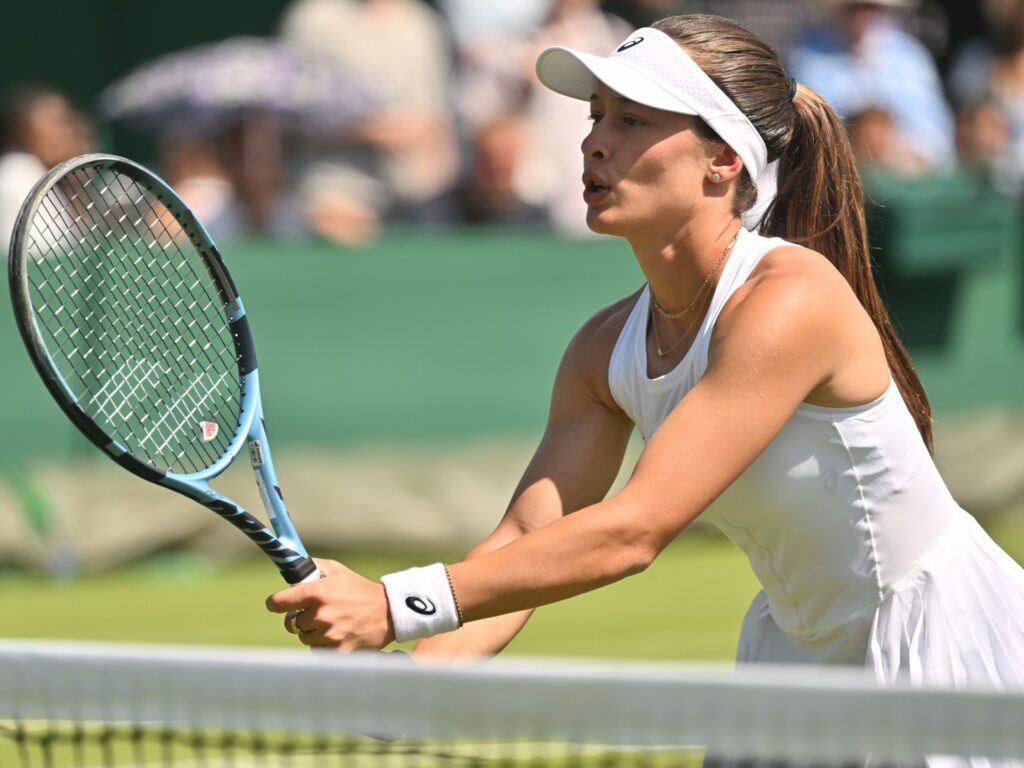
In the world of sports, players often become symbols of much larger social and political issues. One such figure making headlines is Turkish tennis player Zeynep Sonmez. At the prestigious Wimbledon tournament, Sonmez drew significant attention not only for her performance but for her bold statement of solidarity with Palestine. Defying a Wimbledon ban on political statements, she competed with a strikingly unique racket. Her tennis racket featured a colorful watermelon design, emblazoned with the word “Palestine,” a symbol both subtle and powerful in its political message.
Zeynep Sonmez’s decision to use the watermelon racket at Wimbledon highlights the intersection of sports and activism. The Wimbledon Championships are one of the most traditional and strictest tournaments when it comes to regulations and decorum, including a stern stance against visibly political statements from players. Sonmez’s action, therefore, is a courageous deviation from these norms, meant to draw attention to the ongoing plight and struggles of Palestinians.
The watermelon is more than just a fruit in this context; it carries symbolic meaning in Middle Eastern cultures and has become a popular emblem of Palestinian identity and resistance. By incorporating this imagery into an international sporting event, Sonmez challenges both the silence and the controversies often surrounding political expressions in global arenas.
Zeynep Sonmez hails from Turkey, a country with complex political dynamics and strategic geographic positioning that often reflect in the personal views of its citizens. By publicly expressing support for Palestine, she not only touches on a sensitive international issue but also showcases the personal courage required to stand up for one’s beliefs despite potential professional repercussions.
The consequences of her act include potential disciplinary actions from tennis governing bodies, but it also significantly amplifies her message. Through her bold gesture, she places the spotlight on human rights, providing a platform for dialogue and awareness that many athletes do not dare to touch.
Sonmez’s act resonates beyond the tennis court. It underscores the evolving role of athletes as more than just competitors but as influential voices in important global issues. Her example encourages discussions about freedom of expression, the responsibilities of sports institutions, and the power of individual acts of defiance in highly regulated environments.
The reaction to Sonmez’s watermelon racket has been mixed. Supporters applaud her bravery and the innovative way she combines art, sport, and activism. Critics argue that sports events should remain apolitical, focusing solely on competition and unity. This tension reflects broader debates in society about the place of politics in public life.
Zeynep Sonmez’s narrative reminds us that sports can serve as a potent platform for expressing identity and solidarity with oppressed communities. Her choice to stand in solidarity with Palestine at Wimbledon adds to a growing list of athletes who use their visibility to challenge injustices and inspire change.
In an era where the lines between sports, politics, and culture increasingly blur, Sonmez’s watermelon racket is a vivid example of how even the smallest acts on the grandest stages can reverberate loudly. Her presence at Wimbledon with this statement is not only about tennis but about human dignity, courage, and the ongoing quest for justice in a divided world.