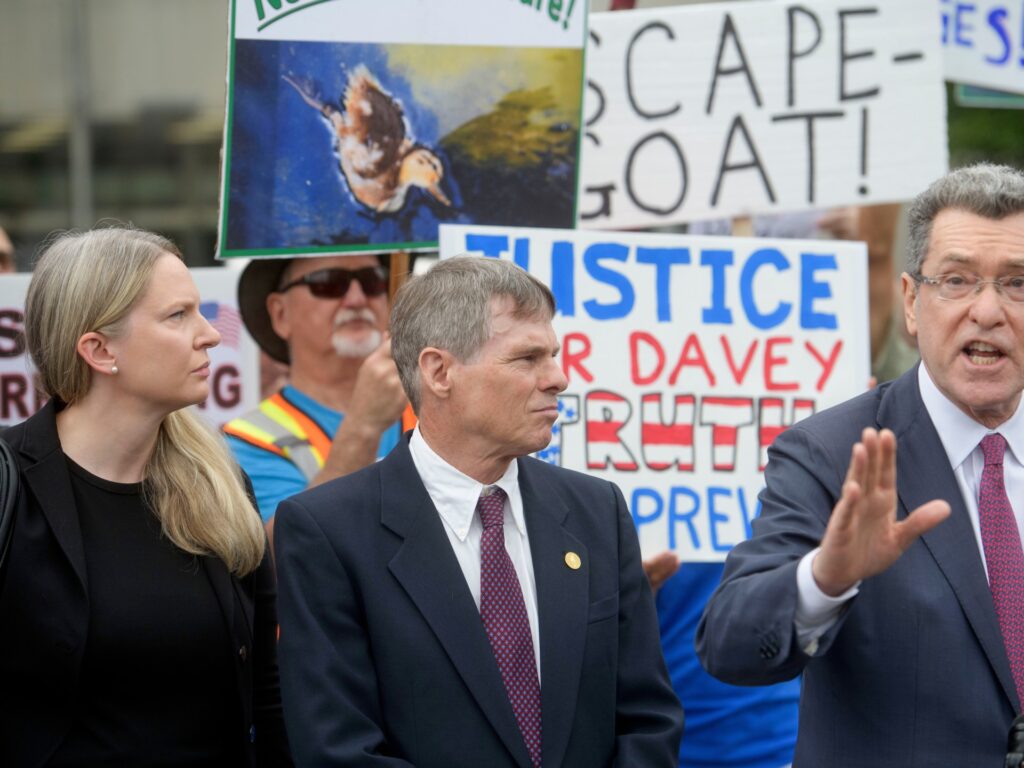
David Hearn, a former US Olympian in canoeing, has pleaded not guilty to charges related to the vandalism of the reflecting pool in Washington, DC. The reflecting pool, a notable landmark located near the National Mall and close to the White House, recently underwent a renovation overseen by former President Donald Trump’s administration. Authorities have accused Hearn of causing damage to the pool during a protest or an incident, but the former athlete firmly denies these allegations.
The incident has sparked public and media attention due to the involvement of a well-known sports figure and the significance of the location. The reflecting pool holds historical and symbolic value, often associated with major monuments and political events. Damage to such a site is considered a serious offense, and legal proceedings are underway to determine the facts of the case.
Hearn’s legal team argues that their client is innocent and that the evidence linking him to the vandalism is not sufficient. They maintain that Hearn’s presence at the scene does not equate to involvement in damaging public property and that he is committed to clearing his name through the judicial process.
The case draws focus on issues surrounding the protection of national monuments and public spaces, the legality of protests, and the consequences of property damage during civil demonstrations. Law enforcement agencies have increased surveillance and security measures around significant landmarks in response to recent events.
During the Olympic Games, David Hearn represented the United States and was celebrated for his achievements in canoeing. However, this legal situation contrasts markedly with his athletic career as he faces criminal charges. If found guilty, Hearn could face penalties including fines and possible imprisonment.
Community reactions have been mixed, with some expressing skepticism over the charges and others calling for accountability to preserve national heritage sites. Advocates for civil rights emphasize the importance of allowing peaceful protests without escalation to destructive acts.
As the court case proceeds, further details are expected to emerge, shedding light on the circumstances that led to the vandalism allegations. The outcome will be closely watched by the public, especially given Hearn’s status as a former Olympic athlete and the high-profile nature of the case.
In the meantime, efforts to maintain and protect the reflecting pool and other monuments continue, highlighting the balance between public access and safeguarding national treasures. The case serves as a reminder of the complexities involved when incidents intersect with history, politics, and individual rights.