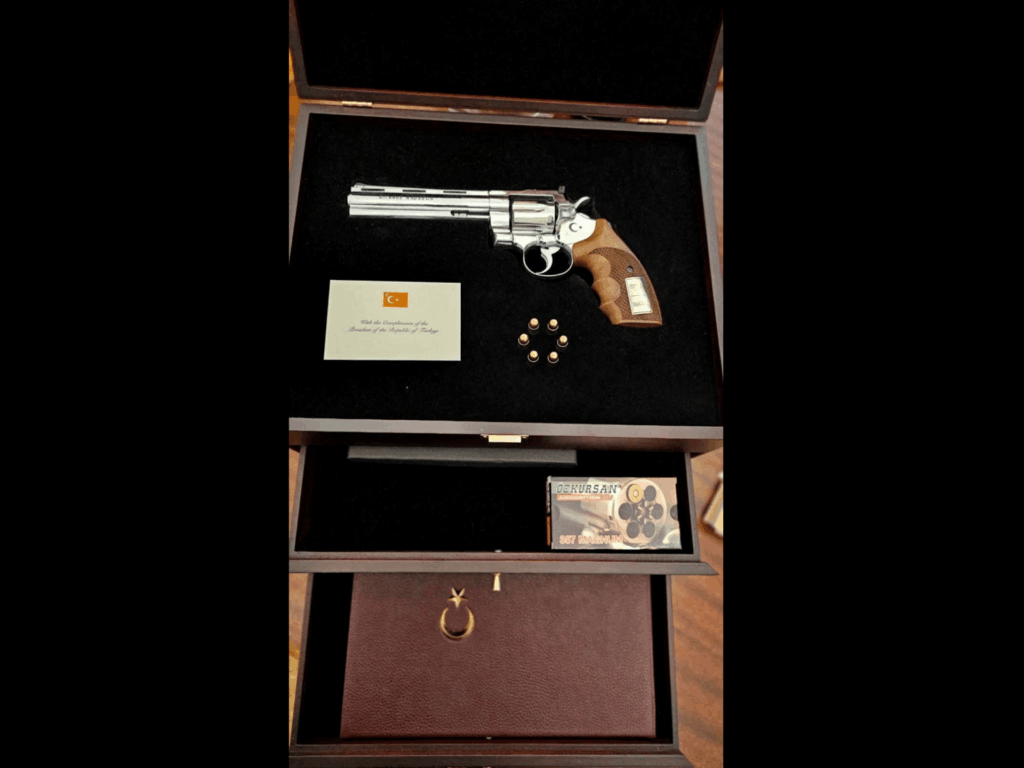
In a surprising and controversial gesture at the recent NATO summit held in Ankara, Turkish President Recep Tayyip Erdogan presented NATO leaders with personalized, engraved revolvers that were fully loaded with live ammunition. This unexpected gift has sparked widespread discussion and varied reactions across the international community.
The Ankara summit, a significant gathering of NATO heads of state and government, is typically characterized by diplomatic dialogue, alliance-building, and the forging of unified strategies. However, this year’s event became notable for Erdogan’s distinctive choice of diplomatic gifts.
The engraved revolvers, each customized with the recipient’s name and NATO insignia, were accompanied by boxes of live rounds, prompting security experts and diplomats alike to assess the implications and symbolism contained in such gifts.
Turkey, a longstanding member of the NATO alliance, has often taken assertive political and military stances on the global stage. Erdogan’s decision to present these weapons could be interpreted in various ways, ranging from a symbol of strength and resolve to a controversial message reflecting current geopolitical tensions.
Some analysts see the gesture as reinforcing Turkey’s commitment to defense and the security obligations of NATO members. The revolver, a powerful emblem of protection and sovereignty, paired with live ammunition, might be viewed as a reminder of the alliance’s readiness to confront threats.
Conversely, critics argue that gifting loaded firearms could be perceived as an aggressive or provocative act, potentially straining diplomatic relations within the alliance. The presence of live ammunition in the gifts adds an unprecedented element of risk and has raised questions about security protocols and the appropriateness of such presents in high-level diplomatic exchanges.
The reactions from NATO leaders themselves have been mixed. While some expressed appreciation for the craftsmanship and uniqueness of the gifts, others were visibly uncomfortable with the dangerous nature of the present. Security briefings following the summit emphasized the need for caution in handling and storing the weapons.
Historically, diplomatic gifts tend to symbolize peace, cooperation, and goodwill; Erdogan’s choice challenges conventional norms by intertwining such gestures with elements of military power. The incident has sparked debate among international relations experts about the evolving nature of symbolism in diplomatic practices.
Furthermore, the timing of the gift has drawn attention amid ongoing geopolitical challenges, including NATO’s discussions on collective defense strategies, security in the Black Sea region, and tensions involving Russia and other global powers.
In response to the controversy, the Turkish government issued a statement clarifying that the gifts were intended to honor the spirit of mutual defense and alliance solidarity, not to intimidate or provoke. Erdogan himself highlighted the historical significance of revolvers as symbols of authority and protection, emphasizing Turkey’s role as a cornerstone member of NATO.
This unprecedented incident at the Ankara summit adds a unique chapter to diplomatic history and signals potential new dynamics in alliance symbolism and interactions. As NATO continues to navigate complex security challenges, the balance between symbolism, diplomacy, and messaging remains delicate.
Looking ahead, NATO member states are expected to address the protocols surrounding diplomatic gifts to ensure alignment with alliance values and security concerns.
The engraved revolvers with live ammunition gifted by President Erdogan serve as a potent reminder of the intertwining of diplomacy and military readiness, reflecting the nuanced and often challenging nature of international alliances in the modern era.