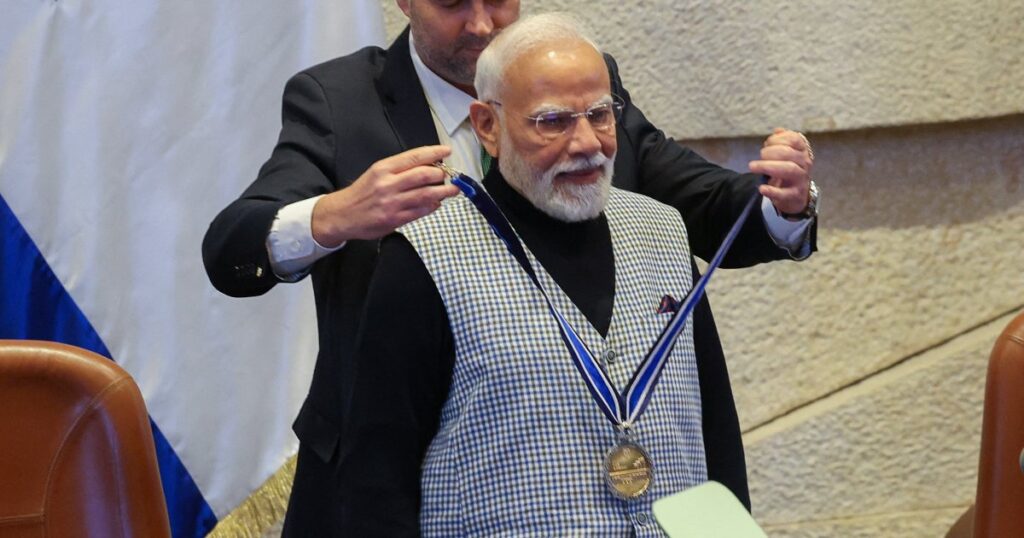
Indian Prime Minister Narendra Modi was recently honored with another prestigious foreign award during his state visit to the Seychelles. This accolade adds to his already extensive collection of international recognitions, sparking discussions about the reasons behind his frequent receipt of such honors.
Modi’s collection of foreign awards is unique among world leaders. Over the years, he has received various accolades from countries spanning different continents, including state honors, humanitarian awards, and recognition of his leadership qualities. These awards reflect the growing influence of India on the global stage under Modi’s leadership.
One central reason behind Modi’s success in garnering these awards is his active diplomatic strategy. Modi’s government has placed significant emphasis on building strong bilateral relationships, fostering economic ties, and promoting cultural exchanges. This diplomatic focus has endeared him to many international leaders and institutions.
During his visit to the Seychelles, Modi was honored with a prestigious award acknowledging his efforts to enhance cooperation between India and Seychelles, especially in areas like maritime security, environmental conservation, and sustainable development. Such focused bilateral collaborations have helped Modi’s image as a leader committed to constructive partnerships.
Critics occasionally describe Modi’s international awards as a ‘double cross, first class’, implying a blend of genuine achievements mixed with political strategizing and image-building. Some analysts argue that these awards are part of soft power tactics to elevate India’s profile globally while consolidating Modi’s personal stature both internationally and domestically.
India’s Prime Minister has also been a key proponent of multilateral cooperation. His active participation in global forums such as the United Nations, BRICS, and the G20 has further amplified India’s voice on complex global issues like climate change, counter-terrorism, and economic development. This international visibility contributes to the recognition he receives from foreign entities.
Moreover, Modi’s persona as a transformative leader who has driven significant domestic reforms—such as economic liberalization, infrastructure development, and digital innovation—is often highlighted in the context of these awards. International award committees frequently cite these reforms as evidence of Modi’s dynamic leadership, making a strong case for honoring him.
In conclusion, the reason behind Narendra Modi winning numerous foreign awards lies in a mix of his proactive diplomacy, strong bilateral and multilateral outreach, domestic achievements, and the strategic use of soft power. While the motivations may be multifaceted and sometimes debated, the accumulation of such awards undeniably reflects Modi’s prominent position on the global stage and India’s expanding role in world affairs.