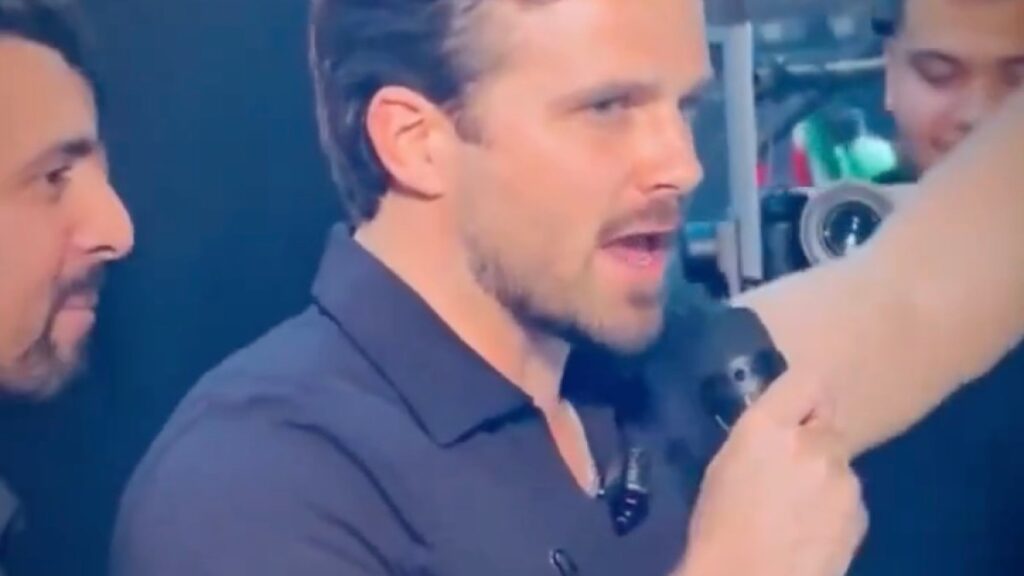
In a striking and controversial event, American social media influencer Jackson Hinkle made headlines by attending the funeral of Iran’s Supreme Leader, Ayatollah Ali Khamenei. The funeral, a significant state occasion, drew attention worldwide not only because of the revered Iranian leader’s death but also due to the presence of foreign personalities like Hinkle, who publicly voiced anti-USA sentiments.
Jackson Hinkle, known for his outspoken political commentary and influence on social media, appeared amidst chants of “Down with the USA” at the funeral proceedings. His attendance and the slogans raised eyebrows across international observers, signifying the complex and often contentious relationship between Iran and the United States.
The funeral marked the end of an era for Iran, with Khamenei having been a towering figure in the country’s regime and a steadfast critic of American policies in the Middle East. His death prompted an outpouring of grief among his supporters, alongside displays of nationalism and defiance against perceived foreign adversaries.
Hinkle’s presence at the funeral stirred debate back in the United States, with opinions divided on his motivations and the implications of an American influencer aligning so publicly with a foreign leader vilified by many in the West. Critics questioned whether his actions were a form of provocation or a genuine political statement drawn from his personal worldview.
Supporters of Hinkle argue that his attendance sheds light on alternative perspectives and challenges mainstream American narratives about Iran and international relations. They claim that his involvement opens discussions on the complexities of global politics and the influence of soft power in shaping public opinion.
The slogans of “Down with the USA” chanted during the funeral reflect long-standing animosities that have defined US-Iran relations for decades. These sentiments are deeply entrenched in the political culture of Iran and are part of official state rhetoric following historical conflicts, including the 1979 US Embassy hostage crisis, ongoing sanctions, and military confrontations.
Analysts note that while Hinkle’s attendance might be seen as sensational, it also underscores how digital influencers are becoming significant actors in international political discourse. Social media platforms provide them with a reach that can amplify messages and impact public perceptions globally.
Iran’s government has not officially commented on Hinkle’s attendance, focusing instead on mourning their leader and rallying national unity. However, the incident has fueled discussions around the role of foreign influencers in domestic political events and the intersection of social media influence with geopolitical affairs.
This event highlights the evolving nature of political activism and diplomacy, where individuals outside traditional government structures are increasingly visible in global affairs. It reflects broader trends of how global conflicts and alliances are now playing out not only in diplomatic corridors but also on digital platforms and public demonstrations.
The presence of Jackson Hinkle at Khamenei’s funeral stands as a potent symbol of the intricate and often controversial interplay between politics, media, and international relations in the 21st century.