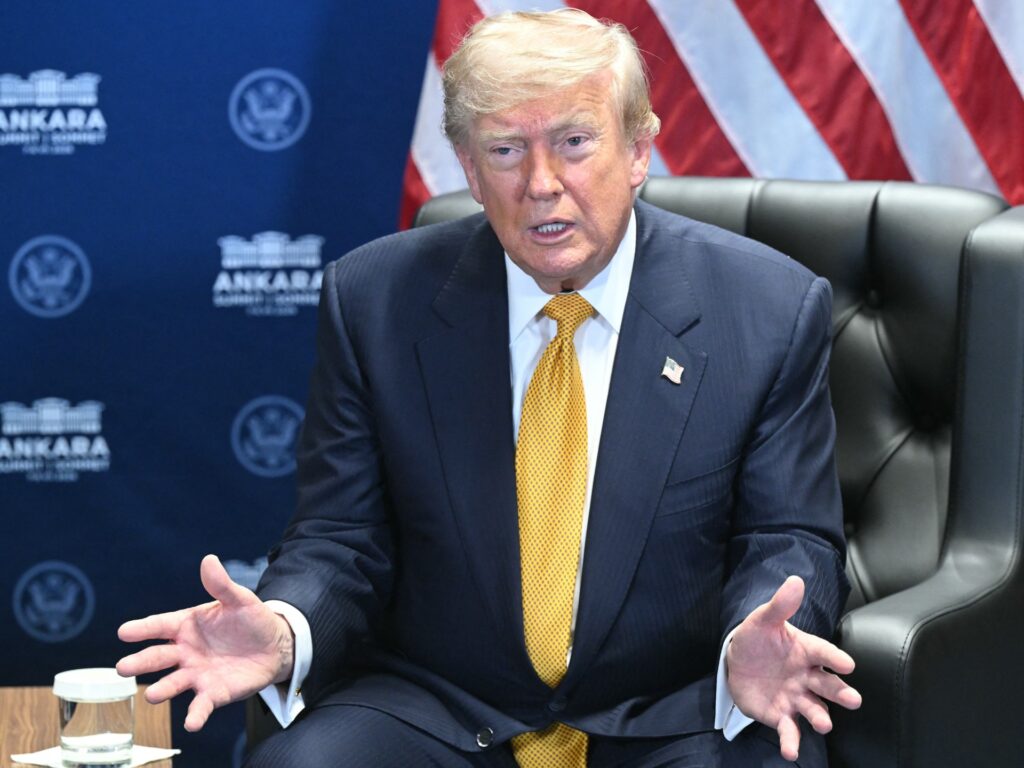
In a dramatic escalation of tensions at the NATO summit, former President Donald Trump announced that the ceasefire between the United States and Iran is ‘over.’ Trump, speaking to an audience of international leaders, reiterated threats of resuming a naval blockade against Iran, launching further military strikes, and potentially seizing control of Kharg Island, a strategically vital oil export hub in the Persian Gulf.
This announcement follows a series of hostile exchanges between the US and Iran, with each side accusing the other of initiating attacks in recent days. The situation has raised concerns among NATO members and the global community about the risk of a broader conflict in the Middle East.
Trump criticized the current administration’s handling of Iran, asserting that a stronger stance is necessary to counter Iranian aggression. He emphasized that the US must project power decisively to protect its interests and maintain stability in the region.
The former president’s comments mark a significant shift from earlier diplomatic efforts and a brief ceasefire agreement that had appeared to reduce hostilities temporarily. However, with this announcement, the prospects for renewed conflict have intensified.
Strategic analysts note that resuming a naval blockade would severely restrict Iran’s oil exports and cripple its economy but also risk a confrontation with Iranian naval forces and potentially other regional actors allied with Tehran.
Kharg Island, the site Trump mentioned targeting, is Iran’s primary oil terminal on the Persian Gulf. Control of Kharg Island would give the US substantial leverage over Iranian oil shipments but would also be highly provocative and escalate military tensions further.
The NATO summit, intended to focus on fostering cooperation among member states, was overshadowed by Trump’s stark warnings and calls for the US and its allies to prepare for increased military engagement in the Middle East.
Diplomats and experts have urged caution, warning that rapid escalation could spiral out of control, disrupting global oil supplies and destabilizing an already volatile region.
The international community is closely monitoring developments, advocating for renewed dialogue and conflict de-escalation measures to prevent further deterioration of US-Iran relations.
As the situation unfolds, all eyes remain on the White House and Tehran, anticipating their next moves in a high-stakes geopolitical confrontation that could reshape the future of Middle Eastern security and US foreign policy.