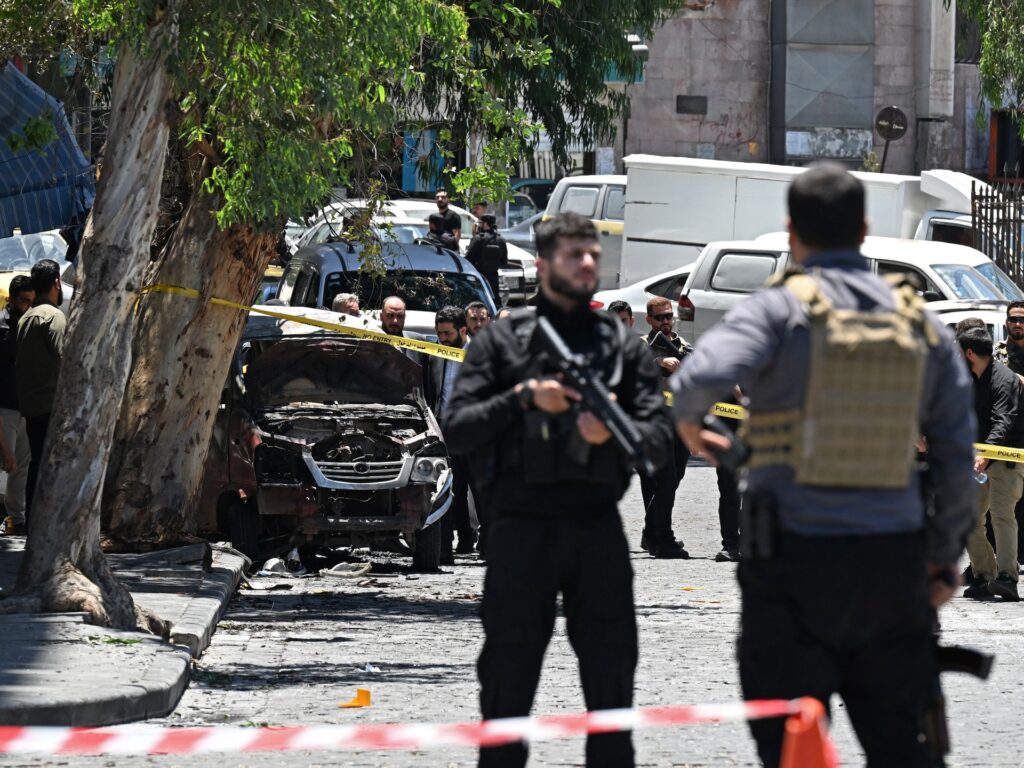
Syria is currently witnessing a turbulent period marked by renewed unrest and escalating threats to its already fragile stability. Recently, the capital city of Damascus was shaken by twin blasts, an event that occurred during a high-profile visit by French President Emmanuel Macron. This attack has underscored the precarious security situation in Syria, highlighting the persistent vulnerabilities facing the government.
The twin explosions in Damascus serve as a grim reminder that Syria’s internal stability remains under significant pressure. The Syrian government has long battled various insurgent groups and opposition factions since the onset of the civil war over a decade ago. Despite gains made in reclaiming territories, the shadow of conflict and unrest looms large, with violence continuing to disrupt peace.
President Macron’s visit was intended to foster diplomatic relations and discuss Syria’s future, but the attacks during his stay emphasized the ongoing volatility and risks associated with the region. The blasts have not only threatened the safety of diplomatic missions and visitors but also signaled the persistent threat posed by radical elements within and around Syria.
The Syrian government faces a dual challenge: managing longstanding conflicts with armed groups and addressing emerging threats from new militant factions exploiting the country’s instability. These groups take advantage of Syria’s weakened state institutions and fractured political landscape to expand their influence and conduct attacks.
Security forces in Damascus and other key areas have intensified their efforts to clamp down on these threats, but the complex nature of the conflict makes complete suppression difficult. The government’s capacity to maintain order is continually tested by the deliberate targeting of civilians and critical infrastructure, undermining public confidence and the prospects for lasting peace.
In addition to internal threats, Syria’s fragile stability is further complicated by the involvement of international actors with competing interests. Regional powers and global players have stakes in Syria that contribute to the complexity of the conflict and the challenges of diplomatic resolution.
The blasts during Macron’s visit are emblematic of the volatile nature of Syria’s current predicament. They highlight the need for a comprehensive approach that addresses both the root causes of unrest and the evolving security threats. Without sustained international support and effective internal governance, Syria risks descending further into chaos.
The people of Syria continue to endure the harsh realities of living in a conflict zone, with disruptions to daily life, economic hardships, and the constant threat of violence. The international community must recognize the urgency of stabilizing Syria, not only for its citizens but for regional and global security.
As Syria navigates through these turbulent times, the resilience of its institutions and the willingness of all parties to engage in meaningful dialogue will be crucial. The recent attacks serve as a stark call to action, emphasizing that the path to peace is fraught with challenges but remains essential for the future of Syria and its people.