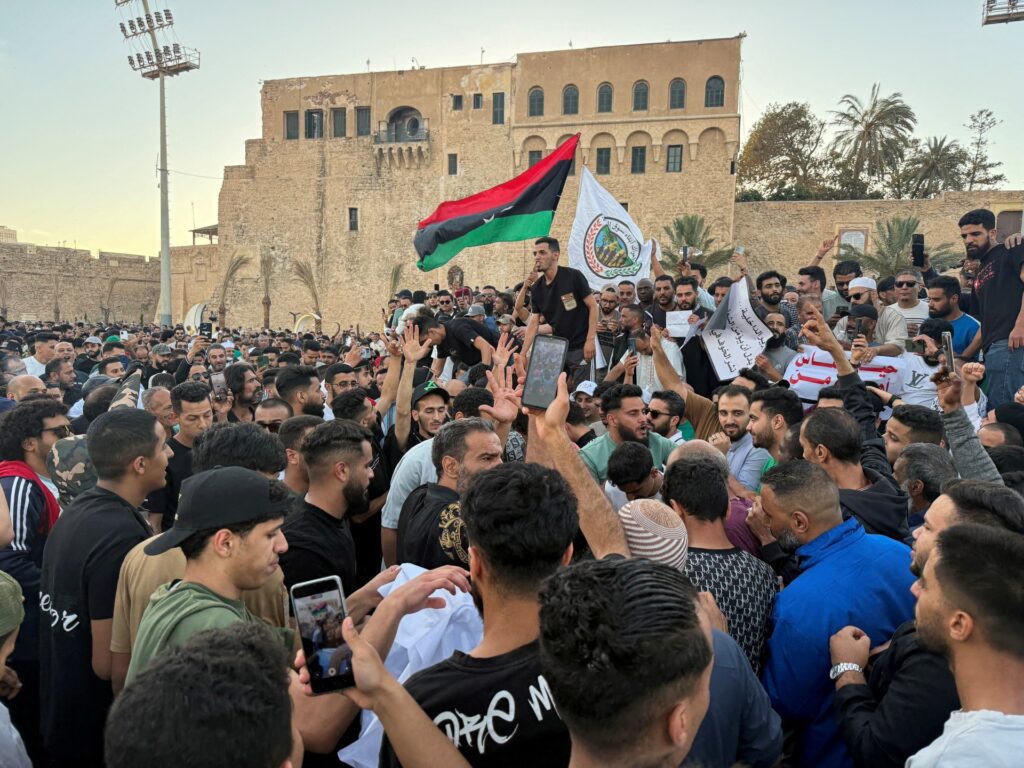
Libya, a nation long embroiled in conflict and political instability, faces a new diplomatic initiative aimed at fostering unity through economic cooperation. The United States, under a plan led by Trump relative Massad Boulos, is proposing a mediation strategy focused on leveraging Libya’s vital oil resources to bring rival factions together.
The core of the US mediation plan involves promising significant oil investments to Libyan factions contingent on their collaborative efforts toward political reconciliation. This approach aims to align economic incentives with the broader goal of nation-building and peace.
Libya’s rich oil reserves have been both a blessing and a curse. While they offer enormous potential wealth, control over these resources has been a central factor in the ongoing conflicts between factions competing for dominance. The US plan capitalizes on this by offering to unlock investment opportunities in the oil sector, provided that the factions agree to cooperate.
Leading the initiative is Massad Boulos, a businessman with close ties to the US administration through former President Donald Trump. Boulos’s involvement symbolizes a new kind of diplomacy blending economic interests with strategic mediation.
The proposal is structured to encourage a ceasefire and the establishment of a unified government framework. By promising infrastructure investments, technological support, and financial flows into Libya’s oil industry, the plan seeks to provide much-needed stability and rebuild the war-torn economy.
Key elements of the plan include:
1. Oil Investment Promises: Commitment of US and international financial backing to develop Libya’s oil production if factions agree to cooperate.
2. Facilitated Talks: Mediation sessions led by Boulos aimed at bridging political divides and laying down a roadmap for governance unity.
3. Economic Reconstruction: Support for rebuilding oil facilities and related infrastructure to revive Libya’s economy.
4. Security Guarantees: Measures to ensure that oil revenues are managed transparently and equitably to reduce mistrust among factions.
Reactions to the plan have been cautiously optimistic. Some factions see it as a pragmatic route toward ending the deadlock, while others remain skeptical about external influence and the sincerity of the promises.
Experts note that the US mediation plan echoes broader international efforts to stabilize Libya but distinguishes itself by centering economic incentives directly linked to Libya’s key resource. This approach could create a powerful motivation for unity but also carries risks if not accompanied by genuine political commitment.
The success of the plan will depend heavily on the willingness of Libyan factions to prioritize national interests over personal or ideological gains. It also requires sustained international support and monitoring to ensure that investment commitments and political agreements are honored.
In closing, the US mediation plan led by Massad Boulos marks a significant step toward resolving Libya’s prolonged conflict by intertwining economic opportunity with diplomatic engagement. If successful, it could serve as a model for conflict resolution in resource-rich but politically fragmented regions.