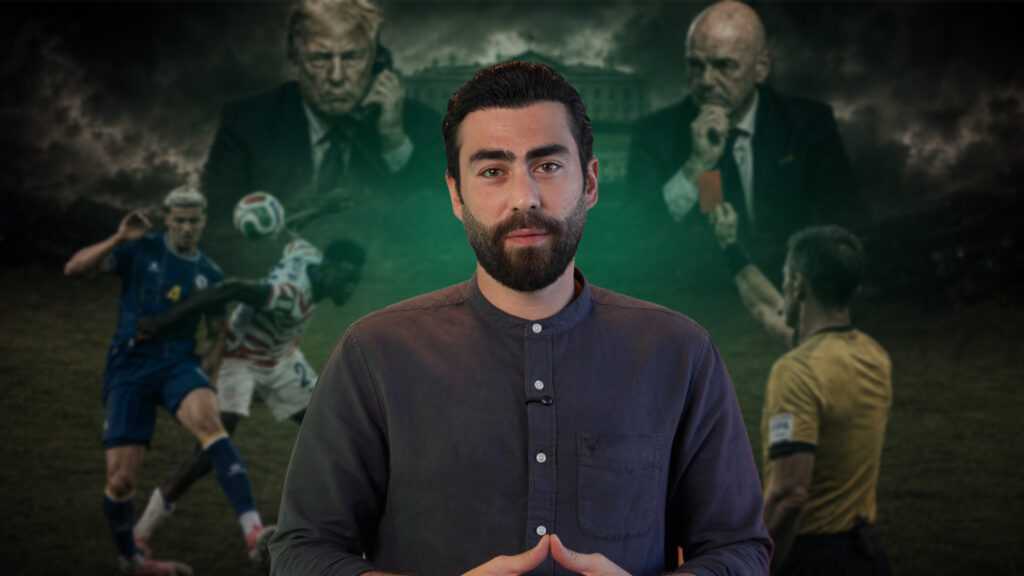
The recent controversy surrounding Folarin Balogun’s participation in the World Cup has sparked widespread discussion about political influence and sports governance. At the heart of the scandal lies a seemingly innocuous phone call, which paved the way for the erasure of a red card that would have otherwise barred Balogun from competing.
Al Jazeera’s Basel Ghazoghli (@baselgazi) delves into the intricate details of how the White House reportedly intervened to ensure Balogun’s eligibility in the tournament. This involvement has raised questions about the intersection of politics and sports, and the extent to which external pressures can sway decisions in international competitions.
Folarin Balogun, a promising footballer, was set to miss crucial World Cup matches due to a red card received in an earlier qualifying game. However, after the unexpected disappearance of this red card from official records, doubts began to emerge about the circumstances behind this reversal. Ghazoghli’s investigation uncovers the pivotal role played by a high-profile phone call from the White House, which allegedly influenced football governing bodies to reconsider the disciplinary action.
The scandal exposes potential vulnerabilities in the administration of football regulations, suggesting that sporting decisions might be susceptible to political maneuvering. It also raises concerns about fairness, sports integrity, and the potential precedent this sets for other athletes and teams facing disciplinary measures.
Many experts and fans have expressed outrage at the possibility that a political entity could impact the outcomes of sporting events, which are traditionally expected to operate independently of government interference. The situation challenges the ideal of sports as an autonomous arena where merit and rule-based judgments prevail.
Moreover, the Balogun case underscores the power dynamics between athletes, sports organizations, and political institutions. It reveals how athletes with connections or endorsements might receive preferential treatment, undermining equal opportunity principles.
The White House’s involvement in the case, whether direct or indirect, has prompted calls for greater transparency in how disciplinary decisions are made in international sports. Advocates suggest the establishment of clearer protocols to prevent undue influence and safeguard the credibility of sporting outcomes.
As investigations continue, the global sports community remains vigilant about preserving the integrity of competition. The Balogun scandal serves as a reminder of the ongoing challenges in balancing sports governance with external pressures and the need for robust systems that ensure fairness.
In conclusion, the one phone call that led to the vanishing red card reveals a complex web of influence and power that transcends the sports field. It calls for renewed scrutiny of the ties between politics and sports and the implementation of measures to protect the sanctity of international competitions like the World Cup.