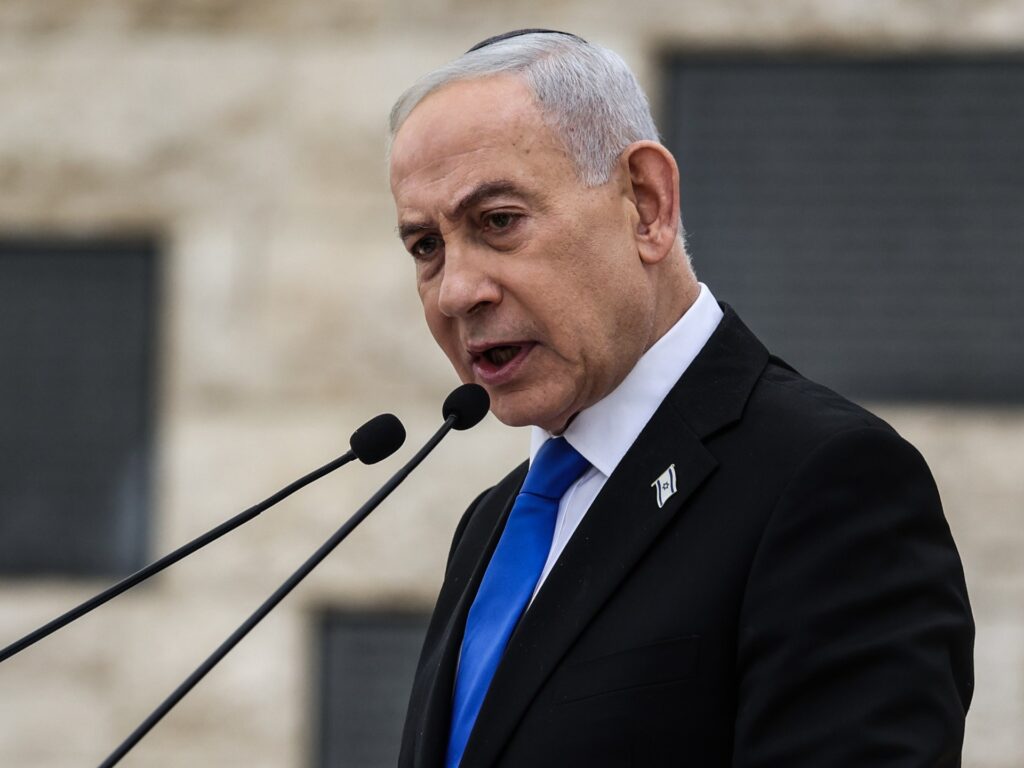
In a recent interview with Fox News, Israeli Prime Minister Benjamin Netanyahu addressed his relationship with former US President Donald Trump, describing their ties as “fine.” Netanyahu underscored the strong alliance between Israel and the United States, praising the longstanding cooperation between the two nations.
During the interview, Netanyahu took a firm stance against Turkey receiving advanced F-35 fighter jets. He argued that Ankara should not be allowed to possess such weaponry, raising concerns over security and regional stability. Netanyahu’s critique comes amid ongoing tensions between Israel and Turkey, as well as broader geopolitical shifts in the Middle East.
The Prime Minister emphasized the importance of maintaining a robust and stable US-Israel partnership, highlighting cooperation in defense and intelligence. At the same time, he voiced caution over Turkey’s ambitions and military acquisitions, signaling a potential challenge to regional security.
Netanyahu’s remarks reflect Israel’s strategic priorities and its efforts to influence US foreign policy decisions concerning arms sales in the region. His comments reaffirm the complexity of international relations in the Middle East, where alliances and rivalries continuously evolve.
The topic of F-35 jets has been contentious, with various countries seeking access to the stealth fighters, which are among the most advanced in the world. Israel has traditionally sought to maintain a qualitative military edge over its neighbors, which informs its objections to Turkey’s potential acquisition of these jets.
This interview also highlights Netanyahu’s ongoing engagement with the US political landscape, including his ties to influential figures like Donald Trump. The rapport aims to secure support for Israel’s security needs and diplomatic goals.
Overall, Netanyahu’s statements underscore the delicate balance in the US-Israel-Turkey triangle, where diplomatic efforts are shaped by security concerns and shifting alliances. The conversation illuminates broader implications for Middle Eastern geopolitics and US foreign policy strategy.