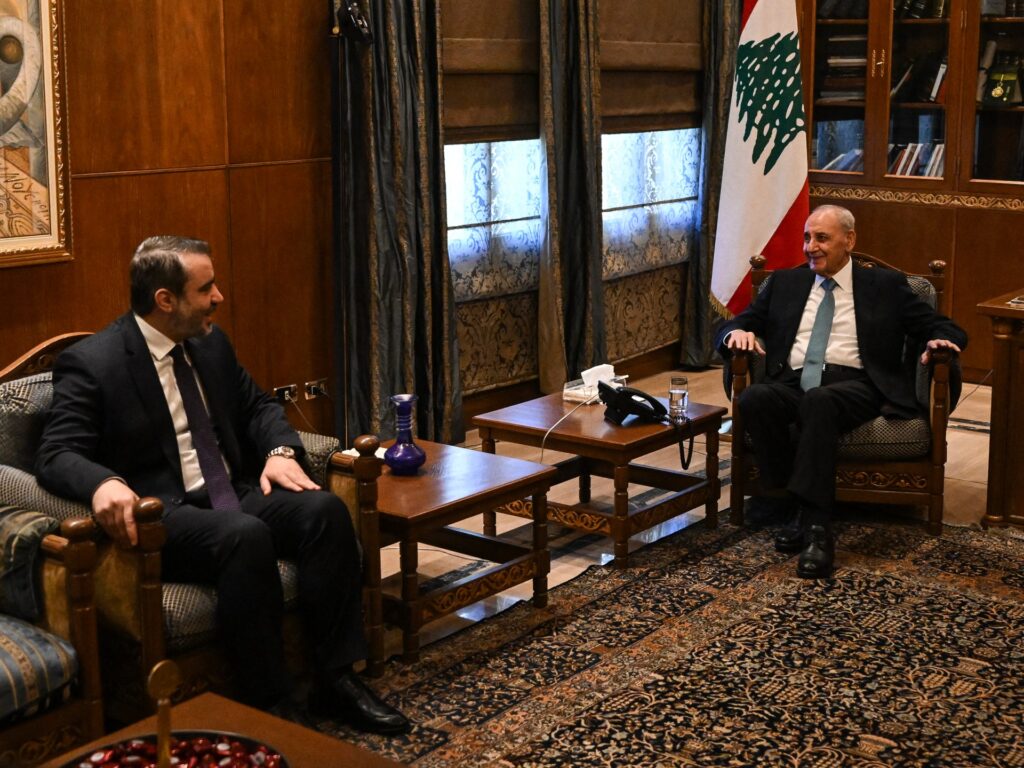
The recent diplomatic developments in the Middle East highlight a complex interplay of international interests and regional alliances. Syrian Foreign Minister Faisal al-Shaibani made a noteworthy visit to Lebanon, where he met with key political figures, including Nabih Berri, the allied head of Hezbollah. This visit marks a significant diplomatic gesture from Syria, signaling a willingness to engage in dialogue and potentially de-escalate tensions in the region.
Meanwhile, the United States, under President Donald Trump’s administration, has taken a contrasting stance. The US has openly called for intervention, urging Syria to disarm Hezbollah, a powerful political and militant group considered a terrorist organization by Washington. Trump’s administration emphasizes the need to curb Hezbollah’s influence, citing concerns over regional security and the stability of Lebanon.
This divergence in approach underscores the strategic complexities in the Middle East. Syria’s outreach through al-Shaibani’s trip appears to advocate diplomatic solutions, aiming to foster stability by engaging with influential Lebanese figures and Hezbollah’s allies. In contrast, the US position prioritizes security measures through disarmament and intervention.
Al-Shaibani’s discussions with Nabih Berri highlight the enduring ties between Syria and Hezbollah, reflecting decades of political and military cooperation. Berri, a significant Lebanese political leader and ally of Hezbollah, plays a crucial role in Lebanon’s political landscape. The Syrian Foreign Minister’s visit can be seen as an attempt to reinforce these alliances and possibly coordinate strategies for dealing with external pressures.
The timing of this visit is significant, occurring amid heightened tensions following various cross-border incidents and ongoing conflicts in Syria and Lebanon. Syria’s diplomatic olive branch through its FM contrasts sharply with the US’s more assertive rhetoric aimed at curbing militant influence.
Observers note that while the US pushes for intervention, this approach risks escalating conflict and potentially destabilizing Lebanon further, which has already been economically and politically fragile. Syria’s strategy appears to be focused on dialogue and regional cooperation, which may be more conducive to long-term peace.
The international community watches closely as these developments unfold, recognizing that the balance between diplomacy and intervention in the Middle East remains precarious. The outcomes of these interactions could shape the future geopolitical landscape, influencing not only Lebanon and Syria but the broader region as well.
In summary, Syrian Foreign Minister al-Shaibani’s Lebanon trip and meeting with Hezbollah ally Nabih Berri mark a pivot towards diplomacy at a time when the United States is advocating for more direct intervention. This dichotomy highlights the ongoing struggle between varying approaches to security and stability in the Middle East, underlining the importance of dialogue in resolving complex regional issues.