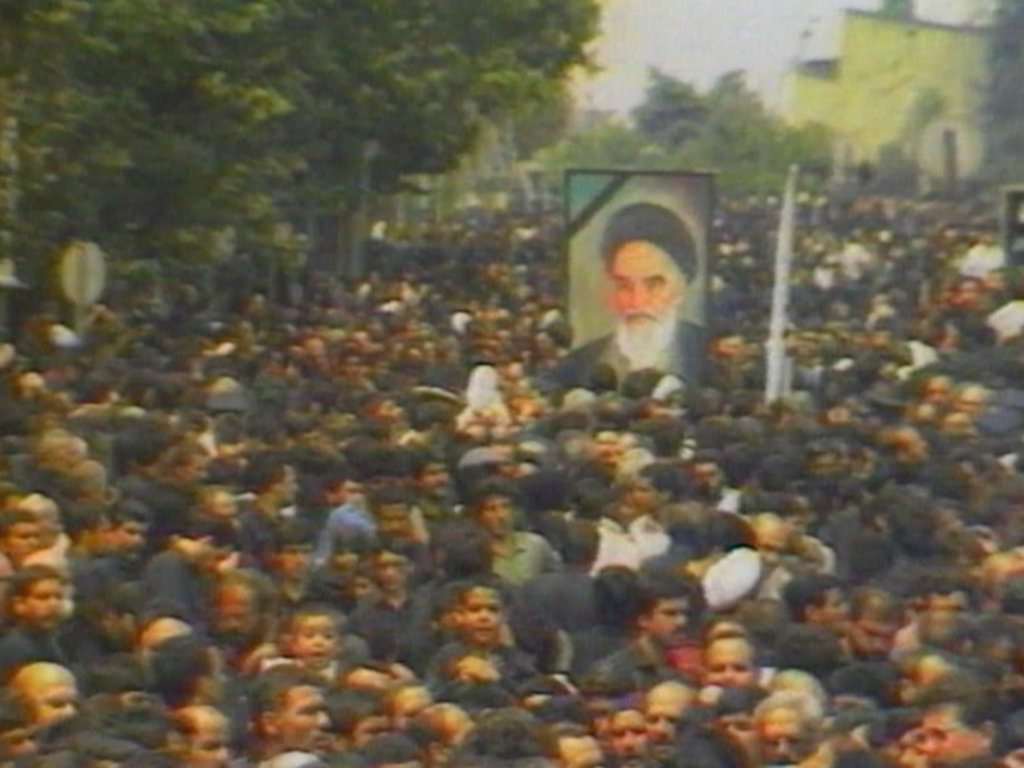
In 1989, Iran witnessed an extraordinary event that deeply marked the nation’s history—the funeral of its first Supreme Leader, Ayatollah Ruhollah Khomeini. This funeral drew an estimated 10 million mourners, a testament to Khomeini’s profound influence and the emotional connection Iranians felt toward him.
Khomeini, who led the 1979 Islamic Revolution that transformed Iran into the Islamic Republic, became the country’s Supreme Leader, the highest-ranking political and religious authority, following the overthrow of the Shah. His leadership set the trajectory for the government and society for decades to come.
His funeral, held in Tehran, was one of the largest gatherings in human history, reflecting the deeply rooted reverence of the Iranian people. The sheer scale of the attendance overwhelmed the city’s capacity, highlighting the collective grief of a nation at the loss of its guiding figure.
Mourners came from all across Iran and even from different parts of the world to pay their respects. Streets were flooded with people wearing black, chanting religious hymns and slogans, and expressing their sorrow. Public spaces became sites of communal mourning, and media coverage captured the profound atmosphere of loss and respect.
The funeral procession was marked by a blend of religious rituals and national symbols, underscoring Khomeini’s dual role as both a spiritual leader and a political icon. The ceremonies featured prayers, recitation of the Quran, and speeches from prominent clerics and political figures.
This event indicated not only the end of an era but also set a precedent for future state funerals in Iran. It showcased the profound impact of the Supreme Leader’s role in shaping the socio-political landscape of the country.
Since then, the expectation and significance of such a funeral have remained extremely high, given the Supreme Leader’s position as the ultimate authority in Iran’s political hierarchy. The 1989 funeral remains a historical point of reference whenever the country confronts the passing of its leaders.
Iran’s leadership and public sentiment during and after the funeral illustrated the powerful blend of politics, religion, and public expression unique to the Islamic Republic. It emphasized the collective memory and identity around this foundational figure.
In conclusion, the funeral of Ayatollah Khomeini in 1989 was more than just a state ceremony; it was a pivotal moment of national convergence that brought millions together to mourn, remember, and reaffirm their commitment to the principles he espoused. The scale of the event stands unmatched, making it an unparalleled chapter in the history of Iranian public life.