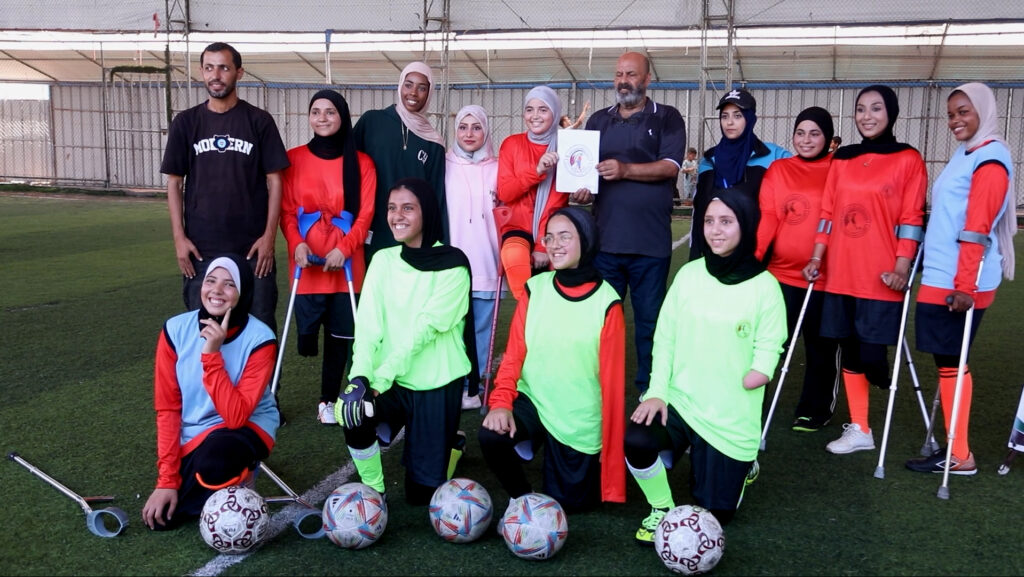
In the war-torn region of Gaza, resilience and determination are vividly embodied by a groundbreaking group of athletes: Gaza’s first women’s amputee football team. Despite the pervasive challenges posed by conflict and instability, these women are reclaiming their space on the football pitch, symbolizing hope and empowerment.
The formation of this team marks a historic milestone in Gaza’s sports and social history. Traditionally, football has been a male-dominated sport worldwide, and in Gaza, cultural and societal barriers have further limited opportunities for women, especially those with disabilities. Yet, amidst adversity, these women have come together to challenge norms, inspire others, and redefine what is possible.
The impact of war in Gaza has been devastating, with countless civilians suffering injuries that result in amputations. For many women, the path to recovery and acceptance is fraught with physical, emotional, and social hurdles. The establishment of the women’s amputee football team provides a crucial platform for healing and rehabilitation. It fosters camaraderie, boosts self-esteem, and promotes physical fitness.
Training sessions, often held in makeshift venues due to limited resources, have become a sanctuary where the players forge bonds and regain confidence. Their commitment to the sport and to each other is unwavering, demonstrating unparalleled courage and spirit.
The team’s journey is not just about sports; it is a powerful narrative about reclaiming identity and agency in a context where war seeks to erode both. Their story resonates beyond Gaza, inspiring advocacy for inclusive sports programs and greater visibility for women with disabilities globally.
Supporters and local organizations have recognized the team’s potential as a force for positive change. Initiatives to provide them with proper sports equipment, accessible training facilities, and medical support are underway, reflecting a growing acknowledgment of the importance of inclusion.
Moreover, the team’s public appearances and participation in friendly matches have attracted media attention, further spotlighting issues faced by women amputees in conflict zones. Their determination and achievements challenge stereotypes and highlight the need for more comprehensive support systems.
As the team continues to train and play, they embody a powerful message: despite the destruction wrought by war, life and hope endure. They demonstrate that with resilience and solidarity, even the most marginalized can reclaim their rightful place in society.
Ultimately, Gaza’s first women’s amputee football team stands as a beacon of resilience, empowerment, and the unyielding spirit of human tenacity amidst adversity. Their story is a testament to the transformative power of sport and the indomitable will to rise above hardship.