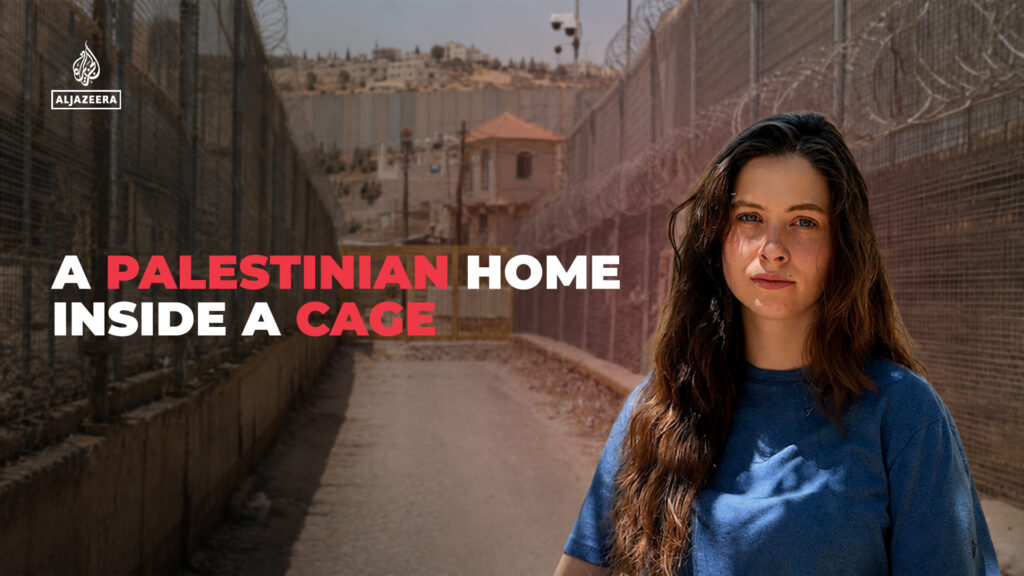
In a striking and poignant representation of the ongoing Israeli-Palestinian conflict, a Palestinian family remains trapped within their own home, encapsulated by the physical and symbolic barriers of an Israeli settlement and the separation wall. This scenario is not just a singular case; it is emblematic of the broader challenges faced by many Palestinian communities in the occupied territories.
The home, once a place of freedom and refuge, has been transformed into a cage, surrounded on all sides by Israeli settlement structures and the imposing concrete separation wall. This isolation creates a surreal environment where normal life activities become complex and fraught with danger.
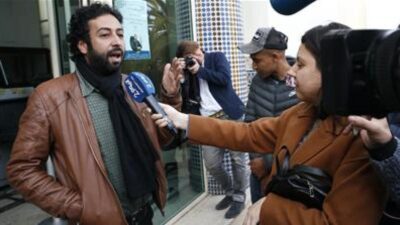
Leila Warah, a reporter for Al Jazeera, provides a vivid account and visual documentation of this family’s circumstances, highlighting the severe restrictions on movement, access to resources, and the psychological impact of such confinement.
The separation wall, erected by Israel citing security concerns, has effectively divided communities and fractured the social and economic fabric of Palestinian life. For families like this one, the wall not only impedes physical movement but also aspirations, separating them from neighbors, schools, medical facilities, and markets.
Israeli settlements, considered illegal under international law by most countries, continue to expand, further encroaching on Palestinian lands. These settlements are heavily guarded and often come with a myriad of restrictions on the Palestinian residents in adjacent areas.
Living amidst these conditions, Palestinian families face daily challenges: limited access to clean water, electricity, health services, and education. The psychological toll of living in an enclosed space, under constant surveillance and threat, cannot be understated. Children grow up with limited exposure to the outside world, affecting their development and sense of security.
This situation raises critical questions about human rights, freedom of movement, and the health and wellbeing of those caught in the geopolitical crossfire. The international community remains divided, with calls for negotiations, peaceful resolutions, and consideration of humanitarian needs often met with political complexities.
Reports like those from Leila Warah serve to bring these stark realities to global attention, emphasizing the urgency of addressing the humanitarian aspects of the Israeli-Palestinian conflict. The story of this home in a cage is a powerful symbol of the broader struggle for dignity, rights, and peace in the region.
As the conflict continues with no immediate resolution in sight, the endurance of families living in such confined and restrictive environments highlights the resilience of the human spirit amid adversity. Their stories are a call for empathy, dialogue, and constructive action towards a just and lasting peace.