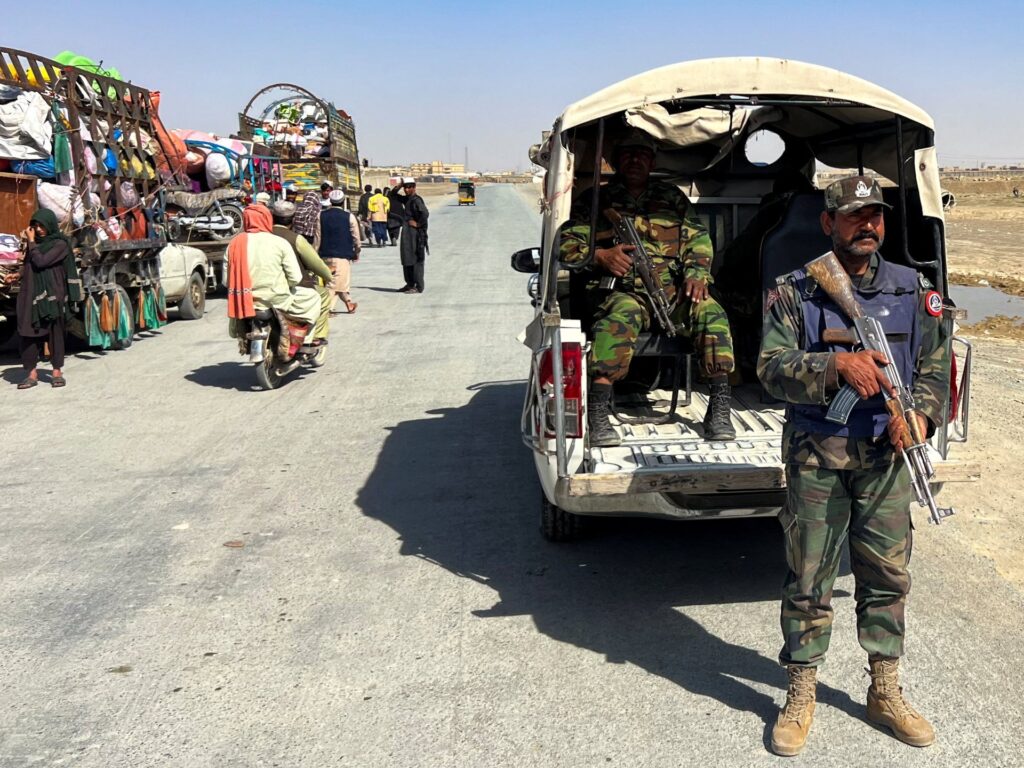
Recent developments have intensified the fragile relations between Pakistan and Afghanistan, highlighting security challenges and cross-border tensions. Pakistan’s military announced that it successfully intercepted four unmanned aerial vehicles (drones) fired from Afghan territory. These drones were detected and neutralized as part of Pakistan’s ongoing efforts to safeguard its airspace and national security. The interception signals a serious escalation in aerial threats emanating from Afghanistan, raising concerns over sovereignty and regional stability.
Meanwhile, the Afghan Ministry of Defence has reported conducting ‘air strikes’ within Pakistan’s Balochistan and Khyber Pakhtunkhwa provinces. This claim points to active military operations crossing international boundaries, involving areas that have historically been sensitive due to ethnic links and insurgency concerns. The statement from Kabul suggests that Afghan forces targeted specific locations in response to ongoing security challenges along the border.
Balochistan and Khyber Pakhtunkhwa have long been zones of strategic significance for both nations due to their geographic placement and demographic compositions. Both provinces have experienced insurgencies and militant activities, often complicating relationships between the adjacent countries. The reported air strikes and drone activities underscore the volatility in these regions.
Political analysts suggest that these incidents could exacerbate already fragile diplomatic ties. The use of drones indicates an advancement in unconventional warfare tactics, presenting new challenges for Pakistan’s defense infrastructure. Concurrently, Afghan military operations in Pakistani territory reflect Kabul’s intent to counter perceived threats, potentially linked to militant groups using the border areas as safe havens.
The Pakistan government has condemned the drone attacks as violations of its sovereignty and has vowed to take all necessary measures to prevent future incursions. Officials emphasize the importance of maintaining peaceful relations but express readiness to respond firmly to any further aggression.
In contrast, Afghan officials justify their air strikes as legitimate counterterrorism operations aimed at eliminating threats that jeopardize Afghanistan’s security. They contend that militant elements operating against Afghanistan are sheltered within Pakistan’s border provinces, necessitating cross-border action.
International observers have called for restraint and dialogue between the two countries to defuse tensions. Regional stability hinges on cooperative security arrangements and mutual respect for territorial integrity. Continuous conflict risks destabilizing the broader region, which is already grappling with economic and security challenges.
The recent incidents reveal the fragility of peace efforts and the complexities underlying Afghanistan-Pakistan relations. Border security remains a critical and contentious issue, impacting civilian populations and complicating military strategies.
In summary, the interception of four drones fired from Afghanistan by Pakistan and the Afghan air strikes on Balochistan and Khyber Pakhtunkhwa mark a significant escalation in hostilities. Both nations face the challenge of balancing security imperatives with the need for diplomatic engagement to prevent further deterioration of ties and to promote regional peace and stability.