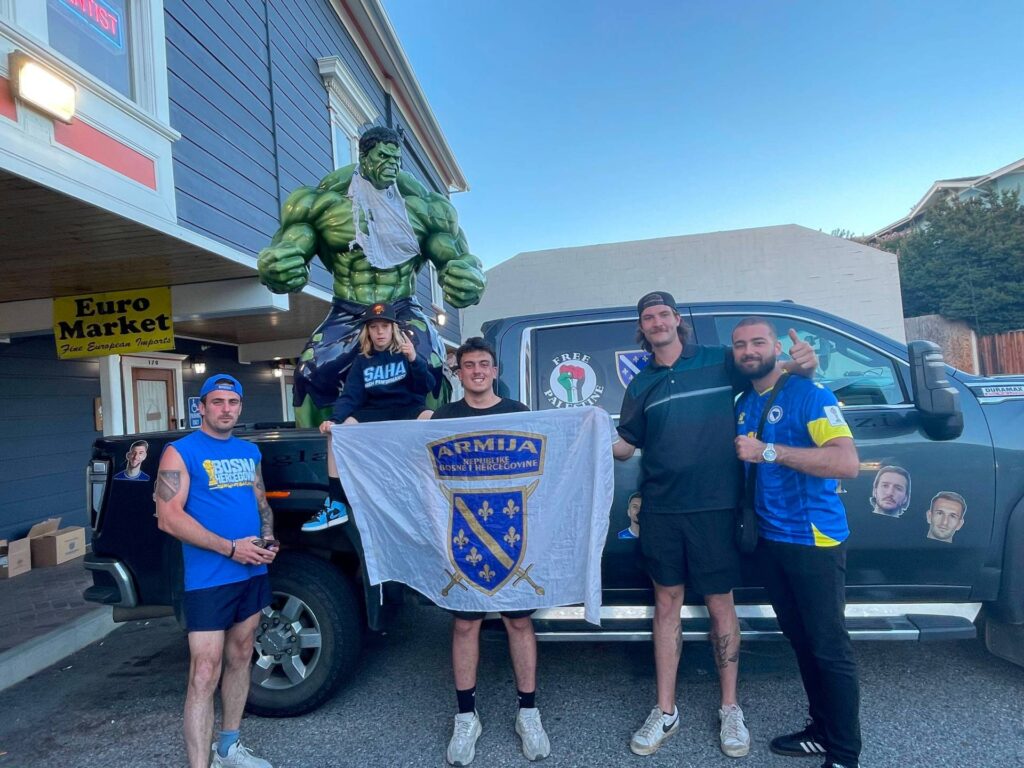
The FIFA World Cup has once again proven to be more than just a football tournament; it serves as a global stage where fans’ passions and political expressions merge. This year, Bosnia and Herzegovina’s fans have notably captured the spotlight, not only by fervently supporting their national team but also by expressing solidarity with Palestine.
Bosnia’s national team is engaged in a crucial battle to advance to the Round of 16 in the tournament. This competitive drive has ignited enthusiasm among Bosnian supporters both within the country and across the global diaspora. The Bosnian fanbase, known for their vibrant and unwavering support, has brought remarkable energy to every match, creating a festive and competitive atmosphere.
The tournament has served as a platform for these fans to showcase their passion, but it has also highlighted the interconnectedness of global political and social issues. Many Bosnian supporters have used their presence at the World Cup games to display gestures of solidarity with Palestine, a cause that resonates deeply with many in the Bosnian community. This solidarity often stems from shared experiences of conflict, displacement, and the desire for peace and justice.
Spectators at the World Cup have witnessed Bosnian fans waving flags, holding banners, and chanting slogans that reflect their support for Palestine, demonstrating the powerful role of sport in raising awareness about international issues beyond the game itself. This blend of sportsmanship and activism underscores how major sporting events can become platforms for expressing broader human concerns.
The Bosnian diaspora, scattered across Europe and beyond, has also played a crucial role in amplifying this message. Through coordinated efforts and social media campaigns, they have brought attention to their national team’s efforts while simultaneously advocating for Palestinian human rights.
This connection between Bosnia and the Palestinian cause has garnered international media attention, bringing a unique dimension to the World Cup narrative. It reminds fans and viewers worldwide that the tournament is intertwined with personal and political identities.
Bosnia’s struggle to advance in the tournament represents more than just athletic competition; it embodies the hopes and resilience of a people who have faced significant hardships. The fans’ passionate support and political advocacy showcase how sports can be a unifying thread among dispersed and diverse communities.
In conclusion, the Bosnia World Cup experience exemplifies how football transcends sport. It unites people, fosters global awareness, and highlights shared struggles. As Bosnia fights to reach the Round of 16, their fans continue to demonstrate that passion on and off the field can amplify voices and promote solidarity across borders.