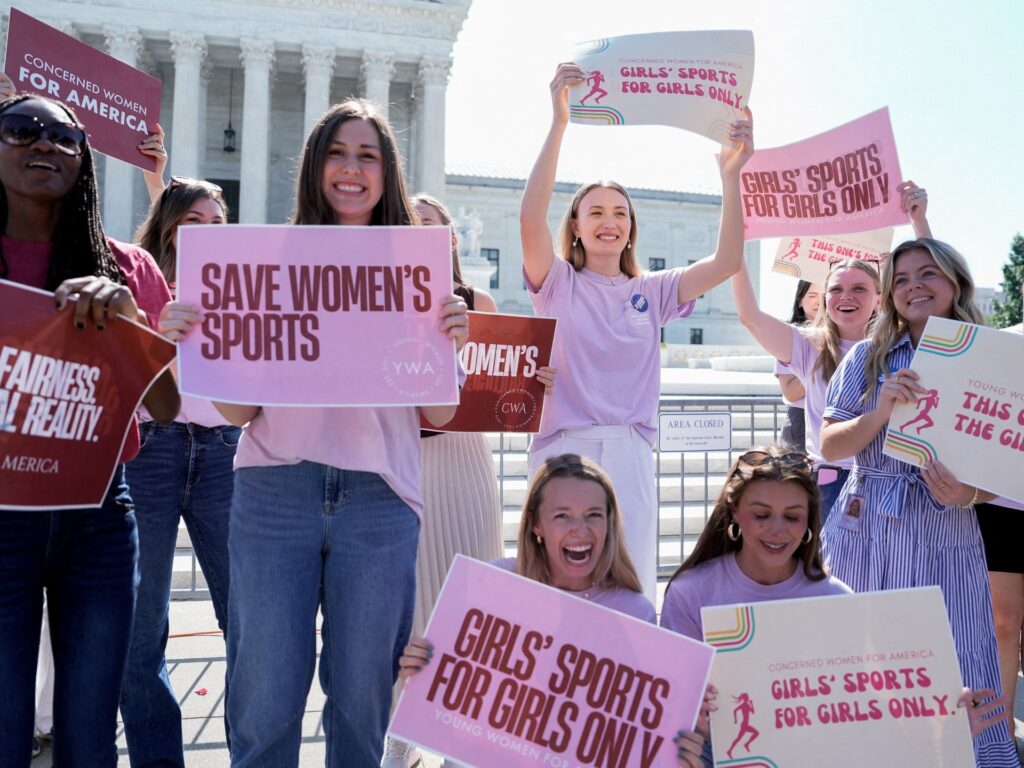
In a landmark decision, the US Supreme Court has upheld state laws that ban transgender athletes from participating in sports teams aligning with their gender identity. The ruling was unanimous, with a 9-0 vote confirming that such laws do not violate Title IX, a key civil rights statute that prohibits sex discrimination in education.
Title IX has long been a cornerstone in ensuring equal opportunities in education and sports. However, this ruling clarifies the court’s stance on the intersection of gender identity issues and competitive sports.
The case revolved around laws passed in several states that restrict participation of transgender girls and women in female sports categories. Opponents of these laws argued that they were discriminatory and infringed upon the rights of transgender individuals. They contended that Title IX protections should extend to gender identity, safeguarding transgender athletes’ right to compete according to their identified gender.
Supporters of the bans, including several state governments, argued that these laws are necessary to maintain fairness in female sports competitions. They asserted that biological differences could give transgender women unfair advantages over cisgender women, thus disrupting the level playing field that Title IX intended to protect.
The Supreme Court’s decision largely sided with the states, stating that Title IX’s prohibition on sex discrimination does not explicitly cover gender identity. The court found that Congress must explicitly include gender identity in legislation for it to be considered a protected category under Title IX.
This verdict marks a significant moment in the ongoing debate over transgender rights in sports. Advocates for transgender athletes expressed disappointment, emphasizing the challenges faced by transgender youth in accessing equal sports opportunities.
Legal experts suggest that this ruling sets a precedent for how future cases involving gender identity and civil rights in education and sports might be adjudicated. It also highlights a legislative gap regarding the protection of transgender individuals under federal law.
The decision is expected to impact policies across various states that have adopted similar bans or are considering them. It may also influence actions by educational institutions and athletic organizations nationwide.
Civil rights organizations are calling for legislative action to explicitly address gender identity under Title IX and other relevant federal laws to ensure comprehensive protections for transgender people.
This Supreme Court ruling represents a critical juncture in the broader cultural and legal landscape surrounding transgender rights in the United States, particularly in the domain of sports and education.