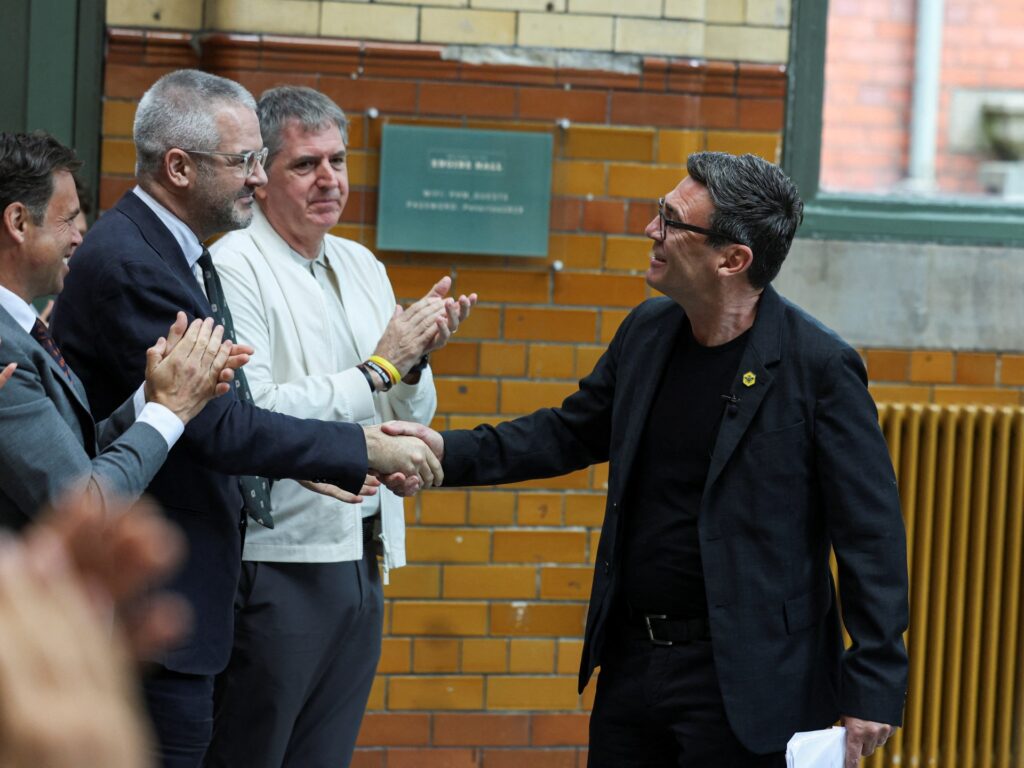
Andy Burnham, the frontrunner to succeed Keir Starmer as the leader of the UK Labour Party and the next Prime Minister, has made pledges focused on greater devolution and improving party discipline. Burnham’s campaign has highlighted his vision of empowering regional governments while emphasizing the need for a unified and disciplined Labour Party to tackle the UK’s pressing challenges effectively.
During a recent policy speech, Burnham outlined plans to devolve more powers to local and regional authorities to foster stronger economic development and ensure decisions better reflect local needs. This approach aims to address long-standing regional inequalities by giving communities more control over health, education, and infrastructure funding.
Burnham also committed to enforcing greater discipline within the Labour Party, asserting that a cohesive and united party is crucial for regaining public trust and winning the next general election. He stressed that internal divisions have weakened Labour’s effectiveness and called for renewed focus on common goals and values.
However, Burnham faced criticism for his refusal to take questions immediately following his policy announcement. Critics argued that this approach showed a lack of openness and accountability at a critical time when leadership transparency is highly valued by both the public and party members.
Despite this backlash, Burnham remains the frontrunner in the Labour leadership race, buoyed by his strong track record as the former Mayor of Greater Manchester and his leadership during the COVID-19 pandemic. His supporters highlight his pragmatic approach and ability to unite different factions within the party as key strengths.
The leadership contest comes at a pivotal moment for the Labour Party as it seeks to rebuild after successive electoral defeats. The party faces the challenge of appealing to a broad electorate while addressing complex issues such as economic recovery, social justice, and the UK’s role on the global stage.
Burnham’s vision of a more devolved and disciplined party reflects a strategic attempt to modernize Labour’s approach and strengthen its governance structures. If elected Prime Minister, his policies would likely signal a shift toward enhanced regional autonomy combined with a focus on party unity to improve government effectiveness.
Observers will be closely watching the leadership campaign’s next stages to see how Burnham and his rivals engage with party members and the wider public, particularly on issues of accountability and policy detail. The outcome will shape the direction of the Labour Party and the future leadership of the UK government.
In summary, Andy Burnham’s pledge to advance devolution and enforce party discipline represents a significant policy stance within the Labour leadership race. His campaign continues to generate debate over leadership style, transparency, and Labour’s path forward as it positions itself for the next general election.