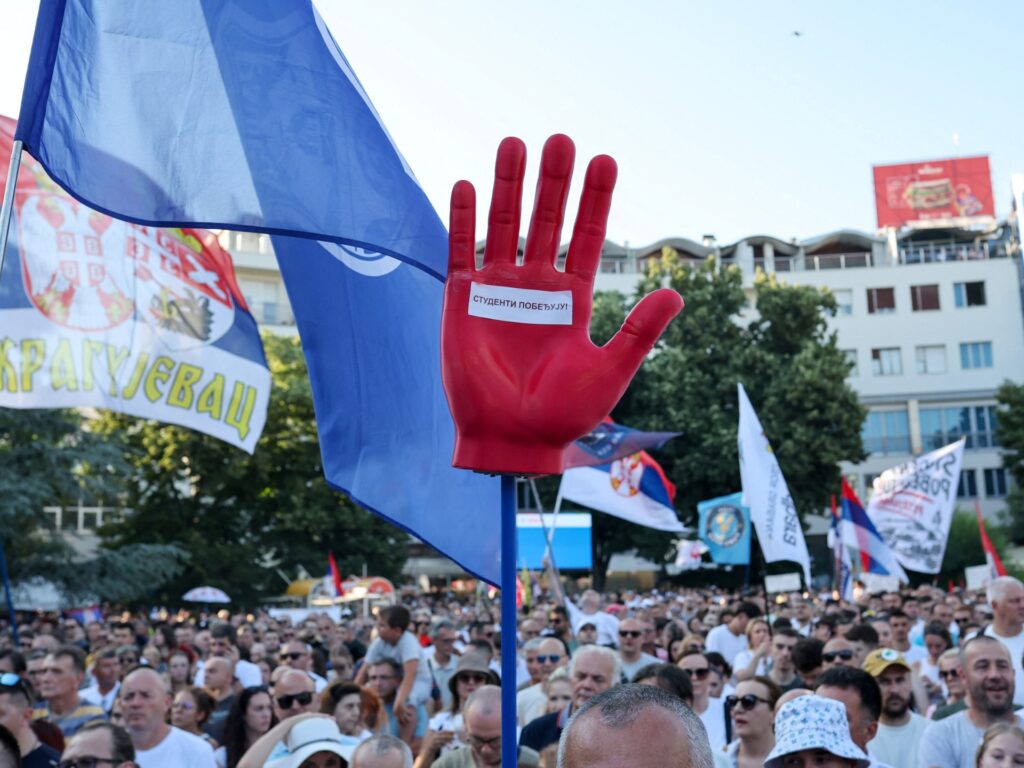
In Serbia, widespread public protests continue unabated despite President Aleksandar Vucic’s recent declaration that he intends to relinquish power. The demonstrators, however, remain skeptical about the sincerity and timing of his promise after his 12-year rule.
Vucic, who has been a dominant figure in Serbian politics for over a decade, announced plans to step down amidst mounting pressure from citizens demanding political reform and greater democracy. His tenure has been marked by significant controversy, with critics accusing him of authoritarian tendencies and undermining democratic institutions.
The ongoing protests, which have drawn thousands of participants from all walks of life, showcase deep-rooted frustration over corruption, media freedom, and government accountability. Protestors insist that Vucic’s pledge is either a political maneuver or an attempt to quell unrest rather than a genuine commitment to change.
Analysts note that the Serbian public’s mistrust is fueled by past instances where political leaders made promises but failed to follow through. Given the extensive power Vucic consolidated during his presidency, many believe a seamless transition is unlikely without continued civic vigilance.
International observers have also expressed concern about the state of democracy in Serbia, emphasizing the importance of transparent governance and free elections. They urge all parties to engage constructively to ensure a peaceful resolution to the crisis.
As the situation evolves, the protesters have outlined clear demands, including fair electoral processes, judicial independence, and media plurality. They are determined to maintain pressure until these conditions are met, signaling that the movement is not merely about Vucic’s resignation but broader systemic changes.
Despite the president’s assurances, the public remains cautious and vigilant. The dynamic between the government’s promises and the citizens’ demands continues to shape Serbia’s political landscape, marking a pivotal moment in the country’s democratic development.
The persistence of the protests highlights the growing political consciousness among Serbia’s populace and their unwavering commitment to achieving accountability and reform. As the world watches closely, Serbia stands at a crossroads, with the potential for significant transformation dependent on the actions of both its leaders and its people.