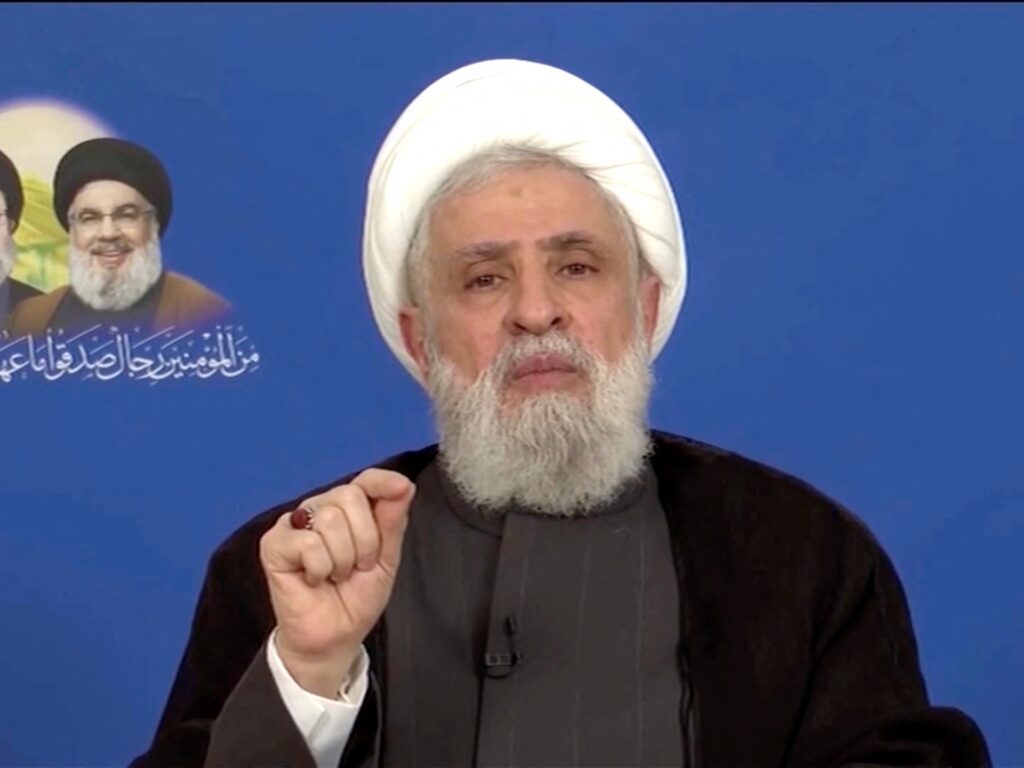
In the latest developments regarding the ongoing tensions in the Middle East, Hezbollah’s Deputy Secretary General Naim Qassem has issued a strong statement demanding that Israel leave Lebanon unconditionally. Qassem emphasized that Israel’s presence in Lebanon is not a matter of missile strikes, but part of a broader objective to ‘swallow it up and occupy it’.
Naim Qassem, addressing supporters and media, highlighted that the Israeli occupation is fundamentally driven by expansionist ambitions rather than defensive measures. According to Qassem, Israel’s military and political maneuvers within Lebanese borders are aimed at asserting control and undermining Lebanon’s sovereignty.
Lebanon has been a focal point of conflict for decades, with Hezbollah playing a significant role as a militant and political organization resisting Israeli influence. The relationship between Israel and Lebanon remains fraught with military skirmishes, political tensions, and ideological clashes.
Hezbollah’s statements come at a time when regional tensions are escalating, with Iran backing Hezbollah both financially and militarily. This support complicates efforts toward peace and stability in the region. The group sees Israel’s presence as an illegal occupation that must end to restore Lebanon’s territorial integrity.
International observers have noted that the ongoing conflicts in the region are influenced by a web of alliances and rivalries, with Iran and Israel marked as principal players. Hezbollah serves as Iran’s proxy in Lebanon, providing strategic depth against Israeli influence.
The demand for Israel to leave Lebanon unconditionally is likely to fuel further diplomatic and military confrontations. While Israel maintains it defends itself against threats emanating from Lebanese territories, Hezbollah counters that such threats are pretexts for occupation.
Analysts suggest that the situation remains highly volatile, with possible escalations leading to wider conflict if diplomatic solutions are not sought urgently. The international community continues to call for dialogue and de-escalation.
This latest proclamation from Hezbollah adds to a long history of dispute over Lebanese sovereignty and Israeli actions. It underscores the enduring challenges in achieving peace in a region marked by complex geopolitical dynamics and historical grievances.
In summary, Hezbollah’s insistence on Israel’s unconditional withdrawal from Lebanon is a significant posture in the ongoing Iran-Israel confrontation, reflecting broader regional tensions and the persistent struggle over Lebanese territory and autonomy. The path forward remains uncertain, with peace contingent upon careful negotiation and mutual concessions.