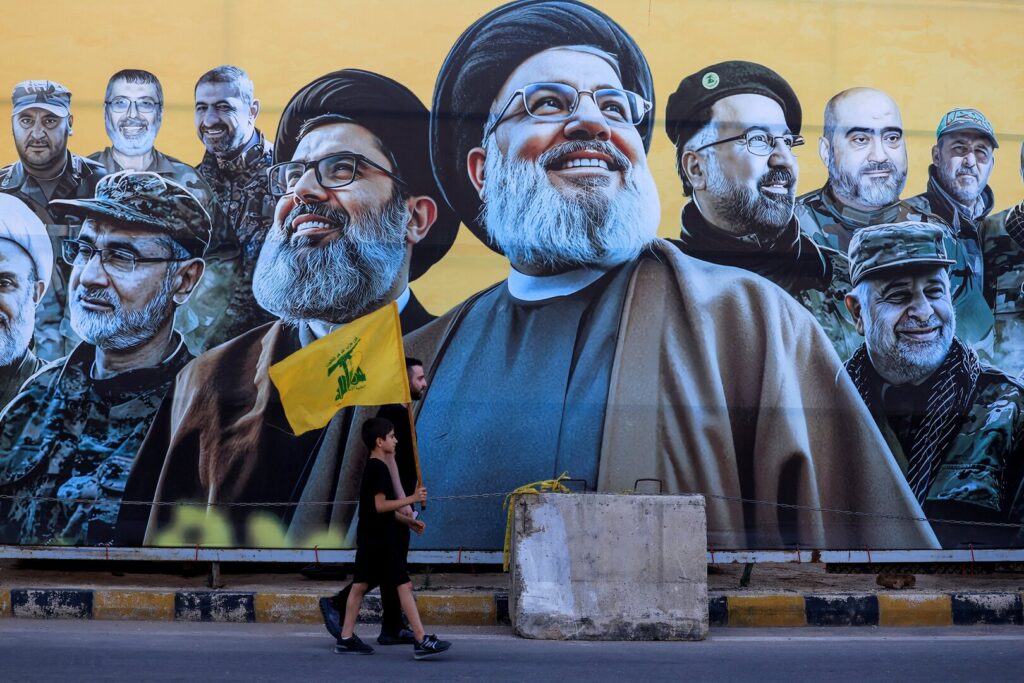
A man walks with a boy, carrying a Hezbollah flag, past a mural depicting former Hezbollah leader Hassan Nasrallah and other senior figures, on the day Hezbollah chief Naim Qassem delivers a televised speech, near the burial site of Hassan Nasrallah on the outskirts of Beirut, Lebanon, June 17, 2026. REUTERS/Mohamed Azakir TPX IMAGES OF THE DAY
Hezbollah, the Lebanese militant group and political party, has declared a firm stance regarding the presence of Israeli forces in Lebanon. According to their recent statement, Israel has “no option” but to “unconditionally” withdraw from southern Lebanon and other occupied regions within Lebanese territory. This announcement reiterates Hezbollah’s long-standing position against Israeli occupation in Lebanon, emphasizing their demand for a complete and unconditional Israeli military retreat.
The context of this demand lies in the longstanding conflict between Israel and Lebanon. Southern Lebanon has been a focal point of tension, particularly due to Israeli military operations and occupation zones established during past conflicts. Hezbollah, which originated as a resistance movement against Israeli occupation, continues to assert its role as a defender of Lebanese sovereignty.
The demand for Israel’s withdrawal from all occupied areas underscores the unresolved dispute over territorial control in the region. Hezbollah’s call comes amid a broader geopolitical landscape marked by intermittent clashes, political turmoil, and fluctuating relations between Israel and Lebanon. The group’s insistence on an “unconditional” withdrawal highlights its rejection of any partial or negotiated settlements that might leave Israeli troops in Lebanese territory.
This statement is likely to intensify tensions between the two parties, potentially affecting peace efforts and stability in the region. Israel’s current policy towards Lebanon remains centered on security concerns, particularly regarding Hezbollah’s arsenal and influence. The Israeli government has traditionally justified its presence in the south as necessary to deter militant attacks and protect its northern border.
However, Hezbollah’s unequivocal position serves as a reminder of the ongoing dispute and the complexities surrounding the security and sovereignty issues in Lebanon. The demand also resonates with broader sentiments in Lebanon, where various factions oppose Israeli military presence and advocate for a sovereign Lebanese state free from foreign occupation.
It remains to be seen how this latest declaration from Hezbollah will impact diplomatic negotiations or military postures in the coming months. For now, Hezbollah’s message is clear: Israel must leave Lebanon unconditionally, marking another chapter in the enduring conflict between the two nations.