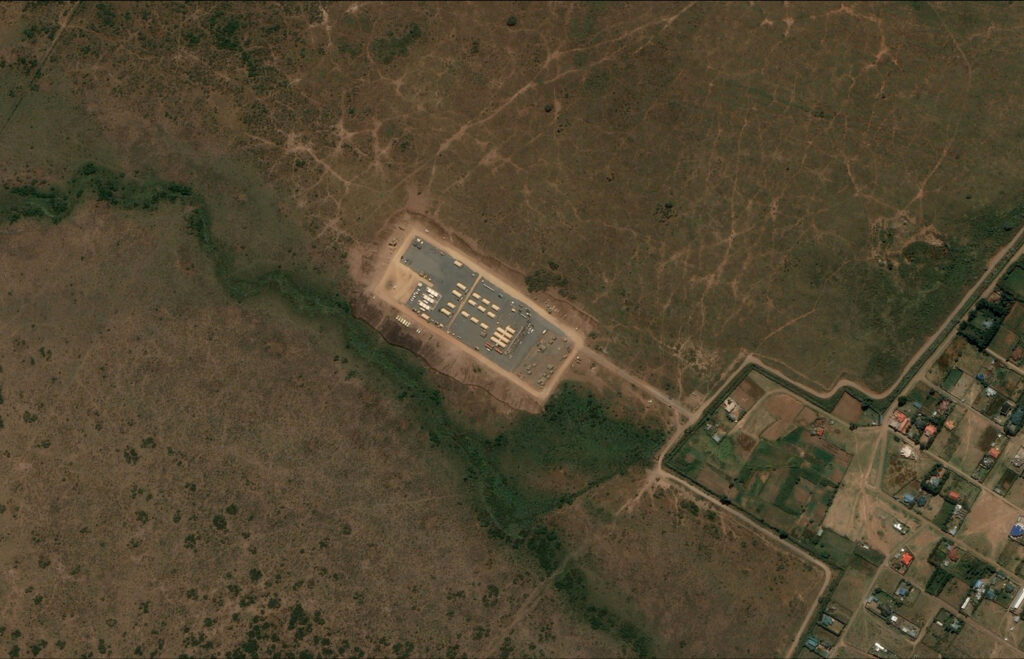
A satellite image shows tents erected at the U.S.-backed Ebola quarantine facility at Laikipia Air Base in Laikipia County, Kenya June 22, 2026. Pleiades © CNES 2026, Distribution Airbus DS/Handout via REUTERS THIS IMAGE HAS BEEN SUPPLIED BY A THIRD PARTY. NO RESALES. NO ARCHIVES. MANDATORY CREDIT.
In a significant development, Kenya’s Health Minister has ordered an immediate halt to the construction of a United States-funded Ebola treatment facility within Kenyan borders. This decision marks a critical juncture in the nation’s approach to handling infectious diseases and foreign medical infrastructure projects.
The US Ebola facility was intended to serve as a specialized center for treating and containing Ebola virus cases, reflecting ongoing concerns about potential outbreaks and pandemic preparedness. However, the Kenyan government has expressed reservations, leading to the stoppage of construction activities.
Officials have stated that the decision to pause construction stems from a need to review the project’s implications on local health policies, national security, and sovereignty. Questions have been raised regarding the long-term management of such facilities and the extent of foreign involvement in Kenya’s healthcare system.
The Kenyan public health community has shown mixed reactions to the halt. Some experts argue that the facility could have bolstered Kenya’s epidemiological response capabilities, especially given the recurring threats of infectious diseases in the region. Others highlight the importance of ensuring that local oversight and control are prioritized when establishing foreign-funded medical infrastructures.
The Health Ministry has indicated plans to conduct a thorough review and consult with various stakeholders, including international health organizations and community leaders, before making a final decision on the project’s future.
This pause also draws attention to broader geopolitical dynamics, as Kenya balances its partnerships with international allies and its commitment to national interests. The US government, which has invested significant resources in combating Ebola outbreaks in Africa, may be prompted to reassess its strategies in light of the Kenyan decision.
Kenya has been active in strengthening its healthcare systems and outbreak response readiness, particularly after facing challenges during past epidemics. The halt of the Ebola facility construction underscores the complexities involved in integrating foreign-led health initiatives in local contexts.
As the global health community watches closely, Kenya’s move underscores a growing trend among nations to assert greater control over healthcare infrastructure projects to safeguard sovereignty and public trust.
Further updates are anticipated as Kenya deliberates on the path forward for the Ebola treatment facility and possibly reshapes its collaboration with international partners in epidemic preparedness and response.