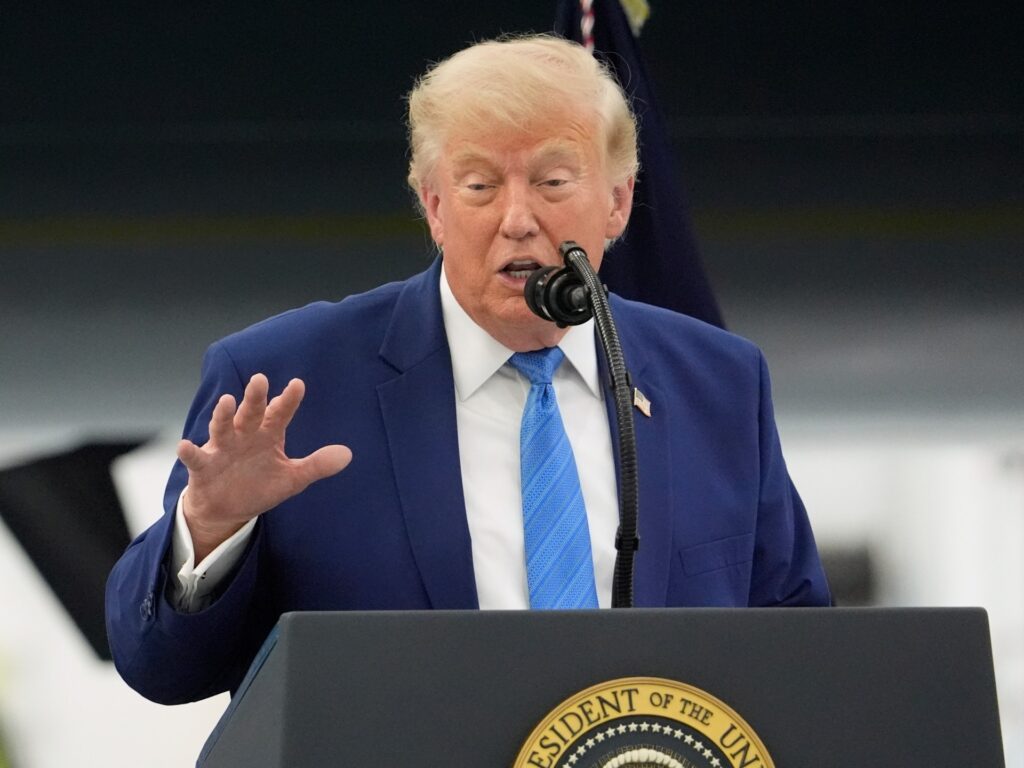
In a recent declaration, former President Donald Trump has emphatically stated that Iran will not be permitted to impose tolls on shipping through the Strait of Hormuz, a vital waterway for global oil transit. This assertion comes amid ongoing tensions and complex negotiations between the United States and Iran regarding navigation rights and regional security.
The Strait of Hormuz is a narrow passage connecting the Persian Gulf with the Gulf of Oman and the Arabian Sea, making it one of the world’s most crucial chokepoints for oil transport. Approximately one-fifth of the world’s petroleum passes through this strait, underscoring its strategic importance.
Trump’s statement follows the establishment of a US-Iran memorandum of understanding (MOU), which temporarily regulates certain activities in the strait. According to the MOU, there is no prohibition against charging tolls in the future, just a deferral during an initial 60-day period. This provision has sparked debates and concerns among global maritime operators and energy markets.
While Trump vowed that Iran will not implement any toll during this initial period, he suggested that the United States might consider imposing its own toll fees on vessels passing through the strait. This bold proposal underlines the administration’s intent to assert control over the crucial maritime corridor and ensure freedom of navigation without interference.
This move seeks to counterbalance Iran’s historical assertions of territorial control in the area and its threats to close the strait in response to international sanctions and military pressures. Iran’s potential imposition of tolls or blockades has been viewed globally as a significant risk to the free flow of energy supplies and world trade.
The US-Iran MOU does not clarify the mechanisms or legal frameworks for how future tolls might be administered or enforced, leaving much uncertainty for international stakeholders. Analysts speculate that any attempt by the US to levy tolls could lead to heightened tensions or escalations, as Iran views such actions as infringements on its sovereignty and regional influence.
Maritime security experts emphasize the importance of multilateral agreements and diplomatic engagement to ensure that the Strait of Hormuz remains open and secure for peaceful commercial navigation. They warn that unilateral toll imposition could prompt retaliatory measures and destabilize an already volatile region.
Global energy markets are closely watching the developments, as any disruption or toll imposition in the strait could result in significant fluctuations in oil prices and supply stability. The prospect of new toll charges raises questions about the future costs of maritime shipping and the economic implications worldwide.
In conclusion, Trump’s vow against Iranian tolls in the Strait of Hormuz affirms a policy stance aimed at maintaining US influence in a key geostrategic location. However, the potential US consideration of its own toll fees represents a complex, and possibly contentious, approach to managing navigation and security in this critical maritime corridor. The international community remains attentive to these developments, hopeful for peaceful resolutions and sustained openness of the strait for global trade.