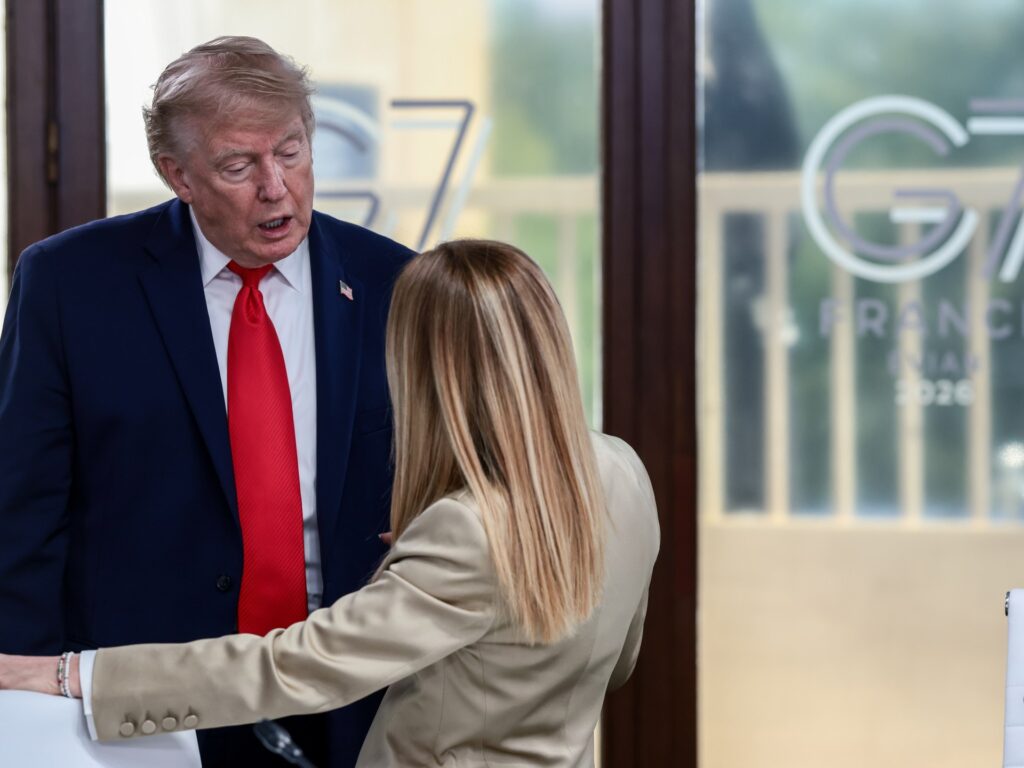
Tensions have escalated between former U.S. President Donald Trump and Italian Prime Minister Giorgia Meloni over recent comments made by Trump. Trump has asserted that Meloni, who leads Italy’s government, sought photo opportunities with him to boost her own political popularity. This claim has amplified an already tense relationship between the once-close leaders.
The dispute comes amid ongoing international complexities, notably the conflict involving Iran, which has intensified diplomatic scrutiny and political alignments worldwide. Once aligned in many political and diplomatic areas, Trump and Meloni’s relationship has visibly deteriorated in recent months.
Trump’s comments suggest that Meloni prioritized personal political gain over genuine diplomatic partnership, alleging that she used their interactions as publicity tools. This accusation has drawn various reactions from political commentators and officials in both Europe and the United States.
Meloni, who has positioned herself as a key figure in European politics, has yet to publicly respond in detail to Trump’s remarks. However, her office has stressed the importance of maintaining strong transatlantic relations and working collaboratively on global issues despite differences.
Observers note that the timing of Trump’s comments is significant, given the heightened tensions between Western countries and Iran. Both the U.S. and Italy are navigating complex geopolitical landscapes, and rifts between their leaders could complicate allied efforts.
The dispute highlights the fragile nature of international alliances where personal and political ambitions can influence diplomatic ties. Experts warn that such public disagreements could undermine trust and cooperation between countries facing significant global challenges.
Trump’s insistence on Meloni’s motivations has added a personal angle to what could have been a more policy-focused dialogue. This personalizing of political relations could set a precedent for future interactions among world leaders.
The conflict between Trump and Meloni is emblematic of a broader trend where former allies find themselves at odds due to differing strategies and priorities. It underscores the evolving nature of global leadership dynamics in an era marked by rapid political changes and geopolitical uncertainties.
As the world watches these developments, the potential impact on international cooperation, especially pertaining to Iran and broader European security, remains to be seen. Both leaders and their governments face the challenge of balancing personal political ambitions with the necessity of cohesive foreign policy.
In conclusion, the row between Trump and Meloni over alleged photo-seeking is more than a headline-grabbing dispute; it reveals underlying tensions in international relationships amid a complex and volatile global context. How these tensions will affect future U.S.-Italy relations and collective responses to global crises will be a critical area to monitor moving forward.