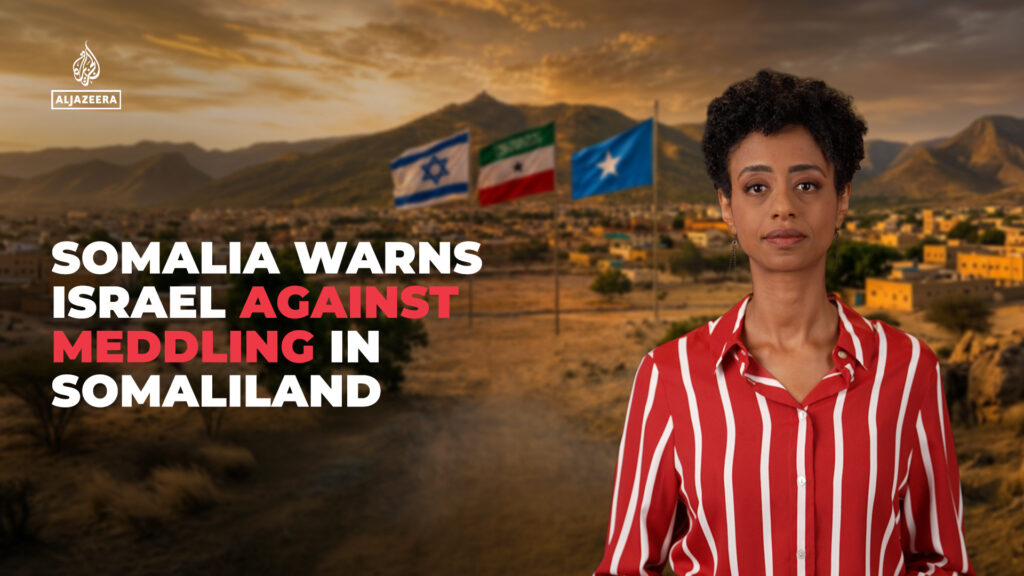
Somalia has issued a stern warning to Israel against interference in Somaliland’s affairs, following a significant diplomatic development this week. Somaliland, a self-declared independent region seeking international recognition separate from Somalia, opened its first overseas embassy in Jerusalem, Israel’s capital. This move marks a historic milestone for Somaliland as it ventures to establish formal diplomatic relations abroad. However, Somalia’s government has expressed strong opposition to this initiative, viewing it as an infringement on its sovereignty and a challenge to its territorial integrity.
Somaliland declared independence from Somalia in 1991, but its independence remains unrecognized by the international community, including Somalia itself. Despite maintaining a relatively stable government and functioning democratic institutions, Somaliland’s status is contentious. The decision to open an embassy in Jerusalem can be seen as an effort by Somaliland to gain international legitimacy and explore new diplomatic partnerships.
The choice of Jerusalem for the embassy is particularly significant due to the city’s geopolitical sensitivity. Jerusalem is claimed as a capital by both Israel and Palestine, making diplomatic moves there highly symbolic. Somaliland’s embassy opening in Jerusalem may also be perceived as an alignment with Israeli interests, which adds a layer of complexity to the regional dynamics.
Somalia’s government condemned the embassy opening, asserting that Somaliland does not have the authority to establish foreign diplomatic missions, as it is considered a breakaway region within its borders. Somalia’s Foreign Ministry issued a statement warning Israel against what it termed “meddling” in the Horn of Africa’s affairs and urged the international community not to recognize Somaliland’s unilateral diplomatic moves.
The reaction underscores the fragile geopolitical landscape in the Horn of Africa, where issues of sovereignty, recognition, and foreign diplomacy are hotly contested. The involvement of Israel, a country already engaged in delicate international relations in the Middle East, brings additional complexity to the situation.
For Israel, opening an embassy in Somaliland represents a diplomatic breakthrough and an opportunity to expand its influence in Africa. Somaliland offers strategic geographical advantages due to its location near critical maritime routes in the Gulf of Aden and the Red Sea. Strengthening ties with Somaliland could provide Israel with new economic and security benefits in a region increasingly important for trade and counter-terrorism efforts.
Experts believe this development might prompt other countries to reconsider their stance on Somaliland’s status. However, such recognition could exacerbate tensions between Somaliland and Somalia, potentially destabilizing the fragile peace in the region.
In summary, Somaliland’s inauguration of an embassy in Jerusalem has triggered diplomatic tensions, with Somalia cautioning Israel against interfering in its internal matters. The incident highlights ongoing challenges related to sovereignty, international recognition, and the strategic interests of external powers in the Horn of Africa.