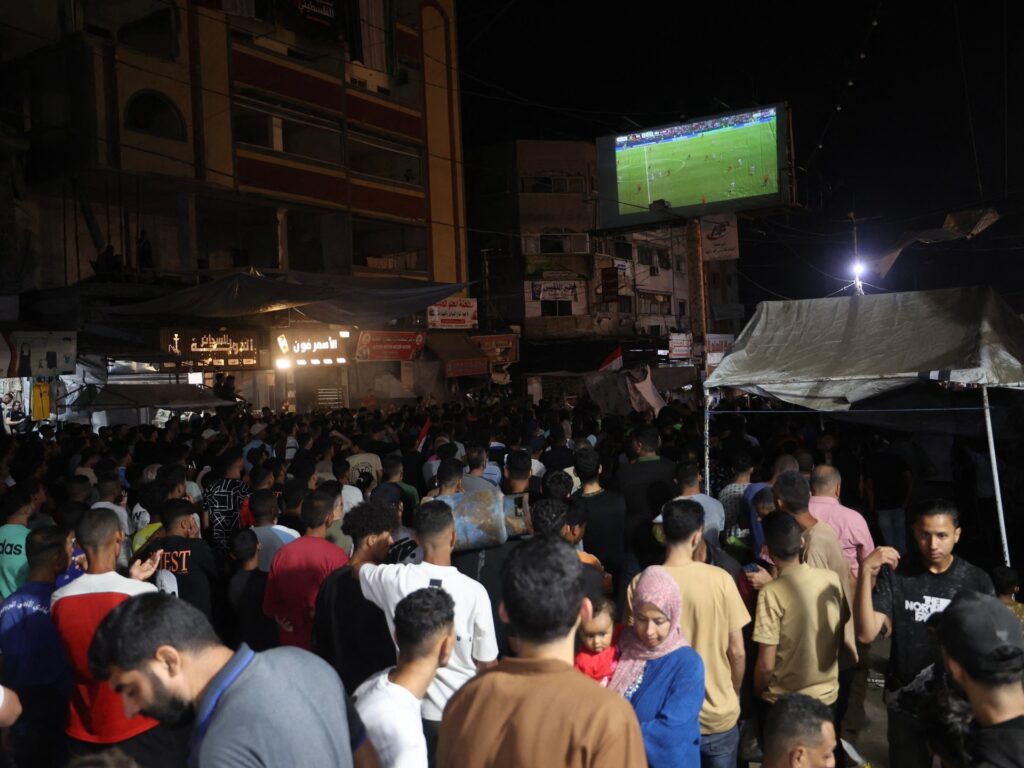
As the world tunes into the FIFA World Cup, residents of Gaza find themselves caught in the midst of war, blackouts, and displacement, yet they still cling to moments of joy by following the global football event. Despite the dire circumstances, Gaza’s football fans seize the World Cup matches as a rare escape, a brief window into normalcy amid their turbulent lives.
The Gaza Strip is no stranger to hardship—prolonged conflict, economic blockade, and frequent power outages have dramatically affected daily life. Many families live in tents or damaged homes, enduring the constant threat of violence and the agony of displacement. Yet, in these bleak conditions, the World Cup offers something precious: a chance to unite and celebrate a shared passion.
Electricity blackouts are a common challenge in Gaza, severely limiting access to televisions and other media. However, community centers, cafes, and some homes with generators or solar panels ensure that football fans can watch matches together. Spirits are lifted as the green flag waves, chants echo, and collective celebrations momentarily drown out the sounds of sirens and explosions.
For many, football symbolizes hope. The sport transcends boundaries and serves as a reminder of a world beyond Gaza’s walls. Children, who grow up amidst rubble, watch their heroes on screen and dream of a future where peace prevails, and they too can play freely.
The social aspect is also vital; watching World Cup games becomes an event that brings families and neighbors together. People gather in small groups, sharing food and laughter, momentarily putting aside worries of survival. These gatherings reinforce community bonds and foster resilience against the backdrop of conflict.
Local shops and street vendors report increased activity during game times, offering snacks and refreshments that contribute to the festive atmosphere. For a few hours, Gaza’s streets vibrate with excitement and hope—feelings often overshadowed by the prevalent despair.
However, the contrast between the celebratory mood during the World Cup and the harsh realities of life in Gaza is stark. News of casualties, displacement, and destruction persistently looms, a grim reminder of the ongoing conflict that refuses to pause.
International observers note that sports, particularly football, play a critical role in psychological relief for conflict-affected populations. In Gaza, this relief is tangible, providing a necessary mental break for residents fueled by the passion for the game.
Amid displacement and uncertainty, the World Cup draws a delicate curtain of joy and normalcy over Gaza. It rekindles hope and temporarily halts the relentless march of hardship, reminding the world that even in the darkest times, the human spirit seeks connection and celebration.
As the tournament progresses, Gaza’s fans continue to cheer, dream, and unite. Their resilience underscores a profound truth: sport can be more than just a game; it can be a beacon of hope, a vehicle for community, and a source of solace when the world feels heavy and uncertain.