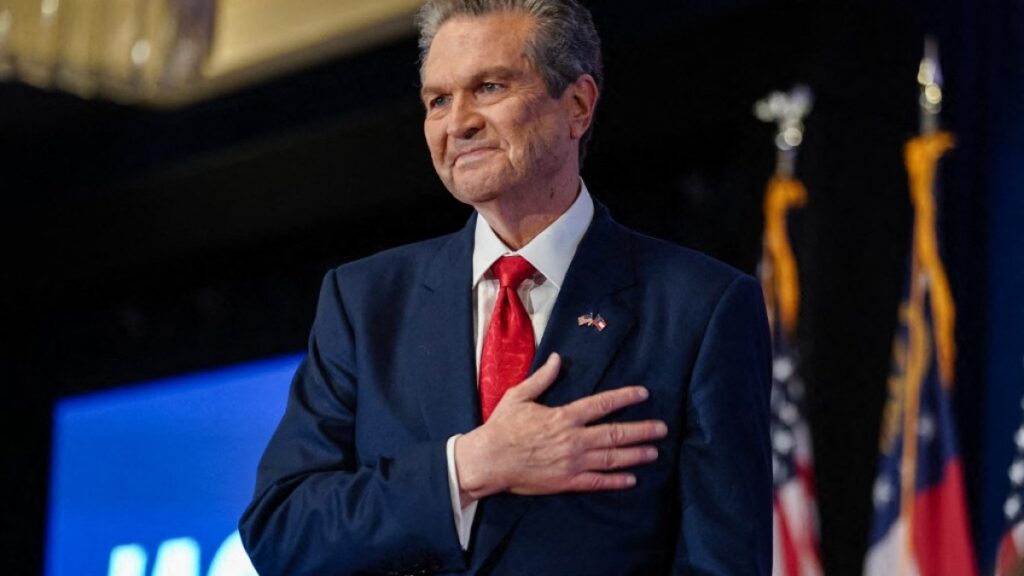
In the recent US primary elections across key states including Oklahoma and Georgia, several Trump-backed candidates faced unexpected setbacks. These primaries, which serve as a precursor to the crucial midterm elections scheduled for November, have revealed a shifting landscape in Republican support and a potential reevaluation of political strategies within the party.
The primary results indicated that candidates endorsed by former President Donald Trump, who had been expected to dominate the races, were largely unsuccessful in securing their party’s nomination. This outcome suggests a nuanced voter sentiment that may not fully align with Trump’s influence, despite his continued prominence in Republican politics.
In Oklahoma, traditionally a Republican stronghold, the Trump-backed candidates struggled to maintain their lead against opponents who campaigned on different conservative platforms. Similarly, in Georgia, another pivotal state, the results showcased a divided electorate with some voters favoring more moderate Republican options over Trump-aligned figures.
These developments are significant as they come just months before the midterm elections, which will determine the control of Congress. The weakened showing of Trump-backed candidates could impact the overall Republican strategy and may influence the party’s messaging and policy focus going forward.
Political analysts interpret these results as a sign that while Trump’s base remains loyal, there is growing resistance within the party and among voters to his direct endorsements. The primaries revealed an appetite for diverse conservative voices, indicating that the Republican Party is not monolithic and that internal debates about its future direction are ongoing.
Moreover, the election outcomes in these states highlight the importance of grassroots mobilization and local campaign efforts, which appear to have played a crucial role in unseating some of the high-profile Trump-backed contenders. This suggests that candidate appeal and ground-level engagement can outweigh national endorsements in certain contexts.
The results also raise questions about the potential for intra-party divisions to influence the general elections. If the Republican base remains split between Trump loyalists and other factions, it could affect voter turnout and the party’s unity in facing Democratic challengers.
In summary, the recent primary elections in Oklahoma, Georgia, and other key states underscore a complex and evolving political environment within the Republican Party. The setbacks for Trump-backed candidates highlight changing voter dynamics and the unpredictable nature of upcoming midterm elections, setting the stage for intense political maneuvering and strategizing in the months ahead.