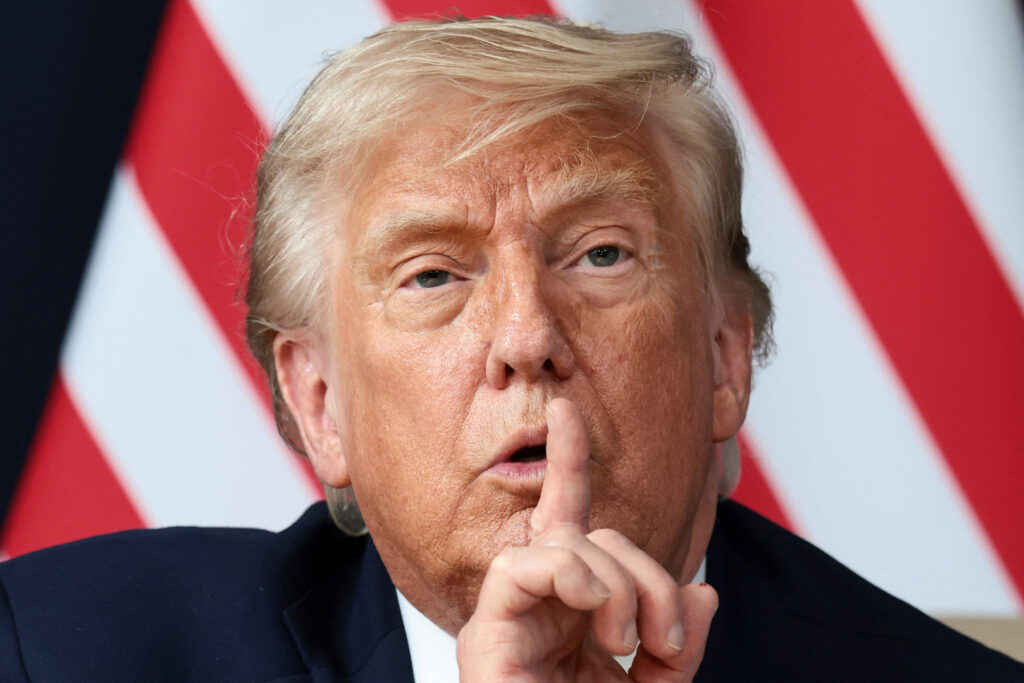
U.S. President Donald Trump attends a bilateral meeting with Indian Prime Minister Narendra Modi (not pictured) during the G7 Summit in Evian-les-Bains, France, June 17, 2026. REUTERS/Evelyn Hockstein
US President Donald Trump has expressed strong confidence in the upcoming Iran deal set to be signed in Geneva on Friday. Describing the agreement as a “very strong” peace deal, Trump emphasized its role as a formidable barrier preventing Iran from acquiring nuclear weapons. The President’s remarks highlight the US administration’s position that the deal will effectively halt Iran’s nuclear ambitions, ensuring regional stability and global security.
The Iran deal, formalized under intense diplomatic negotiations, aims to curb Tehran’s nuclear program through a framework of inspections, limitations on nuclear material, and phased lifting of sanctions. Trump’s characterization reflects a strategic perspective that the deal serves not only as a diplomatic breakthrough but also as a concrete ‘wall’ against potential nuclear proliferation.
Analysts view the deal as a complex achievement, balancing international pressure on Iran with incentives designed to encourage compliance. The agreement includes provisions for rigorous monitoring by international bodies, mostly the International Atomic Energy Agency (IAEA), to ensure Iran adheres strictly to the terms. Such oversight is intended to detect and deter any attempt by Iran to develop nuclear weapons covertly.
Critics of the deal argue that it may not be stringent enough to prevent future nuclear advancement by Iran, but Trump’s administration insists that the comprehensive verification mechanisms embedded in the agreement make it robust and enforceable.
The upcoming signing ceremony in Geneva is expected to attract considerable international attention, symbolizing a step forward for diplomatic engagement with Tehran. Trump’s declaration suggests that the United States is committed to a policy of containment through diplomacy rather than military intervention.
This stance marks a shift from previous US administrations’ approach, with Trump portraying the deal as a historic achievement in preventing nuclear conflict in one of the most volatile regions of the world. The agreement is hoped to open pathways for improved relations between Iran and the West and lay the foundation for sustained peace and security.
The President’s message sends a clear signal that any attempts by Iran to circumvent the deal will be met with swift and decisive action. Enhanced surveillance, sanctions relief contingent on compliance, and active diplomatic engagement form the pillars of this new strategy.
As the world watches, the Iran deal stands as a critical diplomatic milestone. Trump’s assertion of its strength underscores the administration’s belief that well-constructed international agreements can serve as effective tools for non-proliferation and maintaining global peace.
In summary, President Trump’s proclamation at the lead-up to the Geneva signing ceremony positions the Iran deal as a “very strong” defense against nuclear weapons development. The agreement’s success or failure will be closely monitored by governments, international organizations, and global citizens alike, as it could shape the future of nuclear diplomacy and Middle Eastern geopolitics for years to come.