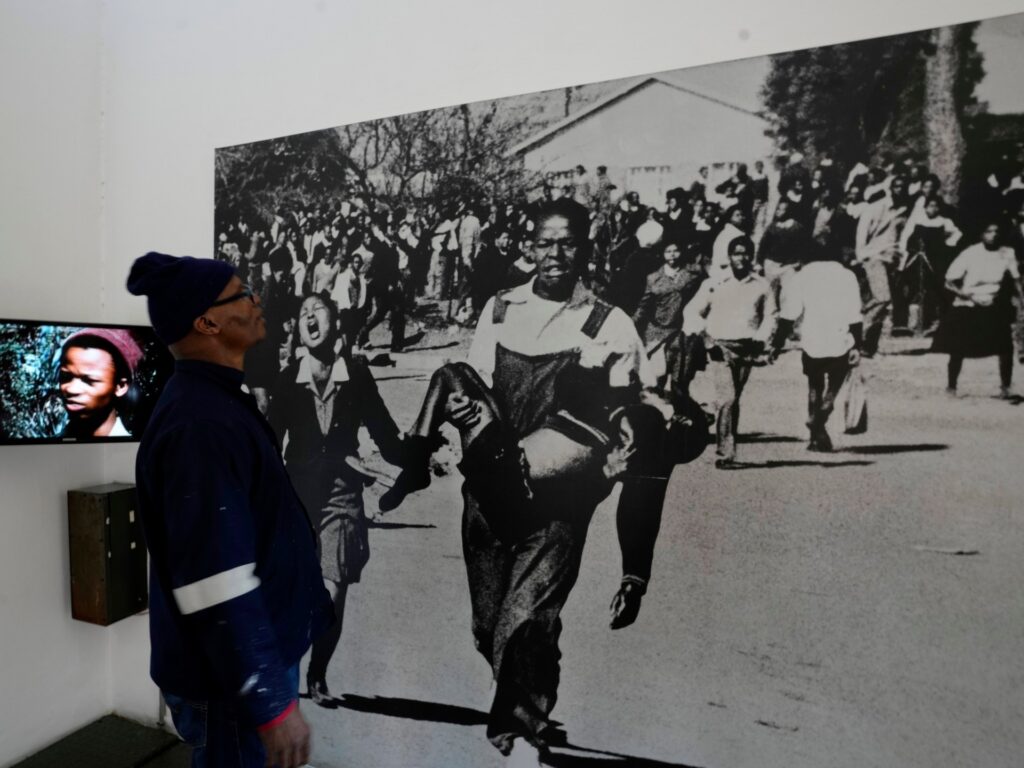
Fifty years after the Soweto riots, South Africa stands at a crossroads, reflecting on a pivotal moment in its history that marked the fierce resistance of black students against apartheid’s oppressive education system. On June 16, 1976, thousands of black students in Soweto bravely took to the streets to protest against the compulsory use of Afrikaans as a medium of instruction in schools, a policy symbolizing broader systemic discrimination under apartheid.
The Soweto uprising triggered a nationwide wave of protests and marked a turning point in the struggle against apartheid, drawing international attention to the injustices faced by black South Africans. The tragic events saw many students shot and killed by police forces, but their courage ignited a spirit of resistance that resonated throughout the country.
In the decades following the riots, South Africa underwent significant transformation. The end of apartheid in the early 1990s led to the establishment of a democratic government, spearheaded by leaders committed to dismantling the institutional racism that had dictated social and economic policy for decades.
One of the most significant post-apartheid changes has been in education. The new government abolished the discriminatory policies that had segregated and deprived black South Africans of quality education. Instead, a framework was introduced to promote equal access to schooling, curriculum reform emphasizing inclusivity, and investment in school infrastructure.
Despite these efforts, challenges remain. Many schools, especially in historically disadvantaged areas, still face issues such as overcrowding, underfunding, and lack of resources. The legacy of apartheid-era inequalities in education manifests in disparities in performance and opportunities.
Beyond education, socio-economic transformation has been a core focus. Policies aimed at redressing inequality, such as Black Economic Empowerment (BEE), land reform, and affirmative action, have sought to bridge gaps created by apartheid. These policies have had mixed success, facing criticism and challenges but also helping to create a more inclusive society.
Moreover, the memory of Soweto remains a powerful symbol of resistance and resilience. Annual commemorations honor the bravery of the students and reinforce a national commitment to social justice and human rights. The uprising also contributed to a growing youth activism movement, influencing new generations to engage in political and social change.
South Africa today is a nation transformed but still grappling with the deep scars of its past. Economic disparities and social injustices persist, but the spirit of Soweto—the courage to confront oppression—continues to inspire efforts toward equality and reconciliation.
As the country marks 50 years since the Soweto riots, it is clear that while much has changed, the journey toward fully realizing the dreams of those who protested on that fateful day continues. The legacy of Soweto calls for ongoing vigilance, commitment, and action to ensure that the promise of a just and equal South Africa becomes a reality for all its citizens.