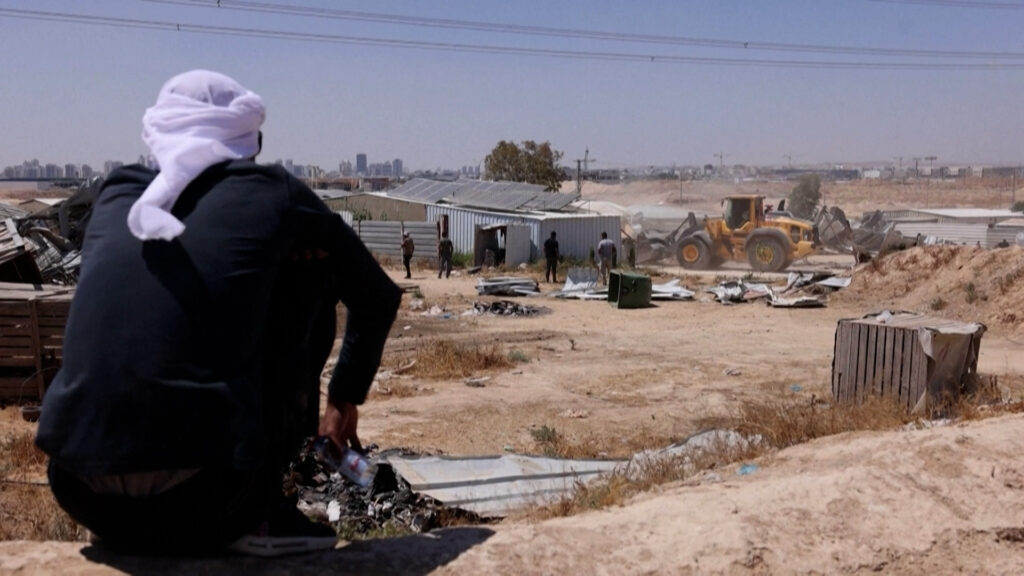
In a distressing development from Beersheba, Palestinian Bedouin villagers have begun demolishing their own homes after receiving demolition orders from Israeli authorities. This unprecedented action is a direct response to the official directives issued to them, compelling residents to dismantle their dwellings.
The demolition orders come as part of a broader enforcement policy by Israeli authorities targeting unauthorized structures in the region. Beersheba, the largest city in the Negev Desert, has a significant population of Bedouin communities who have historically faced challenges regarding land ownership and recognition of their settlements.
Many Bedouins reside in homes that Israeli officials classify as illegal constructions due to a lack of formal permits, which are often difficult to obtain. As a result, these communities are caught in a cycle of building, demolition orders, and forced evictions, leading to socio-economic and humanitarian concerns.
By undertaking self-demolition, the villagers aim to avoid the additional penalties and expenses associated with forcible demolitions. This act also highlights the desperation and frustration faced by these communities, who see their homes dismantled not only by external forces but by their own hands under duress.
Human rights organizations have expressed concern over the situation, calling for dialogue and solutions that respect the rights and dignity of the Bedouin populations. They emphasize the need for legal frameworks that provide security of tenure and access to services for these historically marginalized groups.
The Israeli government maintains that the enforcement actions are necessary to uphold the rule of law and urban planning regulations. However, critics argue that the policies disproportionately impact Palestinian Bedouins, exacerbating tensions and undermining efforts toward peaceful coexistence.
This ongoing issue sheds light on the complex and sensitive nature of land disputes in the region, where competing historical narratives and legal interpretations complicate resolution efforts. The destruction of homes, especially through forced or self-initiated demolitions, has profound effects on community stability, well-being, and cultural heritage.
International observers have urged all parties to engage in constructive dialogue to find equitable and sustainable solutions. The focus remains on protecting vulnerable populations while addressing legal and administrative challenges in ways that promote coexistence and respect for human rights.
As the situation unfolds, the lives of the Palestinian Bedouin villagers in Beersheba continue to be shaped by these demolition orders, underscoring the urgent need for policies that prioritize human dignity and practical resolutions for land and housing disputes in the region.