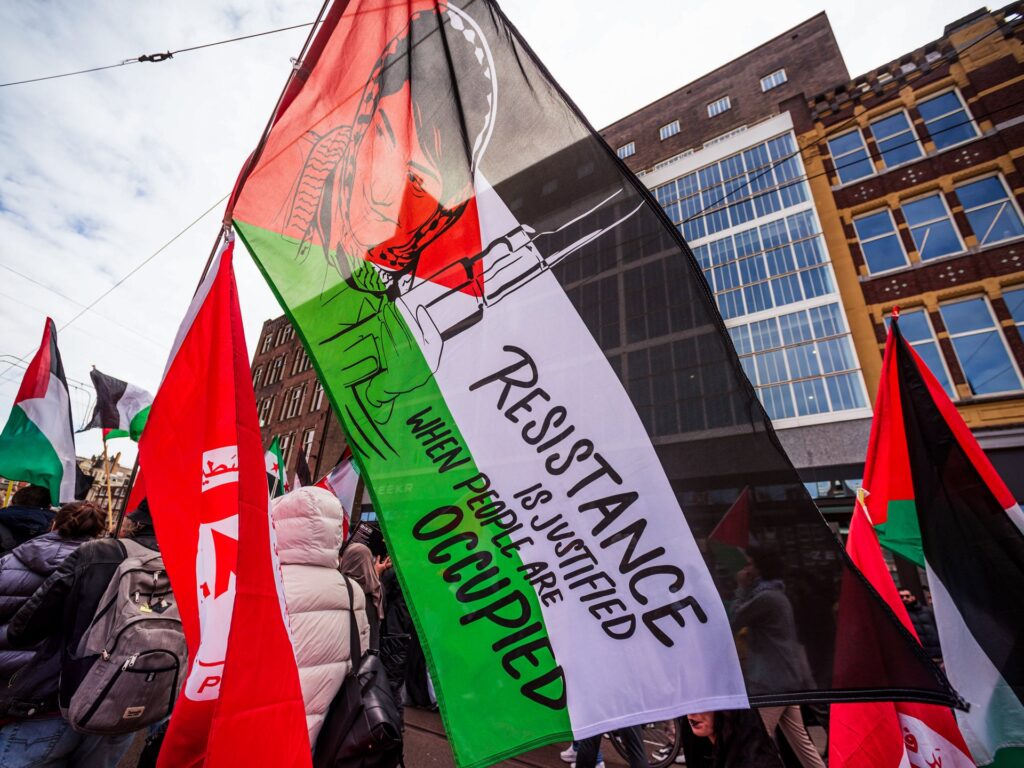
Recent events have stirred significant debate in the Netherlands regarding its stance on Israel, signaling a potential shift in public and political perspectives. Key developments include a landmark court case, a notable Eurovision boycott, and new polling data on Gaza, all contributing to a broader conversation about the country’s ties with Israel and Palestine.
The court case in question has been a pivotal moment, drawing attention to issues of justice and accountability in the context of the Israeli-Palestinian conflict. It has prompted discussions within Dutch society about the appropriate legal and moral responses to the ongoing situation in Gaza.
In addition to legal proceedings, cultural expressions such as the Eurovision boycott have highlighted a growing willingness among some Dutch citizens and groups to take a stand against perceived injustices. This boycott reflects a broader trend of increased activism and public engagement with international human rights issues, particularly those involving the Middle East.
Polling data from Gaza residents, recently covered in the Netherlands, has further influenced public opinion. The glimpses into the lived realities and sentiments of Palestinians have fostered empathy and a re-evaluation of previously held positions regarding the conflict and the Dutch government’s policies.
These developments have collectively sparked a vigorous debate across the Netherlands, where issues of foreign policy, humanitarian concerns, and national values are being closely examined. Discussions are increasingly focusing on whether the Netherlands should reassess its traditional alignment and adopt a more balanced or critical stance toward Israel.
Political figures and civil society are engaging in this dialogue, reflecting a society wrestling with complex questions around justice, international law, and human rights. The debate also underscores the impact of grassroots movements and public opinion in shaping state policies and international relations.
As these conversations unfold, the Netherlands may be on the cusp of a significant shift in its approach to the Israeli-Palestinian conflict. While official policies have historically aligned with Israel, growing public pressure and evolving moral considerations could lead to a reevaluation of diplomatic and humanitarian support.
The intersection of legal cases, cultural expressions, and empirical data from conflict zones is proving to be a powerful catalyst for change. The Dutch example illustrates how global issues resonate locally, driving national debates and potentially influencing international stances.
In summary, recent events have energized a reexamination of the Netherlands’ relationship with Israel, marked by calls for justice and a more nuanced understanding of the conflict. Whether this will translate into concrete policy changes remains to be seen, but the momentum for discussion and reflection is undeniably strong.