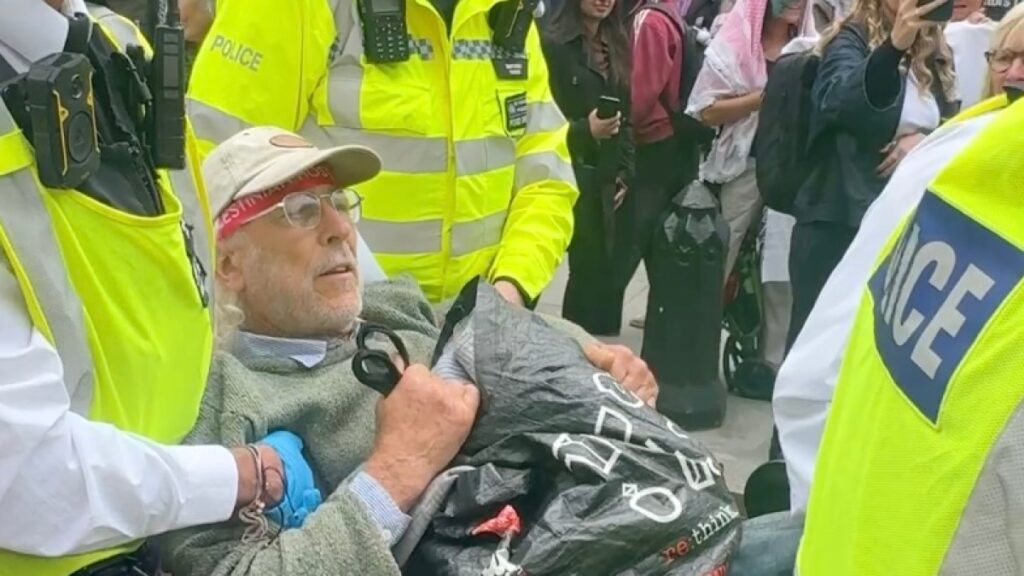
In a significant legal decision, a UK court has upheld the government’s ban on the group Palestine Action, officially designating it as a ‘terrorist’ organization. This ruling marks a pivotal moment in the UK’s approach to handling groups involved in politically sensitive and sometimes violent protests.
Palestine Action, known for its direct action campaigns and protests, particularly targeting arms manufacturers and companies allegedly linked to the Israel-Palestine conflict, has long been under scrutiny by UK authorities. The group’s activities, which include demonstrations, occupations, and disruptions at industrial sites, have often been described by supporters as acts of civil disobedience aimed at promoting Palestinian rights.
However, UK security officials and government representatives argue that Palestine Action’s methods and affiliations cross the line into supporting terrorism. The court’s decision reflects concerns over public safety and national security, emphasizing that the group’s activities are not merely protests but are connected to terrorist conduct.
The ruling came after extensive legal proceedings where the court reviewed evidence including surveillance data, intercepted communications, and testimonies about the group’s operations. Authorities assert that the designation allows for stronger legal tools to prevent the group’s actions, including freezing assets and criminalizing membership.
Critics of the ban, including human rights organizations and activists, warn that this decision could suppress legitimate political dissent and activism. They argue that the label ‘terrorist’ is being applied too broadly, potentially infringing on freedoms of expression and assembly.
The UK government maintains that the ban is a necessary measure to protect the public and uphold law and order, particularly in light of escalating tensions and violence related to the Israel-Palestine conflict. It also sends a clear message to other groups that the state will take firm action against organizations deemed to threaten peace and security.
Palestine Action’s legal team has vowed to appeal the ruling, emphasizing their commitment to non-violent protest and their opposition to the government’s characterization of their actions. The case continues to spark intense debate across political, legal, and social platforms in the UK, highlighting the delicate balance between security concerns and civil liberties.
This development comes amidst broader discussions on how governments worldwide classify and respond to protest groups, especially those involved in contentious geopolitical issues. The UK’s stance may influence similar actions in other countries dealing with activism related to the Israel-Palestine conflict.
As the situation evolves, observers note that the court’s decision may have long-lasting implications for activism, counter-terrorism policies, and the rights of political groups in the UK. The international community is watching closely, reflecting on the intersections of security, justice, and human rights in complex conflict zones.