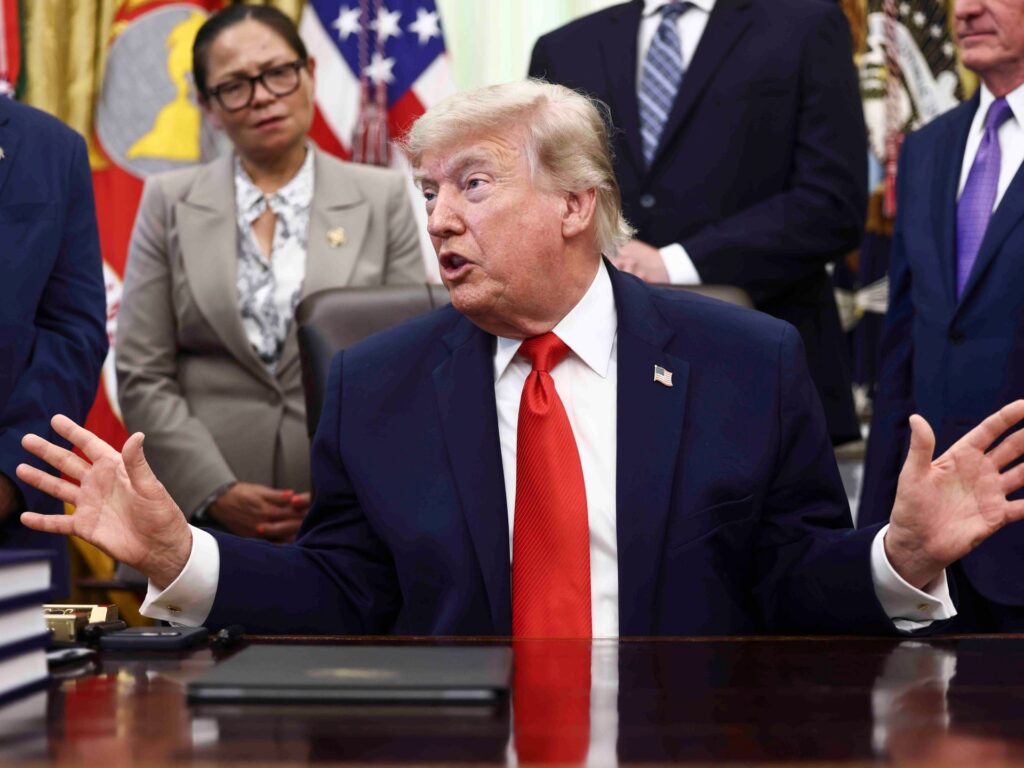
In a significant development amidst ongoing Middle Eastern tensions, former U.S. President Donald Trump has voiced strong condemnation against recent Israeli attacks on Beirut. Trump’s statement underscores the urgency of de-escalating conflict in the region, particularly during a critical period when diplomatic efforts toward an Iran nuclear deal are progressing.
Trump expressed his concerns, saying that there should be “no more attacks” by either Israel or Hezbollah, especially on what he described as a “special day”—a reference to the expected signing of the Iran agreement. This call for restraint highlights the fragile nature of peace talks and the potential ramifications of renewed violence.
The attack on Beirut has raised alarms among international observers, fueling fears that any escalation could jeopardize decades-long efforts toward establishing a stable and peaceful framework in the Middle East. Israel’s military action, targeted at Hezbollah positions, came at a time when diplomatic channels were actively engaged in negotiations to finalize the Iran nuclear deal.
Trump’s comments reflect a rare moment of direct involvement and emphasize the continued significance of the Iran deal in the broader geopolitical context. The deal, which aims to limit Iran’s nuclear capabilities in exchange for lifting economic sanctions, has long been a cornerstone of U.S. foreign policy strategies aimed at curbing proliferation and fostering regional security.
Analysts note that Trump’s emphasis on no further attacks signifies an acknowledgment of the delicate balance that must be maintained to prevent a larger conflict. The potential signing of the Iran deal represents a diplomatic breakthrough that could shift power dynamics and contribute to easing tensions between nations traditionally divided by conflict and distrust.
The statement also implicitly criticizes both Israel and Hezbollah for their roles in perpetuating cycles of violence. By urging cessation of hostilities, Trump advocates for a diplomatic path forward, underscoring the importance of timing and the necessity to prioritize peace over military confrontations.
Following the attack, international diplomatic circles have intensified calls for calm and dialogue. Many stakeholders view the Iran deal as a critical avenue for achieving long-term stability in the region, which has been plagued by intermittent warfare, proxy conflicts, and political unrest.
Trump’s position suggests a pragmatic approach, recognizing that military action, especially during pivotal moments of negotiation, can undermine efforts toward lasting agreements. Furthermore, his comments may be seen as an attempt to influence public opinion and political leaders to recognize the benefits of diplomacy over conflict.
As the situation develops, key questions remain about the readiness of all parties involved to embrace peace. The success of the Iran deal hinges on mutual trust, goodwill, and verification mechanisms—all of which can be threatened by acts of aggression such as the recent attack on Beirut.
In summary, Trump’s condemnation of the attack and call for restraint come at a crucial juncture. While emphasizing the closeness of the Iran deal, he advocates for calm and diplomacy, highlighting the potential for transformative progress in Middle Eastern geopolitics if violence can be curtailed. The international community watches closely as these events unfold, hopeful that peace will prevail.”