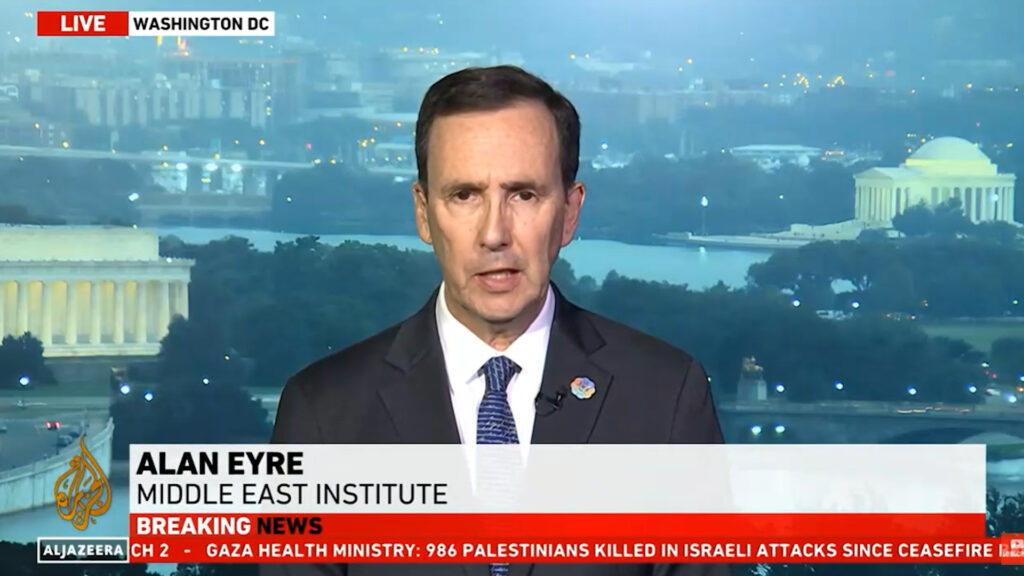
In a recent development, US diplomat Alan Eyre revealed that Israel’s strike in Beirut significantly influenced then-President Donald Trump’s announcement regarding Iran. This revelation sheds light on the complex interplay of Middle Eastern geopolitics and US foreign policy decisions.
The strike in Beirut, attributed to Israel, reportedly pushed Trump towards making a public announcement about Iran. Eyre emphasized that despite the announcement that suggested a ceasefire or an easing of tensions between the US and Iran, no official deal has been finalized. He clarified that any such agreement remains contingent upon formalization.
This incident underscores the delicate nature of diplomatic negotiations in the region. The intertwined actions of regional powers like Israel and global influences such as the US administration have profound effects on the stability and peace prospects in the Middle East.
Eyre’s comments suggest that public declarations, while significant, do not always translate immediately into binding agreements. The formalization process, involving detailed discussions and legal frameworks, is essential to legitimize and enforce any ceasefire or diplomatic resolution.
The Beirut strike’s timing and its impact on US policy illustrate how military actions can directly affect diplomatic timelines and announcements. It also highlights the strategic considerations that governments weigh when balancing military responses and diplomatic engagements.
Furthermore, this situation reflects the broader challenges of achieving lasting peace between the US and Iran, with Israel’s security concerns adding layers of complexity. The atmosphere of mistrust and strategic posturing continues to shape the negotiations, requiring patience and careful diplomacy.
In summary, while the US-Iran ceasefire announcement gave hope for improved relations, Alan Eyre’s remarks remind us that the absence of a finalized deal means uncertainties remain. The geopolitical landscape in the Middle East remains dynamic, with ongoing developments influencing the trajectory of peace efforts.