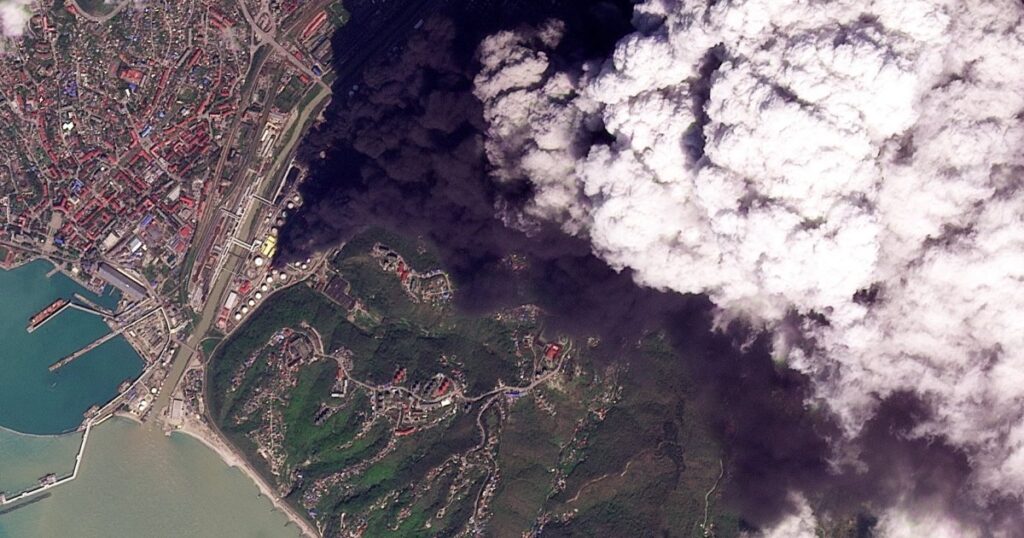
Ukraine’s Security Service (SBU) has announced a renewed focus on targeting Russian energy facilities, following a recent assault on the Tamanneftegaz sea terminal, located off the coast of Russia. The attack triggered consequential fires at the terminal, highlighting Ukraine’s continued strategic efforts to disrupt Russia’s energy capabilities amidst ongoing conflict.
The Tamanneftegaz terminal is a crucial component of Russia’s vast energy infrastructure. It serves as a pivotal hub for the processing and shipment of oil and gas resources. Damage to this facility could have significant ramifications on Russia’s energy output and the broader economic stability tied to its energy exports.
Officials from Ukraine’s SBU reported that the operation was executed with precision, causing extensive fires that temporarily hindered terminal operations. This strike marks a notable escalation in Ukraine’s campaign to weaken Russia’s energy sector, which is a key revenue source fueling Moscow’s military efforts.
Energy infrastructures like Tamanneftegaz are vital not only for domestic consumption within Russia but also for supplying energy to international markets, especially in Europe. By targeting these assets, Ukraine aims to constrain Russia’s ability to finance its ongoing military operations and to increase pressure for a cessation of hostilities.
The fires at the terminal were reportedly intense, requiring substantial firefighting efforts to bring the situation under control. While detailed assessments of damage are ongoing, initial indications point to significant disruptions in the terminal’s operational capacity.
This move by Ukraine follows a pattern of attacks on Russian energy installations, reflecting a broader strategic intent to degrade the opponent’s logistical and economic capabilities. Analysts note that such operations send strong signals to Russia regarding the vulnerabilities of its critical infrastructure amidst the conflict.
Russia, on its part, has condemned the attacks as acts of sabotage, vowing to protect its energy assets vigorously. Moscow’s response is expected to include heightened security measures and possible retaliatory actions against Ukrainian targets.
The situation remains fluid, with both sides deeply entrenched in their conflict. Ukraine’s decision to continue targeting energy infrastructure highlights the war’s dimension beyond conventional battlefields, extending into economic warfare and infrastructure sabotage.
International observers have expressed concern about the potential environmental and economic impacts of these attacks, urging restraint and the pursuit of diplomatic solutions to prevent further escalation.
In summary, the recent attack on the Tamanneftegaz terminal marks a significant development in the ongoing conflict between Ukraine and Russia, underscoring Ukraine’s commitment to debilitating Russian energy resources. The implications for regional energy security and the broader geopolitical landscape remain to be seen as the conflict continues to evolve.