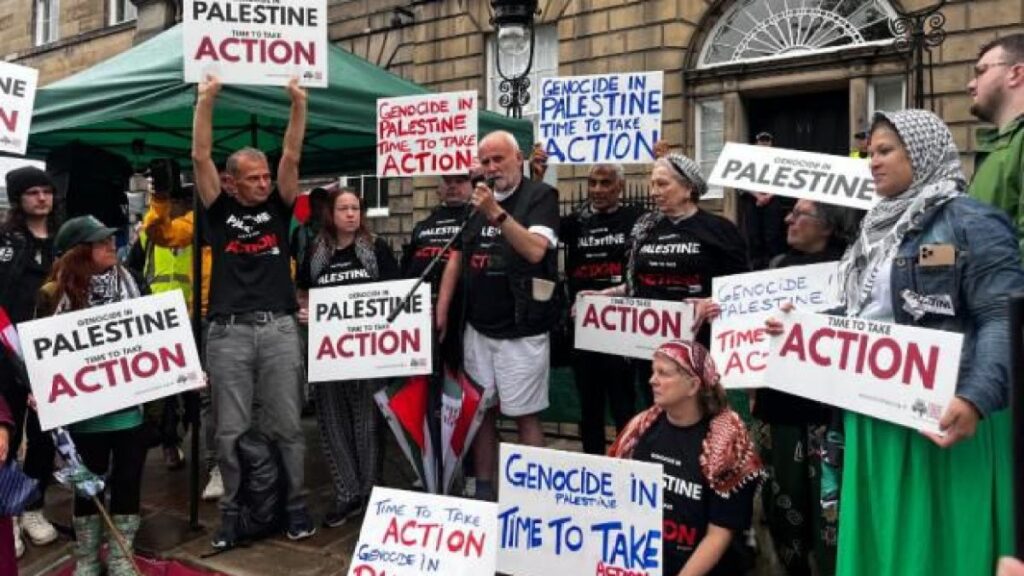
Supporters of Palestine Action in Scotland have expressed their frustration and concern after being denied the right to protest what they describe as genocide against Palestinians. The group, which has been banned by the UK government, is currently fighting the proscription in London, while similar legal and political battles are also unfolding in Edinburgh.
Palestine Action, a grassroots activist organization, has gained attention for its direct actions targeting companies and organizations involved in activities they associate with the Israeli occupation and alleged human rights abuses. Their supporters argue that their protests are a vital exercise of the right to free speech and assembly in opposition to what they view as ongoing genocide.
However, the UK government has banned Palestine Action, labeling it as an extremist group under anti-terrorism legislation. This has led to increased tensions, with activists in Scotland feeling particularly aggrieved as they face heightened restrictions on their ability to protest and advocate.
In London, the proscription of Palestine Action is being legally challenged by the group and its advocates. They seek to overturn the ban, arguing that it infringes on civil liberties and the right to protest lawful political causes.
Meanwhile, in Edinburgh, supporters of Palestine Action report facing similar suppression. Public demonstrations and planned protests have been disrupted or prevented by local authorities citing security concerns and the broader ban on the group. This has fueled accusations that the government is using counter-terrorism laws to silence legitimate political dissent.
Civil rights organizations have weighed in, warning that such bans might set a dangerous precedent curtailing freedom of expression, especially when applied to political advocacy related to human rights issues. They emphasize the importance of allowing peaceful protest as a cornerstone of democratic societies.
The controversy taps into the larger, ongoing debate about the Israeli-Palestinian conflict and the role of activism in shaping international opinion and policy. Supporters of Palestine Action assert that their protests are aimed at raising awareness about what they describe as systematic injustice and violence against Palestinians.
Critics argue that direct action protests, especially those involving property damage or disruption, cross the line into illegal activity and warrant government intervention to maintain public safety.
The legal process in London is ongoing, with a decision expected in the coming months that could have significant implications for activist groups across the UK. Meanwhile, Scotland’s debate highlights regional divisions in how the right to protest is managed and enforced.
As Palestine Action supporters continue their efforts, the question remains: how to balance national security concerns with the fundamental democratic right to protest alleged human rights abuses. The outcome could reshape the landscape of political activism related to the Israeli-Palestinian conflict and beyond.
This case is emblematic of larger global struggles over protest rights, civil liberties, and the response of governments to activism that challenges powerful political narratives. For now, Scotland’s Palestine Action supporters remain determined to fight for their right to speak out against what they see as genocide, even as the state pushes back with legal force.