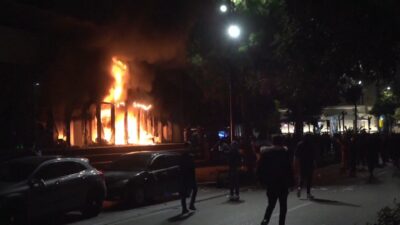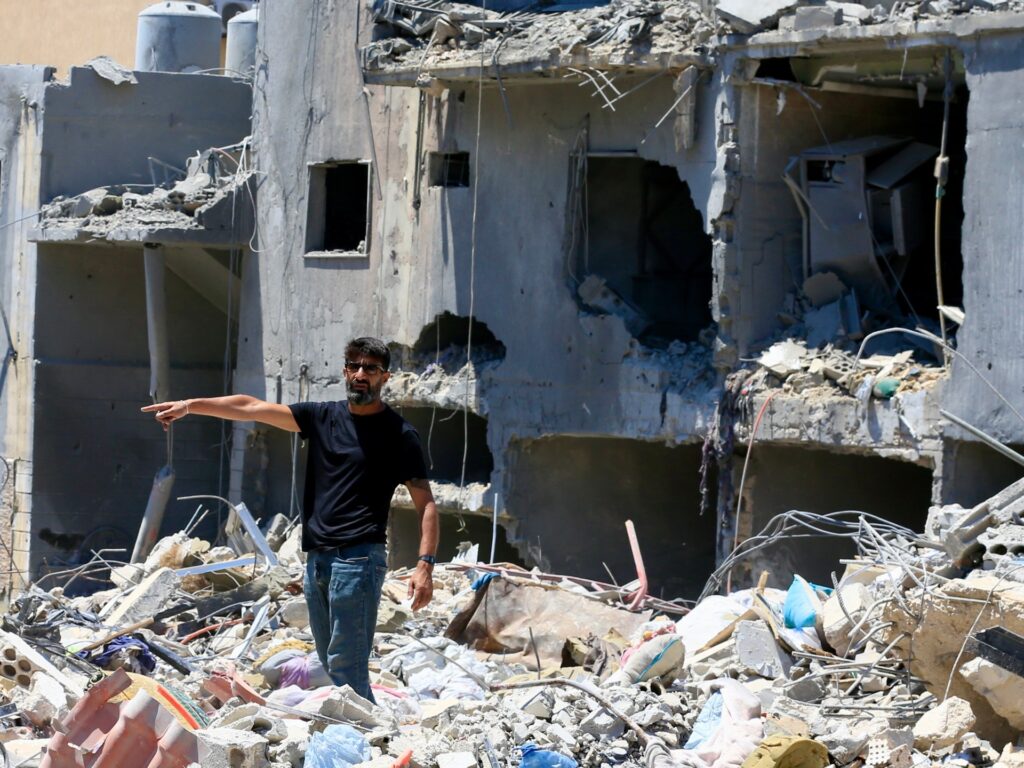
In a recent escalation of tensions in the Middle East, Israel has launched military strikes targeting southern Lebanon, resulting in the death of one individual. The attacks have significantly heightened fears of further conflict in the region.
The Israeli military has also issued urgent forced displacement orders to the residents of 20 towns and villages in southern Lebanon. These orders require inhabitants to evacuate their homes immediately, marking a serious development in the ongoing conflict dynamics.
The affected communities are primarily located near the border areas, which have historically been a flashpoint for confrontations between Israeli forces and Lebanese groups.
Military analysts suggest that the forced evacuations could be part of a broader strategy to secure the border and reduce risks to Israeli citizens amid rising hostilities.
Lebanese officials have condemned the strikes and displacement orders, viewing them as violations of sovereignty and humanitarian law. They have called for international intervention to de-escalate the situation and assist displaced civilians.
The United Nations and other global bodies have expressed deep concern over the developments. Calls for restraint and dialogue have been issued to prevent escalation into a larger, more devastating conflict.
The civilian population in southern Lebanon is facing immediate hardships, with displacement adding to the ongoing challenges of security and economic instability in the region.
Human rights organizations are mobilizing to provide aid and highlight the critical need for protecting civilians caught in the crossfire.
The situation remains fluid, with further military and diplomatic actions expected in the coming days. Observers emphasize the importance of a peaceful resolution to avoid greater regional destabilization.
This latest episode adds to a long history of conflict between Israel and Lebanese factions, underscoring the complex and volatile nature of their relationship.
Efforts by international mediators continue in parallel, seeking avenues for dialogue and peace negotiations to address underlying issues fueling the cycle of violence.
Residents ordered to evacuate face urgent challenges in finding shelter and ensuring safety amid the chaos.
The international community watches closely as events unfold, recognizing that the ramifications extend beyond the immediate area, potentially impacting broader Middle Eastern stability.
As the tension escalates, humanitarian concerns grow, highlighting the necessity for robust support mechanisms for displaced people.
The Israeli military’s actions and Lebanon’s responses will likely influence the geopolitical landscape, shaping future interactions between the two nations.
In this context, the balance between security imperatives and human rights is a critical and contentious aspect of ongoing debates.
The coming days will be pivotal in determining whether the current flare-up will subside or escalate into further violence.
Stakeholders from local to international levels are actively engaged in efforts to prevent a wider conflict and promote peaceful coexistence.
This incident serves as a stark reminder of the fragility of peace in regions marked by long-standing disputes and the profound human cost involved.
Continuous monitoring and responsive diplomacy remain essential to navigate the challenges and seek sustainable solutions.
The forced displacement orders represent one of the most severe measures seen in recent years, demonstrating the intensity of the security situation.
Communities across southern Lebanon are bracing for the impact of these developments, with urgent relief operations likely to follow.
The broader geopolitical implications underscore the interconnected nature of Middle Eastern conflicts, where local incidents can have international repercussions.
Efforts to document and report on the human impact are critical to inform global audiences and mobilize support.
The conflict’s escalation comes at a time when the region is already grappling with multiple political, economic, and humanitarian crises.
The world hopes for a swift de-escalation and a return to dialogue, prioritizing peace and stability for all affected populations.
This episode will be closely studied as part of ongoing analyses of Middle Eastern security and humanitarian issues, contributing to understanding and future policy making.