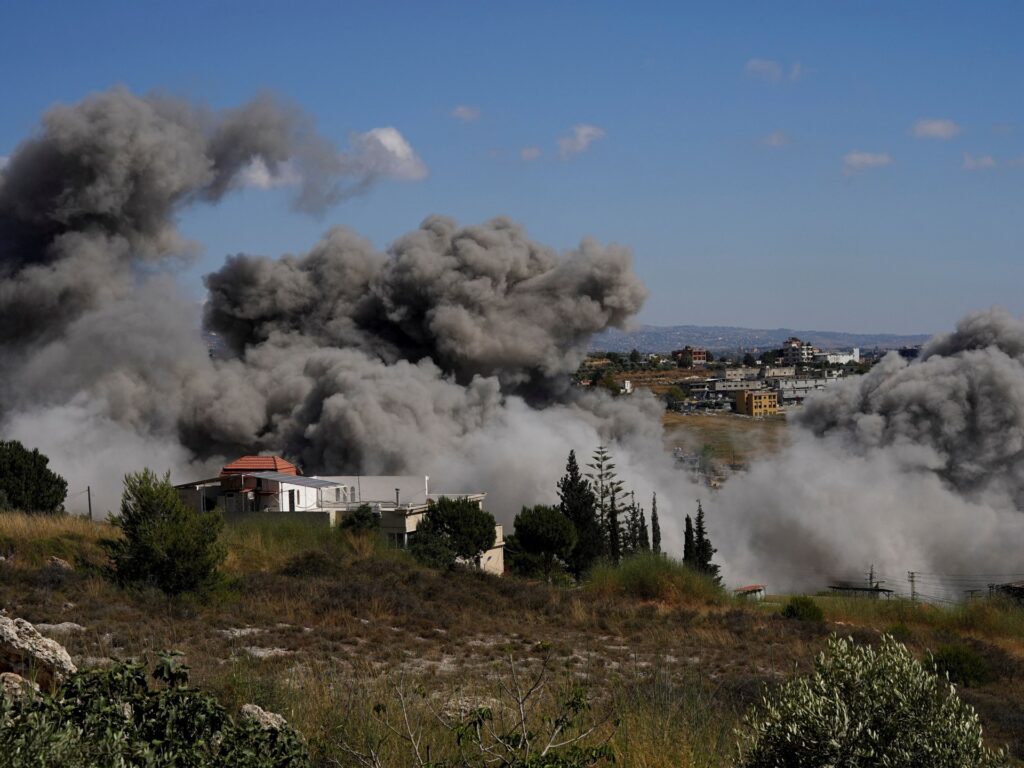
On Saturday, southern Lebanon was rocked by a series of explosions as Israel launched a continued offensive in the region. The attacks reflect escalating tensions in the area, amidst broader geopolitical developments involving Iran and the United States.
The source of the explosions was reported to be Israeli airstrikes targeting multiple sites in southern Lebanon, a region known for its complex security dynamics and the presence of various armed groups. This offensive represents a sharp escalation that risks further destabilizing the already fragile situation in Lebanon.
These attacks come at a pivotal moment internationally, as the United States announced that a deal to revive the Iran nuclear agreement is expected to be signed on Sunday. The deal, which both parties have negotiated intensely over the past months, aims to curb Iran’s nuclear capabilities in exchange for lifting some economic sanctions.
The timing of the Israeli attacks amid the nearing Iran deal has led to widespread speculation about the geopolitical implications. Israel has historically opposed the Iran nuclear agreement, viewing Iran as a significant threat to its security. Therefore, this military action may be interpreted as an attempt to assert pressure or signal dissent against the deal.
Lebanese officials condemned the attacks, calling for immediate cessation of hostilities and warning of potential spill-over effects into the broader region. The Lebanese government has expressed concern about civilian casualties and infrastructure damage resulting from the airstrikes.
International reactions have varied, with calls for restraint from global powers seeking to maintain stability in the Middle East. The United Nations has urged all parties to avoid escalation and protect civilian lives.
The simultaneous occurrence of Israeli attacks in Lebanon and the impending Iran nuclear deal underscores the complexity of Middle Eastern geopolitics, where local conflicts intersect with global diplomatic efforts.
As the situation develops, international observers remain vigilant, recognizing that the outcomes could significantly shape the security landscape of the Middle East. The potential signing of the Iran deal on Sunday could either ease tensions or further complicate relations depending on how all parties respond.
For now, southern Lebanon is bracing for the consequences of the ongoing conflict, while the world watches closely as diplomatic breakthroughs and military confrontations unfold side by side.