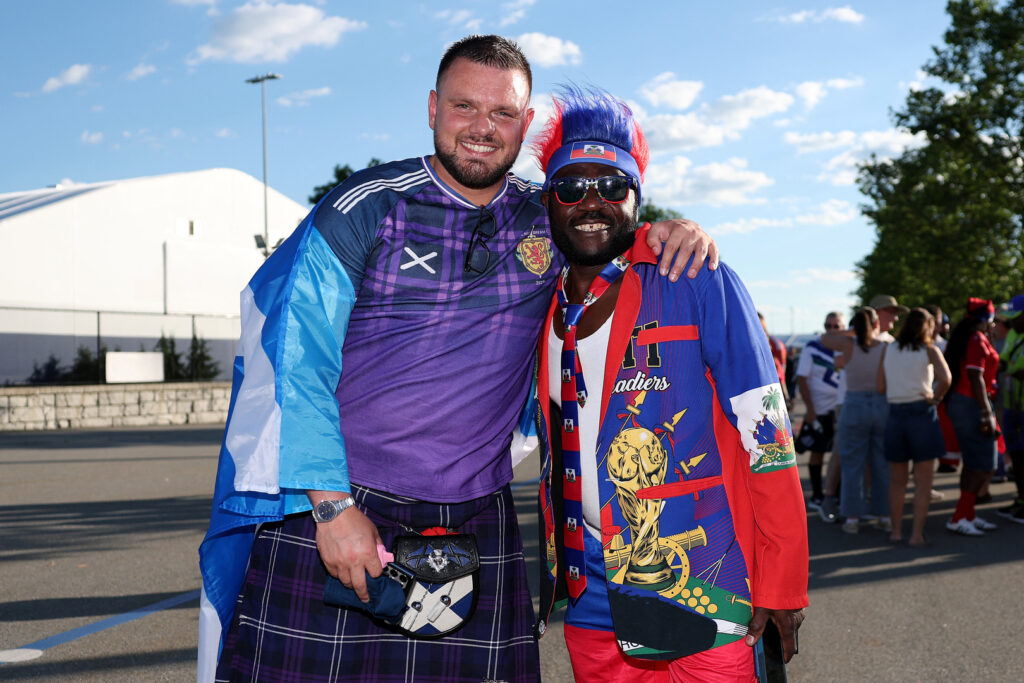
FOXBOROUGH, MASSACHUSETTS - JUNE 13: Fans arrive before the FIFA World Cup 2026 Group C match between Haiti and Scotland at Boston Stadium on June 13, 2026 in Foxborough, Massachusetts. Mattia Ozbot/Getty Images/AFP (Photo by Mattia Ozbot / GETTY IMAGES NORTH AMERICA / Getty Images via AFP)
As the FIFA World Cup approaches, an electric atmosphere is building around the globe, particularly among the supporters of Haiti and Scotland. These two nations, set to face each other in what promises to be a thrilling encounter, have sparked passionate celebrations both in their home countries and among diaspora communities worldwide.
Haiti’s fans have taken to the streets in vibrant displays of national pride. The streets are awash with blue and red, the colors of their national flag, as supporters chant and wave banners emblazoned with the team’s emblem. Music and dance are integral parts of the Haitian celebrations, with drums and rhythmic beats echoing through neighborhoods, embodying the spirit and resilience of a nation eager to make its mark on football’s biggest stage.
Meanwhile, Scotland’s faithful, known affectionately as the Tartan Army, have donned their traditional kilts and tartan patterns, ready to bring their distinctive brand of enthusiasm to the tournament. The Tartan Army is famed for its spirited support, characterized by singing, drumming, and an unmistakable camaraderie that unites fans from all walks of life. Their presence is expected to add a colorful and boisterous dimension to the World Cup festivities.
The matchup between Haiti and Scotland is not only a sporting contest but a cultural celebration, showcasing two passionate fan bases whose support transcends the football pitch. Both sets of supporters are known for their dedication and the unique ways they express their patriotism, making their World Cup encounter a compelling narrative beyond the game itself.
This World Cup is an opportunity for Haiti, a nation with a rich yet often overlooked football history, to showcase its talent and the unyielding spirit of its people. For Scotland, a country with a deep football heritage and a loyal fan base, the tournament is a chance to rekindle their national pride and celebrate their cultural identity on a global stage.
As the fixture date nears, anticipation continues to grow, fueled by the vibrant displays of support from both Haiti and Scotland’s fans. Streets in Port-au-Prince and Edinburgh alike are alive with excitement, music, and hope, symbolizing the unifying power of football.
In summary, the upcoming World Cup clash between Haiti and Scotland is more than just a game; it is a vivid celebration of culture, identity, and the shared passion that football ignites. Fans from both countries are set to paint the tournament in their colors, promising an unforgettable encounter that highlights the rich tapestry of global football fandom.