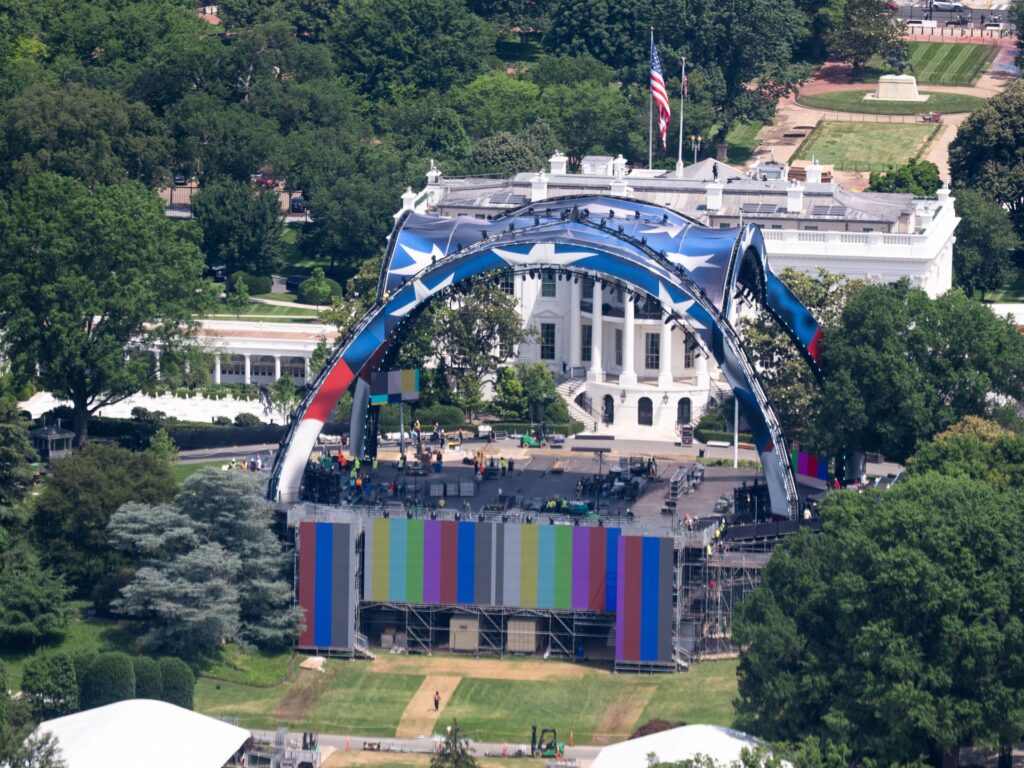
A federal judge has ruled in favor of allowing the UFC fight scheduled to take place at the White House on President Donald Trump’s birthday to proceed as planned, despite facing legal challenges. The decision comes amid controversy and debate surrounding the appropriateness and legality of hosting a mixed martial arts event on government property.
The proposed UFC fight, set for the White House lawn, was met with objections from various legal groups and advocacy organizations citing concerns about the use of federal property and potential violations of legal and ethical standards. These groups sought a court injunction to block the event, arguing that it was an improper use of the White House grounds and posed security risks.
However, the federal judge ruled against the injunction, allowing the event to go forward. The ruling emphasized the president’s authority to host events on the White House grounds and noted that there was insufficient legal basis to justify blocking the fight at this stage. This ruling has cleared the way for what is expected to be a unique and historic sporting occasion at the nation’s executive residence.
The decision has sparked reactions on both sides. Supporters of the event highlight the UFC fight as a celebration of the sport’s growth and the president’s support of mixed martial arts, which has grown into a mainstream sport with a global following. They argue that hosting the event at the White House will showcase American culture and sportsmanship.
Critics, however, express concerns over the symbolism of the event, questioning whether such sporting events belong at a site of governance. They also raise concerns about safety, potential disruptions to official White House functions, and the precedent it sets for future use of government property for entertainment purposes.
The UFC fight at the White House is scheduled to feature prominent fighters from the organization’s roster and is expected to attract significant media attention. The event coincides with President Trump’s birthday celebrations, adding an additional layer of public interest.
This ruling highlights ongoing debates about the intersection of politics, culture, and sports in the United States. It also brings into focus the role of the judiciary in balancing governmental prerogatives with public concern and legal principles surrounding federal property use.
As preparations continue for the UFC event, all eyes will be on the White House to see how the fight integrates into the historic backdrop of the presidential residence. Security measures are reportedly being heightened to ensure the safety of participants, staff, and spectators.
The UFC’s presence at the White House marks a milestone for the sport and reflects its increasing influence in American social and cultural life. The event has the potential to reshape perceptions of the relationship between sports and political spaces.
Legal analysts suggest that the outcome of this case may set a precedent for future events of a similar nature being held on federal property. It raises important questions about the limits of executive power and the ways entertainment can intersect with government operations.
Public opinion remains divided, with some viewing the event as a bold and innovative celebration of American sport, while others criticize it as a politicization of the presidential estate.
As the day of the fight approaches, organizers and officials are focused on ensuring the event proceeds smoothly while addressing concerns from all stakeholders involved.
This development is a notable chapter in the ongoing dialogue about the role of government spaces in hosting public and private events, particularly those that carry significant cultural weight.
The decision to allow the fight at the White House ultimately underscores the complex dynamics at play when sports, politics, and law intersect in the United States.