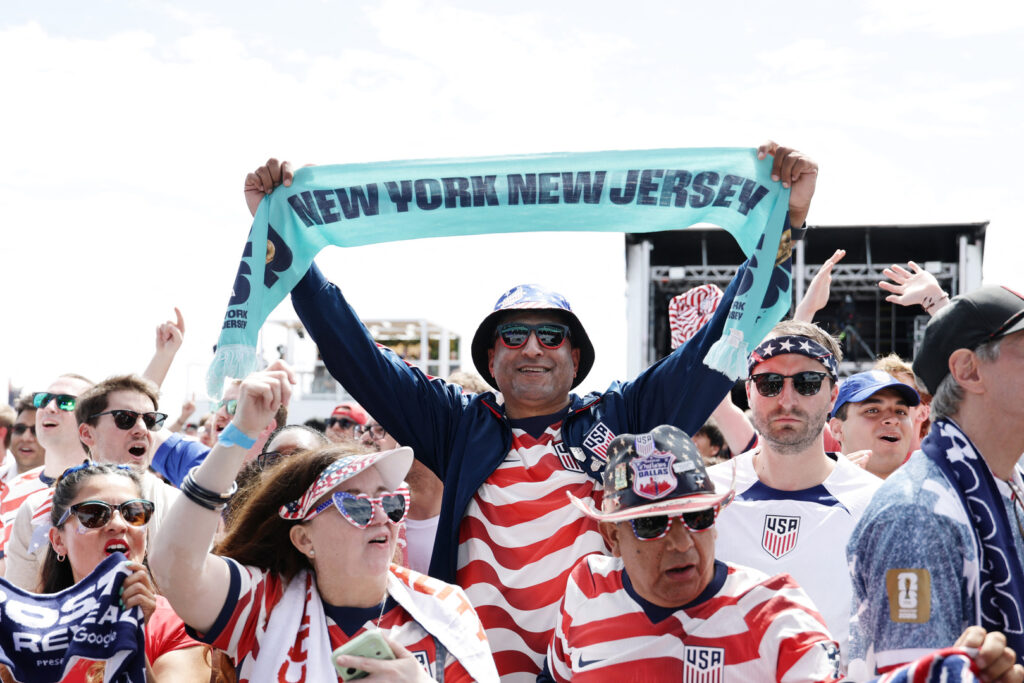
NEW YORK, NEW YORK - MAY 26: Fans cheer prior to the United States World Cup roster reveal on May 26, 2026 in New York City. Adam Hunger/Getty Images/AFP (Photo by Adam Hunger / GETTY IMAGES NORTH AMERICA / Getty Images via AFP)
As the World Cup excitement grips New York City, the metropolis is bustling with more than one million visitors expected to flood its streets. The global soccer tournament, an event of massive international appeal, has brought a surge of energy and anticipation to the city. However, alongside the festive spirit, New York faces significant challenges including transit chaos and soaring costs.
The city’s public transportation system is under immense strain due to the influx of tourists and intense local activity. Subways and buses, already a vital part of daily commute for millions, are experiencing overcrowding and delays. Transit authorities are working overtime to manage the situation, deploying additional services and staff to handle the demand. Despite these efforts, many commuters and visitors have reported longer wait times and discomfort during their travels.
The economic impact of the World Cup is multifaceted. On one hand, local businesses, hotels, restaurants, and vendors are benefiting from the increased foot traffic and spending. The hospitality industry is seeing a boom, with many establishments fully booked weeks in advance. On the other hand, prices for accommodation, dining, and event tickets have surged dramatically, causing frustration among residents and tourists alike.
City officials are walking a tightrope, aiming to promote the World Cup as a positive and unifying event while mitigating the daily inconveniences it causes. Efforts include enhanced security measures, crowd control strategies, and public communication campaigns to keep both locals and visitors informed.
The World Cup fever has also spurred a wave of cultural activities and fan zones across New York City, celebrating the sport with live screenings, music, and local food fairs. This has created an atmosphere of joy and community spirit, helping to offset some of the challenges faced.
Despite the hurdles, New Yorkers have shown resilience and enthusiasm, embracing the international spotlight and the chance to host such a prestigious event. The long-term benefits of global exposure and cultural exchange are expected to outweigh the temporary disruptions.
As the tournament progresses, city planners and officials are closely monitoring the situation to ensure that New York’s reputation as a world-class city remains intact, balancing the needs of its residents with the excitement brought by the World Cup. This delicate balancing act continues to define the city’s response to what has become one of the biggest sporting events seen in recent history.