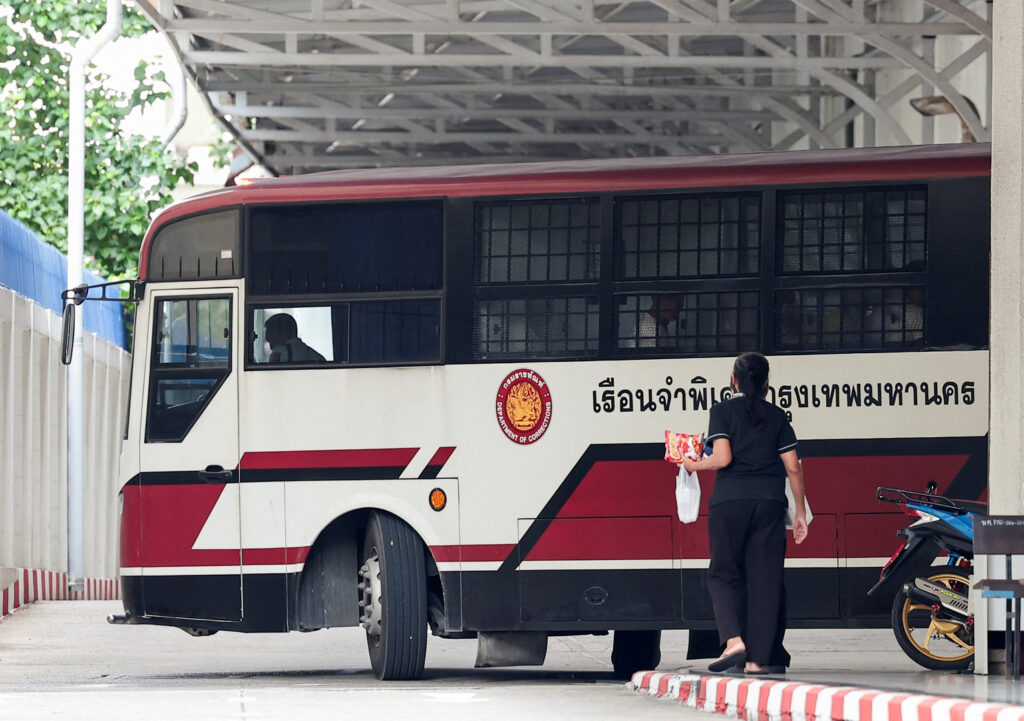
A prison vehicle that the police officers say is carrying Yusufu Mieraili and Bilal Mohammed, also known as Adem Karadag, who were charged over the August 17, 2015 Bangkok blast that killed 20 people, arrives at the South Bangkok Criminal Court ahead of a Thai criminal court's verdict, in Bangkok, Thailand, June 11, 2026. REUTERS/Chalinee Thirasupa
In a significant legal outcome, two men have been sentenced to death for their involvement in the 2015 bombing at the Erawan Shrine in Bangkok, Thailand. The devastating attack, which occurred at a popular tourist site, claimed the lives of 20 people and left over 100 others injured. Authorities conducted a thorough investigation that ultimately led to the conviction of these individuals. The bombing sent shockwaves through the nation and garnered international attention, highlighting concerns over security and terrorism in the region. The court’s decision reflects the severity of the crime and serves as a stern warning against such acts of violence. Families of the victims and survivors have expressed a range of emotions following the sentencing, from relief to a renewed sense of justice. The Thai government has reiterated its commitment to combatting terrorism and ensuring the safety of both citizens and visitors. This case is a pivotal moment in Thailand’s legal and security framework, emphasizing the relentless pursuit of perpetrators who threaten peace and stability. The international community has observed the trial with interest, supporting the efforts to bring those responsible to justice. This sentencing marks a crucial step towards closure for those affected by the tragic bombing and reinforces the global message that violent extremism will face severe consequences.