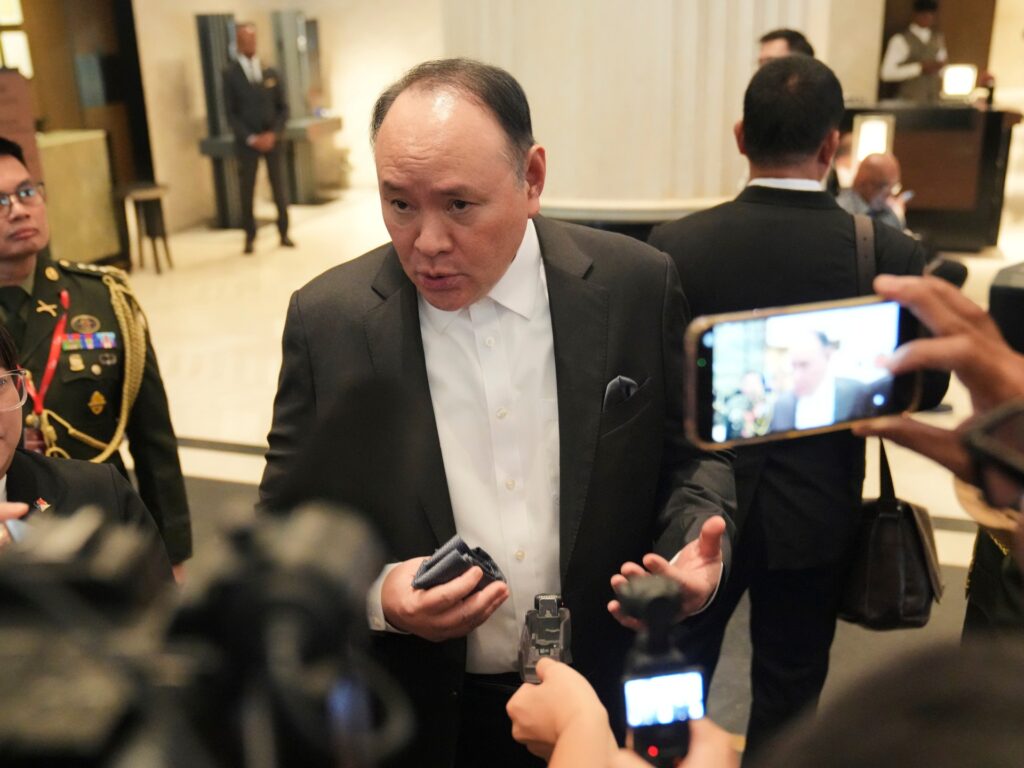
In a significant escalation of diplomatic tensions, China has imposed a ban on the Philippines’ defence chief, Gilberto Teodoro, prohibiting him from entering China. This move reflects the ongoing dispute in the South China Sea, where territorial claims between China and the Philippines have been a source of conflict for years. Alongside the travel ban, Chinese individuals and organizations are also forbidden from conducting business with Teodoro and his family, intensifying the diplomatic strain.
The South China Sea dispute involves several countries competing for control over strategic islands, reefs, and maritime zones rich in resources. China claims most of the sea through its so-called “nine-dash line,” a claim contested by the Philippines and other neighboring countries. The Philippines, backed by international rulings such as the 2016 Permanent Court of Arbitration decision, has consistently challenged China’s expansive claims.
Gilberto Teodoro, the Philippines’ defence chief, has been vocal in addressing the security challenges posed by Chinese activities in the region. His role involves overseeing the country’s national defence strategy, including responses to incursions and maritime security incidents. China’s decision to bar Teodoro signifies a direct response to the Philippines’ assertive stance on protecting its sovereignty in the contested waters.
This ban on Teodoro and his family by China not only restricts diplomatic engagements but also extends to economic interactions, as Chinese entities are now prohibited from engaging in business relations with him. Such a measure indicates China’s firm approach in leveraging economic and diplomatic tools to influence the Philippines’ policy in the South China Sea dispute.
The Philippines government has yet to release an official statement regarding the ban, but this development is expected to further complicate bilateral relations. Analysts suggest that China’s actions are part of a broader strategy to assert dominance in the region and to dissuade Philippine authorities from pursuing stronger alliances or asserting territorial claims vigorously.
The ongoing dispute in the South China Sea remains one of Asia’s most volatile flashpoints. It involves not just sovereignty and territorial rights but also concerns over freedom of navigation and regional security. The involvement of external powers, including the United States, which supports freedom of navigation operations, further complicates the geopolitical landscape.
China’s banning of a high-ranking Philippine official signals an intensification in diplomatic hostilities. It highlights the complexities of navigating territorial disputes in international waters, where national pride, economic interests, and security concerns intersect.
As the region watches closely, it remains to be seen how the Philippines will respond to this latest move by China. The situation underscores the delicate balance countries must maintain in addressing territorial claims while avoiding escalation into open conflict.
This development adds a new chapter to the longstanding rivalry between China and the Philippines over the South China Sea, a maritime region critical for global trade and regional stability. Both sides face the challenge of managing their disputes without derailing diplomatic ties or triggering broader conflict in the Asia-Pacific region.