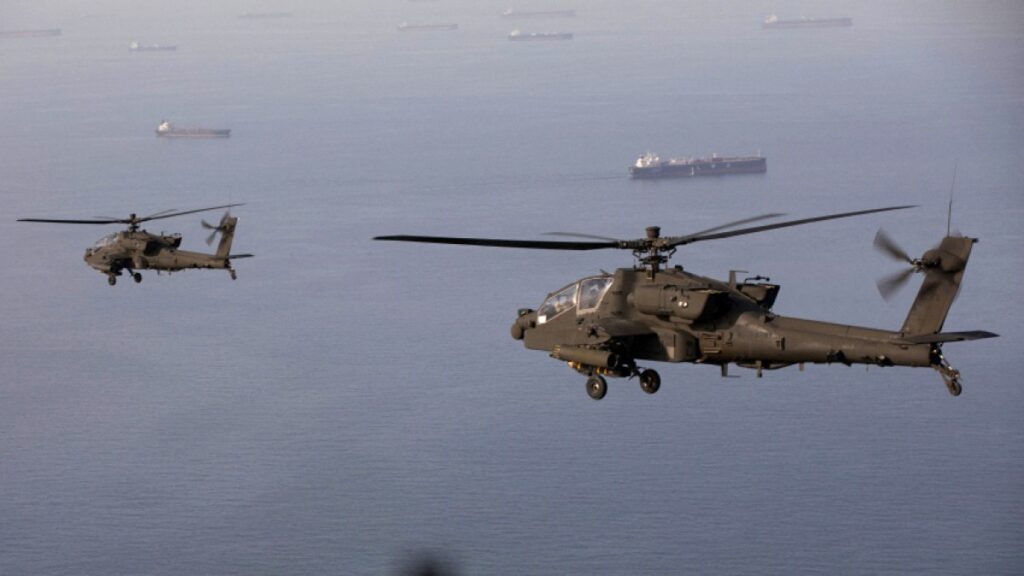
The United States has carried out a military attack on Iran in response to the downing of an Apache helicopter. This aggressive action follows strong statements made by President Trump, who emphasized the necessity of responding to the attack, despite the successful rescue of the helicopter pilots.
The incident began when an Apache helicopter, operated by US forces, was shot down under circumstances implicating Iranian aggression. While both pilots were safely rescued, the US government declared that such an attack could not go unanswered.
President Trump underscored the gravity of the situation, asserting that the United States must demonstrate strength and ensure that acts against its military personnel are met with decisive retaliation. The response was aimed at sending a clear message to Iran about the consequences of hostile actions against American forces.
Experts believe that this development could further escalate tensions in the already volatile Middle East region. Military analysts have warned that the strike might provoke a series of retaliatory actions from Iran, potentially destabilizing the area.
Diplomatic efforts to de-escalate tensions are now viewed with renewed urgency, as international leaders call for restraint from both sides. Meanwhile, military sources have indicated that the US remains on high alert, prepared for any further confrontations.
The attack on the Apache helicopter has highlighted ongoing challenges in US-Iran relations, which have been fraught with conflict for decades. Issues such as nuclear programs, regional influence, and economic sanctions have consistently contributed to friction.
This latest incident and the subsequent US attack mark a significant escalation, raising concerns about the potential for broader conflict. The international community is closely monitoring the situation, with calls for dialogue and peaceful resolution growing louder.
Human rights organizations and global leaders have expressed concern over the risks of military escalation and the human cost of renewed hostilities. The safety of military personnel and civilians alike remains a paramount concern as the situation develops.
As of now, details regarding the specific targets and outcomes of the US military response have not been fully disclosed. Officials have promised transparency while stressing the importance of operational security.
In the coming days, it is expected that negotiations, both overt and covert, will intensify in an effort to prevent further violence. The US administration has reaffirmed its commitment to protecting its forces and interests abroad.
The downing of the Apache helicopter and the subsequent US response underscore the fragile nature of peace in the Middle East and the ongoing risks faced by military personnel operating in the region. The world watches closely as events unfold, hoping for a de-escalation that could avert a larger conflict.