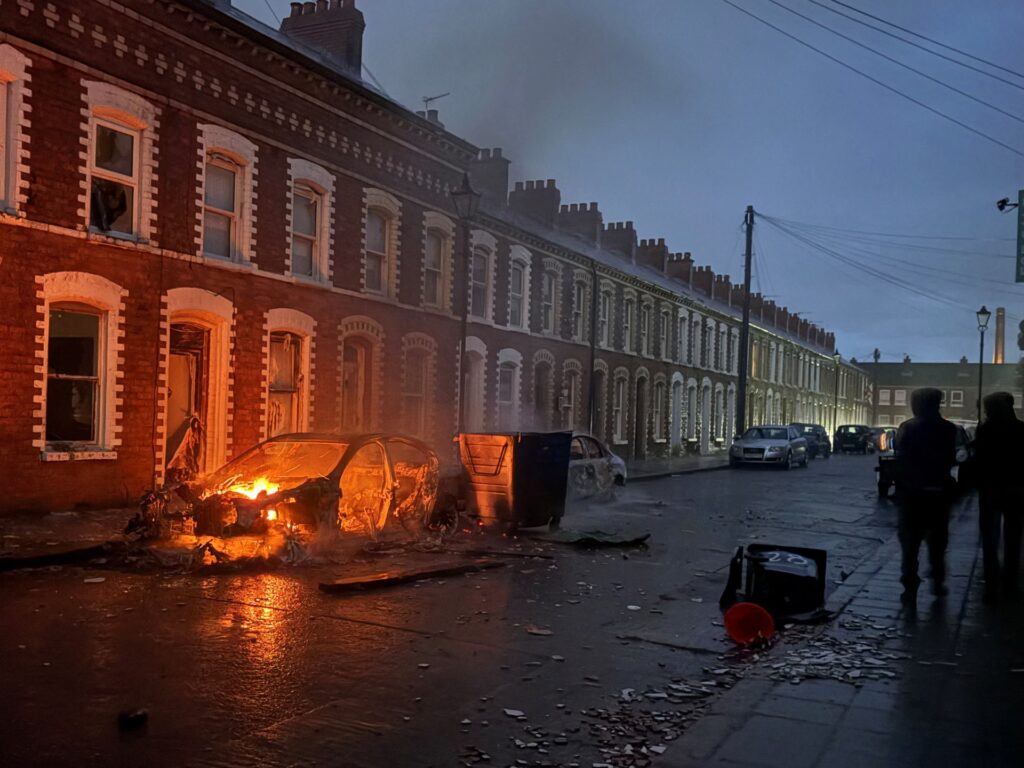
Violence and unrest have broken out in Belfast after a Sudanese man was arrested in connection with a knife attack that took place in north Belfast, UK. The incident has sparked significant protest activity, with demonstrators setting cars and buildings on fire as expressions of anger and frustration.
The stabbing attack, which occurred earlier in the week, targeted individuals in a busy area of north Belfast. The motive behind the attack and the extent of the victims’ injuries have not been fully disclosed by authorities, but the event has nevertheless intensified existing tensions within the community.
Following the arrest, a group of protesters gathered on the streets, expressing their outrage over the involvement of a refugee in the violent act. This unrest has led to clashes with police forces trying to restore order. Multiple vehicles were torched, and various buildings suffered damage amid the violence.
Local law enforcement agencies have condemned the violence and urged the community to remain calm. They have increased patrols and security measures in the area to prevent further escalation.
The incident has also reignited debates on immigration and integration policies in Belfast and the broader UK, spotlighting challenges around refugee assimilation and public safety.
Community leaders called for peaceful dialogue and mutual understanding to address the underlying issues that fuel such conflicts. They emphasized the importance of avoiding collective blame and maintaining societal cohesion.
Authorities continue to investigate the knife attack, with the Sudanese suspect in custody. Further details are expected as the investigation progresses.
This series of events highlights the delicate balance cities must maintain between protecting public safety and supporting vulnerable populations, such as refugees, as well as the importance of addressing social tensions proactively to prevent eruptions of violence.