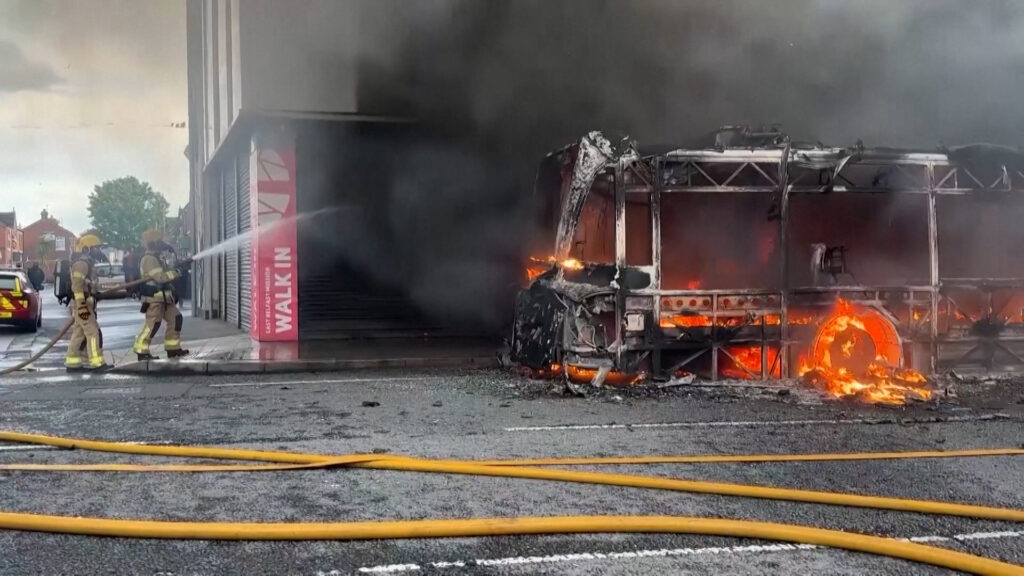
Belfast has been plunged into chaos and violence in the aftermath of a stabbing attack that ignited widespread unrest across the city. What began as protests soon escalated into violent riots, with protesters setting numerous vehicles on fire, leading to a volatile and dangerous situation. Al Jazeera’s Milena Veselinovic reports from the ground, highlighting the tense atmosphere engulfing the city.
The stabbing attack serves as a catalyst in a city already fraught with political and social tensions. Belfast, which has faced decades of conflict and division, now finds itself wrestling with renewed violence that threatens community safety and public order.
According to eyewitness accounts and official sources, the initial demonstrations were intended as peaceful gatherings to express outrage and seek justice for the attacking victims. However, emotions quickly boiled over as certain groups within the crowds resorted to aggressive tactics, including vandalism and arson.
Numerous vehicles were set ablaze in several districts, creating plumes of thick smoke that choked the streets and made efforts by emergency responders particularly challenging. Firefighters and police forces were swiftly deployed to control both the fires and the escalating disorder.
Local hospitals have been placed on high alert, ready to treat victims of both the stabbing incident and injuries incurred during the riots. The violence has also resulted in multiple arrests, as law enforcement attempts to restore calm and prevent further destruction.
Community leaders and political figures have expressed deep concern over the rapid descent into violence. Calls for restraint and dialogue have been issued amid fears that the situation could spiral further out of control.
The roots of unrest in Belfast are complex, with underlying socio-political issues and historical grievances contributing to the fragile peace. The stabbing attack has exposed these fault lines, prompting debates on how to address community divisions and prevent future violence.
Efforts to mediate between opposing factions are underway, emphasizing the need for peaceful resolution and the importance of upholding the rule of law. However, the path to reconciliation remains fraught with challenges as trust between groups is low.
International observers have also taken note, with concerns raised about the potential for renewed conflict in a city still healing from its troubled past. The United Kingdom government has pledged support for local authorities and community initiatives aimed at de-escalating the crisis.
As Belfast reels from the immediate aftermath, the focus now turns to addressing the root causes that triggered the unrest. Long-term strategies involving community engagement, economic investment, and political dialogue are seen as essential to fostering lasting peace.
In the streets, a sense of fear and uncertainty lingers. Residents are urged to stay safe and heed official warnings as Belfast faces a critical moment in its ongoing journey toward stability.
The events unfolding serve as a stark reminder of the delicate balance in divided societies and the dire consequences when that balance is disrupted. The international community watches closely, hopeful that recovery and reconciliation will prevail in Belfast once more.