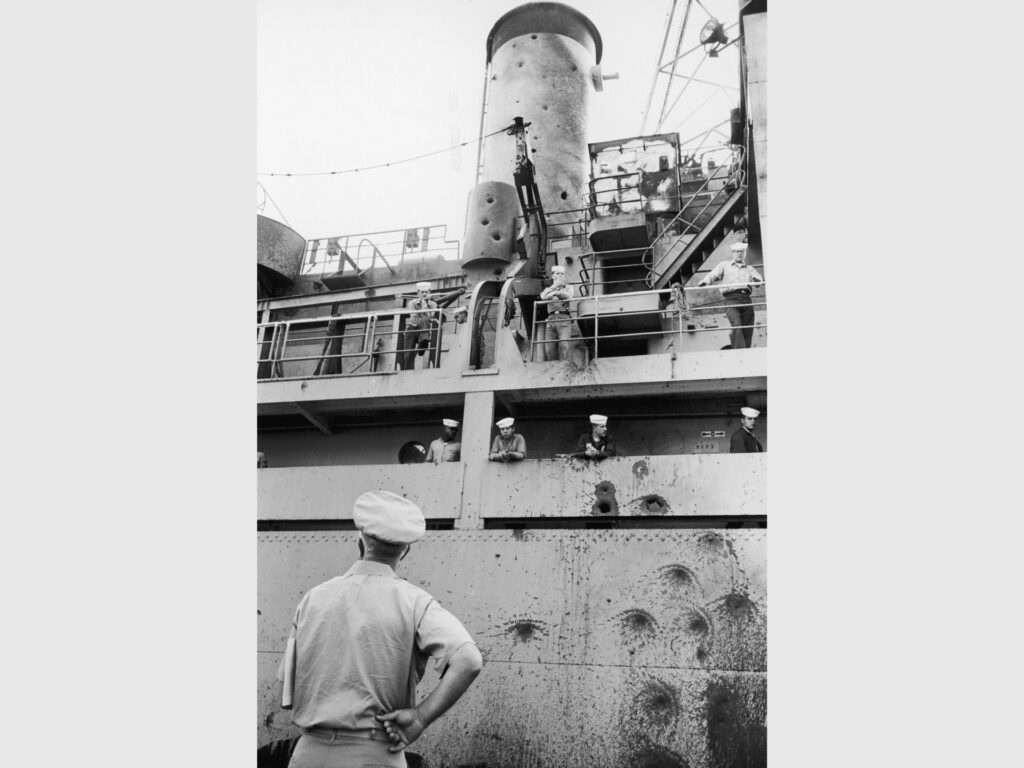
The 1967 attack on the USS Liberty remains one of the most controversial incidents in the history of US-Israel relations. Despite the gravity of the attack, Israel was largely spared from major international scrutiny or severe political repercussions at the time. This complex episode sheds light on the dynamics of Cold War geopolitics, the US-Israel alliance, and the broader Middle East conflict.
On June 8, 1967, during the Six-Day War, Israeli forces attacked the USS Liberty, an American Navy technical research ship, which resulted in the deaths of 34 crew members and injuries to over 170 others. Israel stated that the strike was a tragic case of mistaken identity, claiming the Liberty was confused with an Egyptian ship, and quickly apologized, offering compensation to victims’ families.
Despite initial outrage within some sectors of the US government and military, the attack did not lead to a formal censure of Israel. Several reasons contributed to this outcome:
1. Strategic Alliance: Israel was, and remains, a key US ally in an unstable region. During the Cold War, the US valued Israel as a strategic partner countering Soviet influence in the Middle East. Maintaining a strong alliance often meant avoiding public confrontations that could damage diplomatic relations.
2. Political Considerations: The US government was deeply involved in complex Middle Eastern politics. At the time, efforts were focused on managing the fallout of the Arab-Israeli conflict and the broader Cold War. Criticizing Israel openly risked destabilizing these delicate processes.
3. Investigative Ambiguities: Official investigations, including those by the US Navy, the NSA, and other agencies, were inconclusive or accepted Israel’s explanation of mistaken identity. While some officials privately questioned Israel’s narrative, the prevailing official position was to treat the attack as accidental.
4. Media and Public Awareness: Limited media coverage and controlled information flow at the time kept public attention relatively low. This lack of widespread awareness contributed to a quieter political atmosphere regarding the attack.
Recently, US Representative Thomas Massie has announced plans to honor the crew of the USS Liberty on the House floor, drawing renewed attention to the incident. This move aims to recognize the sacrifices of the crew and push for a broader acknowledgment of the attack within US political discourse.
The USS Liberty attack remains a poignant reminder of the complexities of international alliances and the hidden costs of geopolitical strategy. Honoring the crew while revisiting the incident reinforces the importance of accountability and remembering historical events fully and honestly. Representative Massie’s tribute may serve as a crucial step toward transparency and healing for the survivors and families affected by the tragedy.