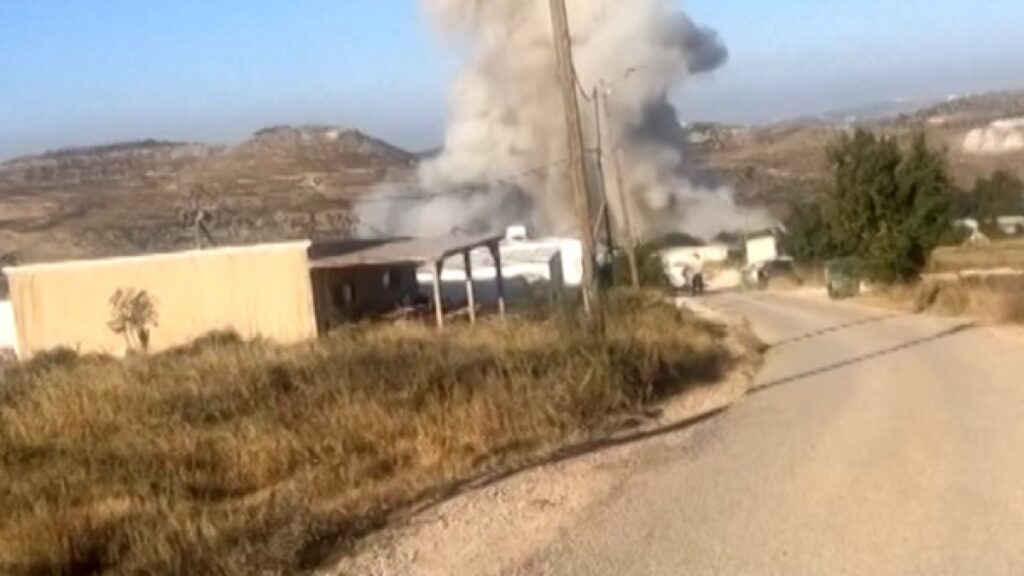
Smoke was observed billowing from an illegal Israeli settlement located in the occupied West Bank after a missile attack carried out by Iran. This incident marks a significant escalation in the ongoing conflict in the region. The settlement, which is considered illegal under international law, came under attack as Iranian forces launched missiles targeting the area. Eyewitnesses reported seeing thick black smoke rising from the settlement shortly after the missiles struck, indicating possible damage to structures and raising concerns about casualties.
The Iranian missile strike represents a new phase of hostility amid already tense relations in the Middle East. The occupied West Bank has long been a flashpoint for conflict, given its disputed status and the presence of Israeli settlements considered illegal by much of the international community. Iran’s involvement in the region, typically through proxy groups and indirect support, appears to be becoming more direct as evidenced by this missile attack.
Israeli officials condemned the missile strike, vowing to respond with decisive and proportionate measures to protect their citizens and maintain security. They emphasized the illegality of the settlement’s status but focused on the immediate threat posed by the missile attack.
The international community has expressed alarm at the incident and called for restraint from all parties to prevent further escalation. United Nations representatives urged both sides to avoid actions that could exacerbate tensions and compromise peace efforts.
This attack raises critical questions about regional security and the potential for broader conflict. Iran’s strategic motives in targeting Israeli settlements could be linked to its opposition to Israeli policies in Palestinian territories and its alliances with various regional actors.
The humanitarian impact on civilians living in the settlement and surrounding areas is a significant concern. Access to emergency services, the possibility of casualties, and the risk of escalating violence are immediate issues demanding international attention.
Analysts suggest that this missile strike may be part of a wider pattern of increasing Iran influence and aggression in the region, likely to elicit a strong response from Israel and its allies.
The situation remains fluid, with reports coming in regarding the extent of damage and casualties. Both sides appear poised for possible further military engagements, raising fears of a broader regional conflict.
Efforts towards de-escalation and negotiation are more critical than ever to prevent a dangerous spiral of violence. The international community’s role in mediating and promoting dialogue remains crucial in these volatile times.