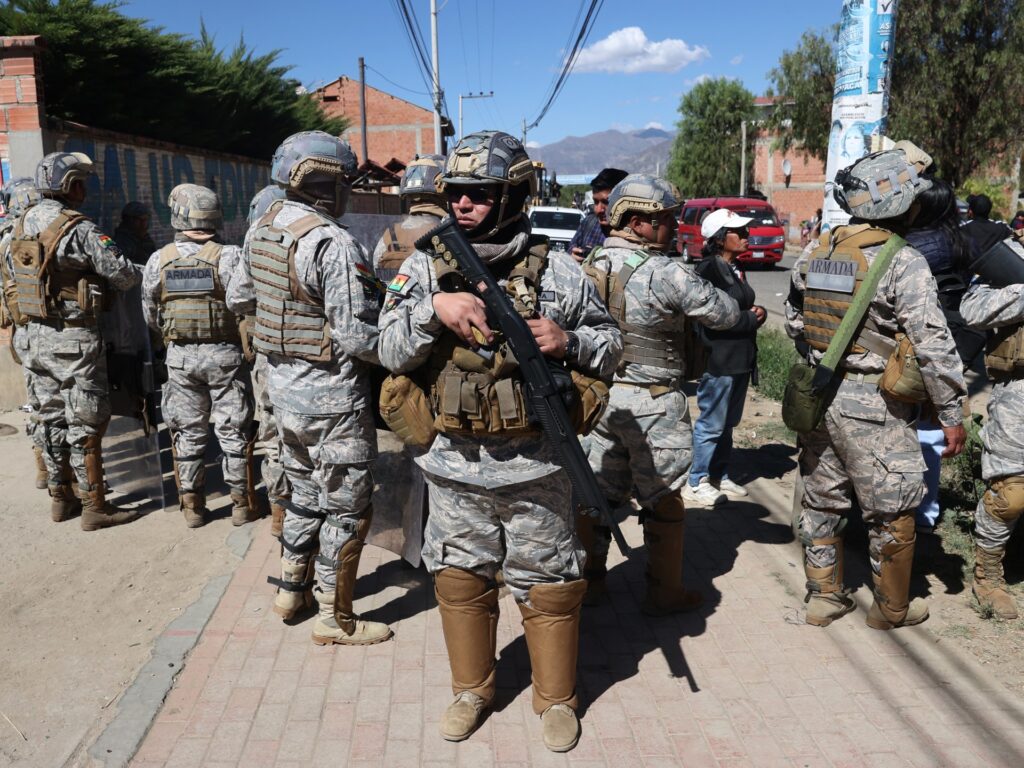
Bolivia’s legislature has recently passed a significant and controversial law that grants the president the authority to deploy military forces against protesters. This new legislation comes amid weeks of ongoing antigovernment demonstrations that have led to widespread roadblocks and disruptions throughout the country.
The law specifically authorizes the president to use troops to clear roadblocks created by demonstrators, a move aimed at restoring public order and ensuring the free flow of traffic and commerce. Protesters have been blocking key transportation routes as part of their resistance against the government, expressing dissatisfaction with government policies and seeking political change.
Supporters of the law argue that the use of military forces is necessary to maintain law and order during times of civil unrest and to protect citizens who are affected by the blockade of essential infrastructure. They contend that these temporary measures are vital to prevent the paralysis of economic activity and to keep public services operating smoothly.
On the other hand, critics of the law have raised concerns about the potential for abuse of military power and the risk of escalating violence in confrontations between troops and civilians. Human rights organizations and opposition leaders have warned that deploying the military in civilian protests could suppress peaceful dissent and lead to violations of fundamental rights.
The government has reassured the public that the measure will be applied judiciously and only in extreme cases where no other means of resolving the situation are effective. They emphasize the importance of dialogue and peaceful negotiation as the primary approach to addressing public grievances.
The passing of this law reflects the heightened tensions currently facing Bolivia, highlighting the challenges of balancing security and civil liberties during periods of political crisis. The coming weeks will be critical in determining how this law is implemented and the impact it will have on the country’s stability and democratic processes.
Observers are closely monitoring the situation as protests continue to demand governmental reforms and accountability. The international community has also expressed concern over the potential escalation of conflict and the need for respecting human rights and democratic freedoms.
In conclusion, Bolivia’s new legislation empowering the military to intervene in protests marks a pivotal moment in the nation’s response to civil unrest. It underscores the complexity of handling public dissent in a democratic society while maintaining order and protecting citizens’ rights.