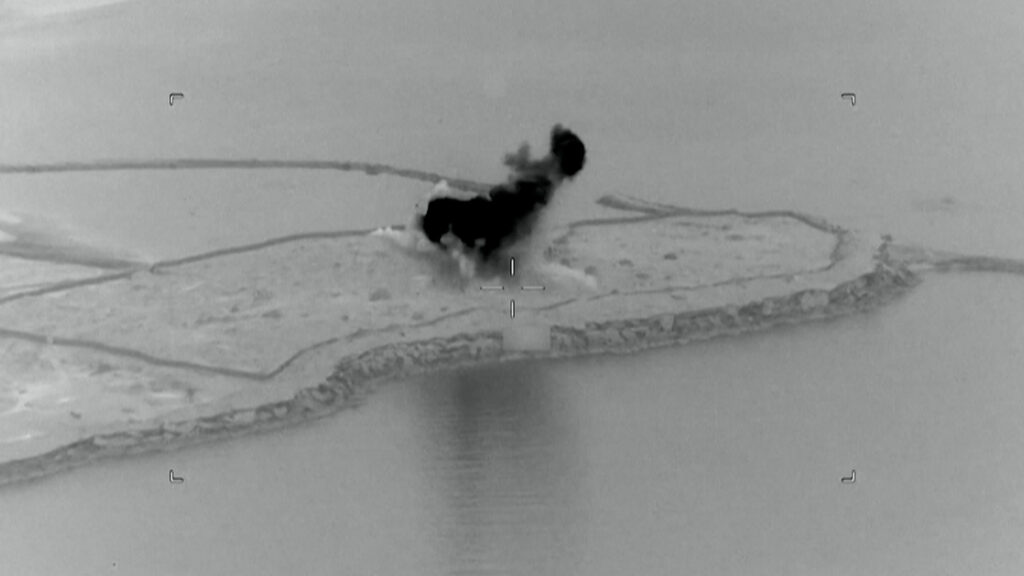
In a significant development, the United States military has released footage confirming strikes on Iranian radar installations located in Goruk and Qeshm Island. The release of this footage marks a critical moment in the ongoing tensions between the US and Iran, raising the stakes in the already complex geopolitical landscape of the Middle East.
According to the US military sources, the strikes targeted key radar sites that were purportedly used to monitor and potentially threaten regional and US forces’ activities. The imagery and video evidence presented by the US depict precision strikes executed to neutralize these radar capabilities, underscoring a strategic move aimed at diminishing Iran’s surveillance and military coordination effectiveness.
The choice of Goruk and Qeshm Island as strike locations is notable due to their strategic positioning in the Gulf region. Qeshm Island, in particular, holds significance for Iran’s military and monitoring operations given its proximity to vital shipping lanes in the Strait of Hormuz, a critical chokepoint for global oil shipments. The US military’s statement emphasized the necessity of the strikes to ensure the safety of navigation and to counteract what it described as aggressive Iranian military posturing.
This action follows a pattern of heightened military and diplomatic tensions between the US and Iran, characterized by attacks on maritime assets, sanctions, and proxy conflicts across the region. The release of the attack footage is likely intended not only to justify the military action but also to send a clear message to Iran and other global powers regarding US resolve and capability.
Analysts suggest that this move could potentially escalate tensions in the region, prompting responses from Iran or its allies, and affecting international diplomatic efforts aimed at de-escalation. The implications for regional security are profound, with concerns over a possible wider conflict looming if retaliatory actions ensue.
Meanwhile, global markets and international stakeholders are closely monitoring the situation due to the potential impact on oil prices and trade routes. The Strait of Hormuz, near Qeshm Island, is a critical artery for the global energy supply, and any instability there can lead to significant economic repercussions worldwide.
The US military’s release of footage serves as both a confirmation of the strikes and a strategic communication tool to frame the narrative of US actions in the region. It highlights the ongoing challenges in balancing military engagement, diplomatic negotiations, and regional stability.
As the situation develops, international observers and foreign policy experts emphasize the importance of cautious diplomacy to prevent further escalation. The strikes on Iranian radar sites at Goruk and Qeshm Island represent a pivotal episode in the broader context of Middle Eastern security dynamics, underscoring the fragility and complexity of the current geopolitical environment.